Computer vision development

Computer vision that holds accuracy

Software that reads images and video and acts on what it sees, detecting objects, defects, and people in real time, and built to keep its accuracy in messy, real-world conditions.

  • 30+ years on the market
  • Unity and Unreal experts
  • 4.8 on Clutch (46 reviews)
  • NDA, secure SDLC
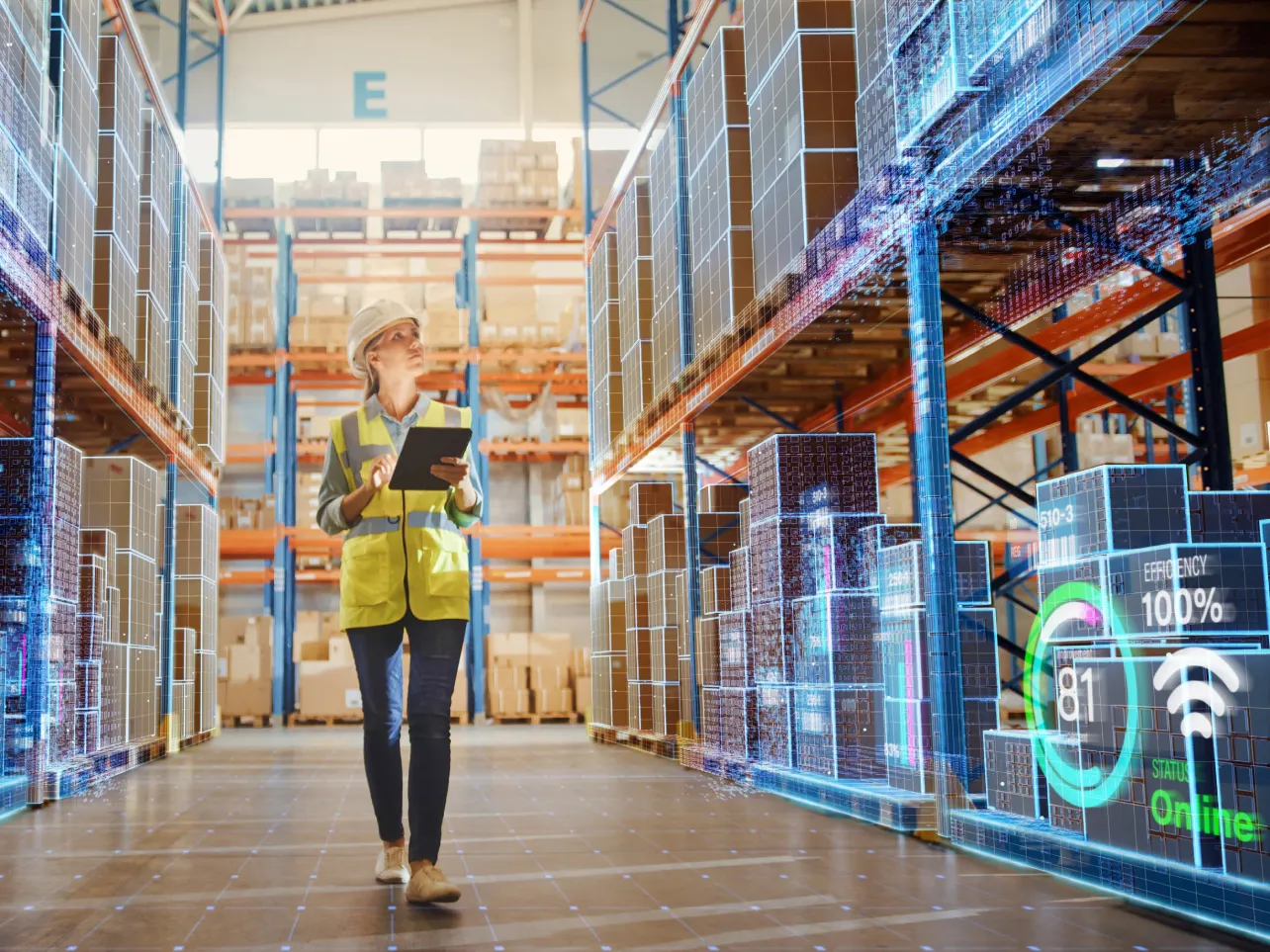
Computer vision system analyzing warehouse inventory and tracking goods in real time
Trusted by enterprise teams worldwide
Unity
GAP
Hopster
Magrabi Optical
RADWIN
Pixomondo
Totem Learning
Nanopixel
Digimation
What it is

What is computer vision development?

In short

Computer vision development is the engineering of software that reads images and video and acts on what it sees, detecting objects, defects, or people in real time. Program-Ace builds it on OpenCV, TensorFlow, and YOLO, tied to a measurable outcome like fewer defects or faster inspection.

Program-Ace builds vision that holds accuracy outside the lab, as part of our broader AI development practice.

What Program-Ace delivers

  • Real-world accuracy
    Models built to hold up under real lighting, angles, and noise.
  • Real-time performance
    Inference fast enough for the line, the camera, or the device.
  • Cloud, edge, or on-device
    Deployed where latency, cost, and connectivity demand.
  • Integration with your cameras
    Works with the hardware and systems you already run.
  • Monitoring against drift
    Retraining and monitoring so accuracy does not decay.
The challenge

Computer vision challenges we solve

A model that scores well in a notebook often fails on a real line. We build for the conditions your cameras actually see.

Accuracy that drops in the real world

A model that scores well on clean data still misses under odd lighting, motion, or partial views, which is where it has to work.

Latency that kills real-time use

A detection that arrives a second late is useless on a moving line, so the pipeline has to run in real time.

Data annotation and training cost

Vision models need labeled data, and without a managed annotation pipeline that effort quietly dominates the budget.

Scaling across cloud, edge, and device

Cloud, edge, and on-device deployment each behave differently, so a model has to be built to run where the camera is.

Integration with existing cameras and systems

The value is in acting on a detection, which means wiring vision into the cameras, lines, and software you already run.

Models that drift over time

Products change, cameras age, and a model trained once slowly loses accuracy without a retraining loop behind it.
Capabilities

What we build with computer vision

From defect detection on a line to real-time recognition at the edge, built to perform where it is deployed.

01

Object detection and recognition

Detect, classify, and count objects in real time, on a line, a shelf, or a camera feed, even under tough conditions.

02

Image and video analytics

Turn raw video into events and metrics, spotting anomalies, patterns, and activity at a scale no person could watch.

03

Visual inspection and defect detection

Automated quality control that catches defects a tired inspector misses, with the precision a production line needs.

04

OCR and document understanding

Read text, codes, and forms from images, so labels, documents, and serial numbers flow into your systems automatically.

05

Facial recognition and biometrics

Secure authentication and identity verification for access control and workforce systems, built privacy-first.

06

Edge AI and real-time vision

On-device inference for low-latency monitoring and autonomous decisions where a round trip to the cloud is too slow.

Built Platform-Agnostic

Computer vision where the latency and data demand

Run inference in the cloud, at the edge, or on the device, matched to the speed, cost, and privacy the use case needs.

LMS integration ERP & operational data Analytics dashboards

Cloud

Large-scale training and batch analytics.

Edge

Low-latency inference near the camera.

On-device

Vision that runs on phones and embedded hardware.
Solutions

Computer vision solutions we build

Productized training solutions we deliver most often, each built to your procedures and standards.

Quality control inspection

Automated quality control on the production line.

Object recognition

Detect, count, and track objects and people.

Video analytics

Turn camera feeds into operational insight.

AR computer vision

Tracking that anchors AR to the real world.

Mixed reality vision

Spatial vision on headsets and MR devices.

Edge vision

Real-time recognition on edge and embedded devices.
How we deliver

How we build your computer vision solution

A structured, outcome-driven path from training goals to measurable results, refined over 900+ projects.

01

Use case and data assessment

Define what to detect and what data exists to train on.
02

Data collection and annotation

Gather and label representative real-world data.
03

Model selection and training

Choose and train models for accuracy and speed.
04

Real-world validation

Test against the conditions the cameras actually see.
05

Deployment target engineering

Optimize for cloud, edge, or on-device inference.
06

Integration

Connect to existing cameras, systems, and workflows.
07

Rollout

Deploy to production with monitoring in place.
08

Monitoring and retraining

Watch for drift and retrain to hold accuracy.
Industries we support

Industries we serve with computer vision

Vision systems pay off wherever a camera can do inspection, counting, or recognition faster and more consistently than the eye.

Manufacturing Logistics Healthcare Oil & gas Retail Construction Energy & utilities Telecom
Technology & trust

Enterprise-grade engineering, security-first delivery

We build on the same real-time engines that power AAA games and industrial digital twins, backed by mature enterprise delivery, NDA-protected processes, and secure handling of your operational data.

Unity Unreal Engine OpenXR WebXR C# / C++ Cloud & DevOps Digital Twins
Security-first
NDA, secure SDLC, and protected data handling by default.
Enterprise delivery
Mature, documented processes with QA and clear ownership on every build.
Reviewed by an expert
Oleg Fonarov
Founder & CEO at Program-Ace

"The teams that see the biggest gains treat simulation as a measurement tool, not just a training one. When you can score real competency, you can prove readiness, and that changes the safety conversation entirely."

Content reviewed for accuracy
Let's Talk

Talk to a computer vision expert

Tell us what your cameras need to detect or measure. We will map an approach that holds accuracy in production, with no obligation.

Book a discovery call
Response within 1 business day
NDA-protected discovery
Scoping & estimate included
900+ projects delivered since 1992
By the numbers

Program-Ace by the numbers

30+
Years on the market
900+
Projects delivered
150+
In-house experts
4.8
Clutch · 46 reviews
Business value

Outcomes you can measure

Every simulation is instrumented, so training stops being a cost center and starts producing data your leadership can act on.

Fewer defects shipped

Automated inspection catches what the eye misses.

Faster throughput

Vision inspects at line speed, without fatigue.

Consistent quality

The same standard applied to every item, every shift.

Lower inspection cost

Cameras scale where adding inspectors does not.
When to use it

Manual inspection vs computer vision

Computer vision is the right fit when inspection or recognition is high-volume, repetitive, or too fast and consistent for people to sustain.

Consideration
Manual inspection
Computer vision
Speed
Limited by human pace
Inspects at line or camera speed
Consistency
Varies by person and fatigue
Same standard every time
Coverage
Sampling, spot checks
100% of items, continuously
Data
Notes, if any
Every result logged and analyzable
Cost to scale
Add more inspectors
Add more cameras, not headcount
Fatigue
Accuracy drops over a shift
No fatigue, steady accuracy
Free whitepaper

AI-powered computer vision

How vision-driven AI delivers quality, insight, and automation across industries.

White paper
Vision-driven AI and computer vision for quality, insights, and automation
Download
How we work

What works best for your project?

Full-cycle development

We run your project from planning through development and deployment with a dedicated team. Best when you need a complete solution, predictable communication, and clear ownership of the result.

Team augmentation

Our specialists join your team to add training and simulation engineering capacity. Best when you need specific expertise or extra hands without disrupting your current workflows.

Awards & recognition

Recognized by leading industry authorities

Independent ratings and award bodies rank Program-Ace among the top VR/AR, AI, and custom software development companies worldwide.

Forbes Technology Council – Official Member 2026
Top AR/VR Development Company Cyprus – Clutch 2026
Clutch Global – Fall 2023
IAOP – The Global Outsourcing 100
Top Augmented Reality App Developers – TopDevelopers
TechBehemoths 2025 Winner – Custom Software Development, Cyprus
International Virtual Reality Healthcare Association – IVRHA
Top IT Consulting Company – AppFutura
Top Mobile App Development Company – GoodFirms
Trusted on TechBehemoths
FAQ

Computer vision development: FAQ

Computer vision automates the visual checks people do slowly and inconsistently, reading a camera feed to spot a defect, count stock, or flag a hazard in real time, at a scale and consistency a human cannot match. Program-Ace builds it for the inspection, analytics, and recognition tasks that move a real number.

As accurate as the data it trained on, which is why we train on your products, lighting, and angles rather than a clean benchmark. Real footage from your site validates it before launch, so the accuracy you see in testing is the accuracy you get on the floor.

Yes, in most cases we build onto the cameras you already have and run inference on an edge box or the device itself. That keeps latency low and avoids the cost of replacing hardware just to add vision.

The work falls into a few core areas:

  • object detection, classification, and counting
  • image and video analytics
  • visual inspection and defect detection
  • OCR and document understanding
  • facial recognition and biometrics
  • edge AI for real-time, on-device vision

Each is trained for the conditions it has to work in.

Computer vision is a branch of AI focused on images and video, while AI is the broader field of systems that learn and decide. They work together, and where a project needs reasoning or language alongside vision, our AI development team builds that side.

Less than most teams expect, because we can start from pre-trained models and your existing footage, then fine-tune. Where data is thin, we set up an annotation pipeline and use augmentation to stretch what you have.

Products change, cameras age, and lighting shifts, so a model trained once slowly drifts. We monitor accuracy in production and retrain on fresh data on a schedule, which keeps the system reliable instead of quietly degrading.

Both depend on the task, the accuracy you need, how much data exists, and where it has to run, so a single detection model and a multi-camera plant system sit far apart. Program-Ace has delivered 900+ projects since 1992, so we scope quickly; we work fixed-price for a defined scope or time-and-material for evolving work, with a clear estimate during NDA-protected discovery. Vision pairs with our digital twin and 3D visualization work.

Let's Talk

Start a project with us

Tell us about the procedures you need to train and the outcomes you want to measure. We will route your inquiry to the right expert and map a custom approach.

Cyprus +357 22 056047 · USA +1 888 7016201
30+
Years on the market
900+
Projects delivered
150+
In-house experts

By sending this form you agree to our Privacy Policy. Your details are added to our CRM for further communication only. This site is protected by reCAPTCHA and the Google Privacy Policy and Terms of Service apply.