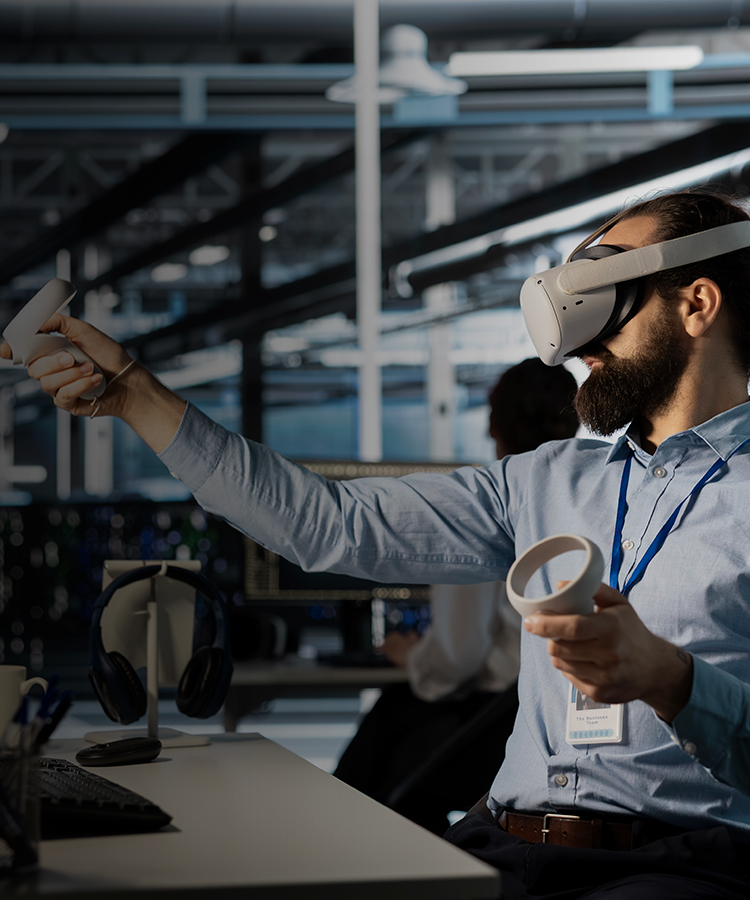
Virtual simulation mob
Virtual simulations top icon

Virtual Simulation Development

Our virtual simulation services support precise training, complex scenario modeling, and operational planning across industries.
Let’s discuss your project

Looking for Virtual Simulation Development Services?

The core of our virtual simulation work at Program-Ace is building controlled, data-driven environments that help you with training, making smarter decisions, and optimizing all your processes. Our team develops simulations that accurately replicate complex technical workflows, high-risk procedures, and multi-step scenarios.

Crucially, our clients use these solutions to thoroughly test operations, safely prepare their staff, and review potential outcomes before ever applying changes in a real-world setting. Every project we undertake is precisely tailored to reflect defined objectives, include measurable parameters, and meet the exact level of detail required. You receive a structured and scalable system that supports skill development, operational readiness, and continuous improvement across your workflows.

Challenges We Help You Tackle as a Virtual Simulation Development Company

Visualization icon Unclear Simulation Objectives
Defining the purpose of a simulation is critical for measurable results. Our experts translate high-level goals into structured simulation scenarios aligned with operational, training, and planning needs.
Inefficient management of digital assets icon High-Fidelity Scenario Complexity
Building realistic simulations often requires managing complex systems and interdependencies. Our development approach ensures accurate behavior modeling for industrial, safety, and decision-driven environments.
Difficulty scaling solutions across operations icon Platform and System Compatibility
Virtual simulations frequently need to connect with LMS, ERP, or operational software. We deliver seamless integration that ensures data consistency, performance stability, and smooth deployment.
Inconsistent product configuration experiences icon Low Engagement and Knowledge Retention
Simulations lose value when users disengage or fail to apply outcomes. We design interactive, outcome-focused experiences that improve retention, decision-making, and real-world readiness.

Virtual Simulation Development Services We Provide

Virtual Simulation Development
Development icons
Program-Ace designs virtual simulation systems that replicate operations, support testing and training, and allow teams to evaluate workflows and outcomes before real implementation phases.
Scenario-Based Simulation
Content icon
Scenario-based simulations guide users through structured situations, enabling decision practice, awareness of consequences, and improved responses under conditions drawn from real operational challenges today.
Virtual Training Simulations
Ui ux services logo
Virtual training simulations provide repeatable learning environments where employees practice procedures, develop skills, receive feedback, and demonstrate readiness without directly impacting live operational systems.
Technical and Operational Workflow Simulation
Consensus change managementicon
Technical and operational workflow simulations model task sequences, dependencies, and variations to analyze efficiency, detect bottlenecks, and consistently confirm procedural accuracy across organizational processes.
Equipment and Machinery Simulation
Technical fork support icon
Equipment and machinery simulations replicate controls, behaviors, and failure states, enabling operators to practice procedures, test responses, and build confidence safely during varied conditions.
Health and Safety Simulations
Vr simulation for healthcare icon
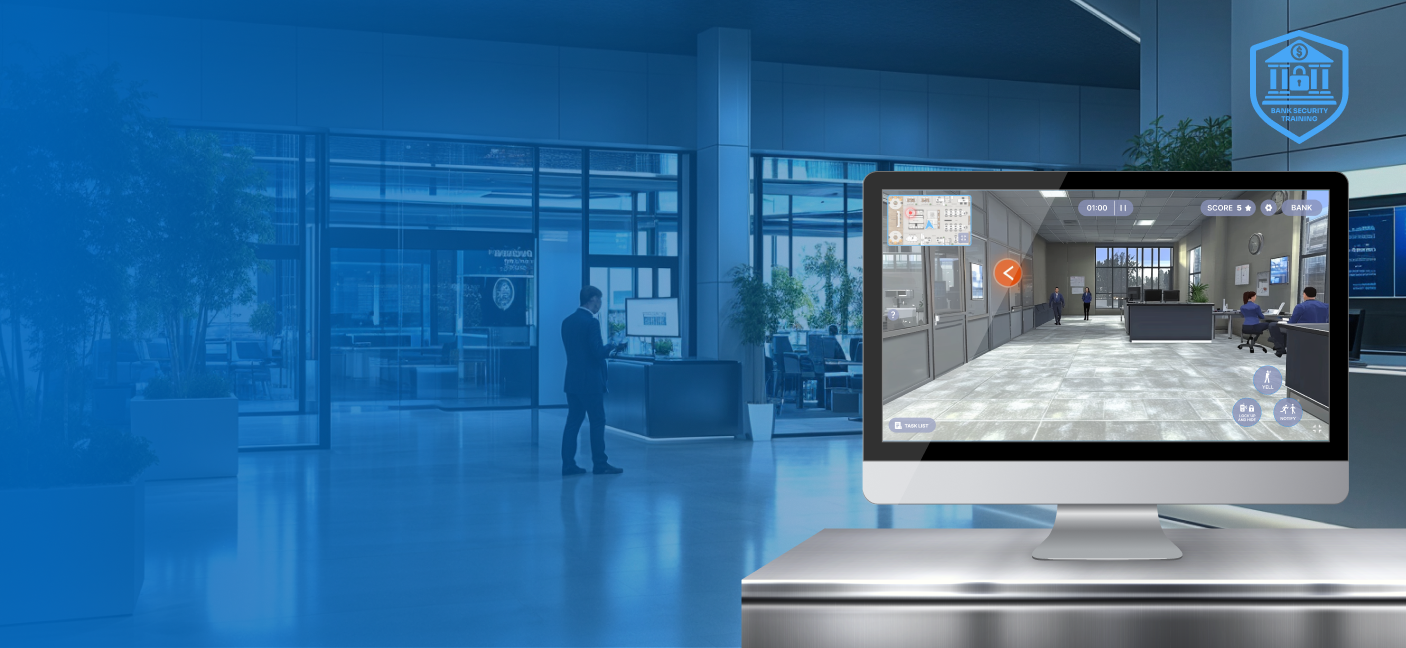
Health and safety simulations prepare teams to identify hazards, follow protocols, and respond correctly during incidents. Organizations use controlled digital training environments.
Virtual Simulation for Digital Twin Environments
2d 3d game creation icon
The digital twin simulations precisely reflect assets, processes, and data behavior. Information supports analysis, planning, monitoring, and confident operational decisions across teams.
Virtual Simulation Platform Development
Desktop apps logo
Platform development delivers centralized systems for scenario management, user access, data integration, and analytics. Solutions support enterprise simulation initiatives at scale, securely globally.
Gamified Virtual Simulations
Game concept prototyping icon
Gamified simulations apply structured mechanics to scenarios. Structured mechanics encourage participation, reinforce learning objectives, and effectively support measurable performance improvement over time within training programs.

What Industry Are You In?
We Provide Tailored Virtual Simulation Development for Any Field

Manufacturing
Manufacturing
Manufacturing
We support production planning by modeling workflows, testing layout updates, training operators, and validating processes. Manufacturers gain clearer efficiency and improved consistency across their industrial operations.
Read more
Healthcare
Healthcare
Healthcare
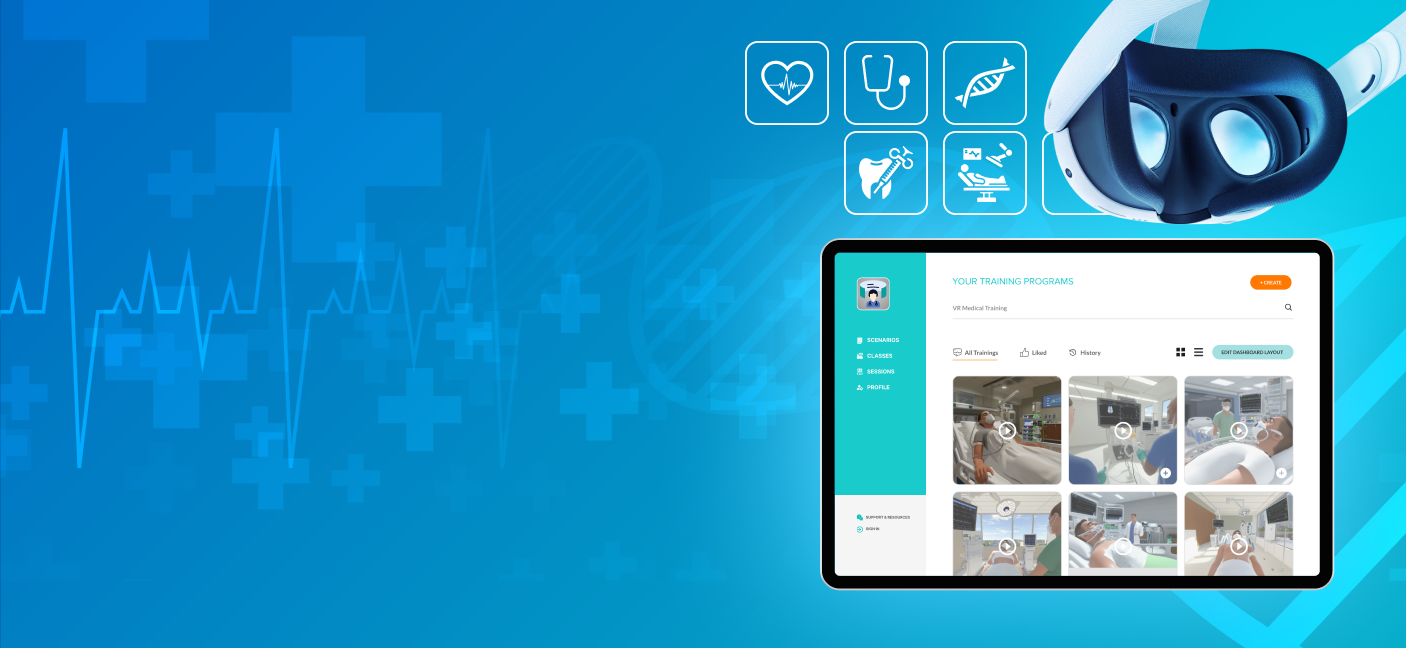
Virtual simulation helps medical teams rehearse procedures, verify diagnostic steps, refine treatment workflows, and standardize training. The result yields greater accuracy, lower risk, and stronger performance in clinical settings.
Read more
Construction
Construction
Construction
Our simulations assist construction crews in modeling site plans, reviewing sequencing, testing hazard responses, and evaluating equipment usage. The outcome enables better preparation and safer execution across upcoming project environments.
Read more
Transportation
Transportation
Transportation
Transportation teams use virtual simulations to strengthen vehicle handling, analyze routes, review decision-making, and validate safety steps. Operations become more reliable across various transportation conditions.
Read more
Oil and Gas
Oil & Gas
Oil & Gas
Oil and gas teams rely on simulation tools to train personnel on complex tasks, test emergency actions, confirm workflows, and raise safety and compliance standards across demanding operational sites.
Read more
Telecommunications icon
Telecommunications
Telecommunications
Telecom specialists use virtual simulations to test network behavior, validate configurations, train technicians, and analyze faults, increasing operational stability before changes roll out across large infrastructure environments.
Read more
enterprise energy and utility
Energy
Energy
Energy providers implement simulations to study grid behavior, test operational strategies, train staff, and validate emergency procedures, supporting improved system performance across generation, distribution, and maintenance activities.
Read more
Real Estate
Real Estate
Real Estate
Real estate teams rely on simulations to showcase properties, test layouts, explore design options, and get a fast preview of any changes. This instantly sharpens clarity, boosts team communication, and drives far better decision-making.
Read more
Military and defence
Military and Defense
Virtual simulations allow defense units to rehearse missions, test tactical choices, coordinate teams, and assess operational outcomes. The resulting practice strengthens both readiness and precision across mission-critical training scenarios.
Read more
Education
Education
Education
Educators use virtual simulations to recreate tasks, technical subjects, and guided scenarios. Simulations support skill development, track progress, and improve academic outcomes through structured, repeatable practice.
Read more

Business Models

Project based model
Project-Based

With this model, Program-Ace oversees your virtual simulation project from initial planning through development and deployment. Organizations choose it when they need full-cycle delivery, predictable communication, and a dedicated team focused on building a complete simulation system aligned with defined requirements.

Team augmentation 2 bm
Team Augmentation

Our specialists join your internal team to seamlessly boost your virtual simulation engineering capabilities. Clients often choose this partnership when they require specific, high-level expertise, direct help with complex simulation tasks, or flexible scaling that strengthens their ongoing development without ever interrupting their existing workflows.

WHAT WORKS BEST FOR YOU?

let’s discuss your idea

Let’s Get Started with Virtual Simulation Development

1
Requirements Definition
2
Scenario Planning & Modeling
3
Environment & System Build
4
Validation & Calibration
5
Rollout & Support
Software Development Outsourcing 14
Requirements Definition
We work with your team to identify operational goals, user roles, data sources, system constraints, and required simulation outcomes, forming a clear foundation for development.
Software Development Outsourcing 15
Scenario Planning & Modeling
Our specialists outline simulation scenarios, define rules, create logic flows, and map interactions to ensure every process reflects real conditions and supports practical decision-making.
Software Development Outsourcing 16
Environment & System Build
Developers construct the simulation environment, implement interaction systems, configure behavioral models, and connect any needed datasets or external tools to achieve accurate system behavior.
Software Development Outsourcing 17
Validation & Calibration
We compare simulation outputs with real operational data, refine parameters, adjust models, and verify accuracy to ensure the system behaves consistently under defined conditions.
Software Development Outsourcing 18
Rollout & Support
After rollout, your team receives training and documentation, while we provide updates, refinements, and long-term support to keep the simulation aligned with evolving operational needs.

How We Did It Before

Why Choose Program-Ace as a Virtual Simulation Development Partner

Time proven expertise icon 1
Extensive simulation expertise

Our team builds sophisticated virtual simulation systems that precisely mirror your real-world operations, detailed technical workflows, and critical decision-making environments. We specialize in complexity.

High end tech stack icon
Advanced integration skills

We seamlessly connect your new simulation platforms with existing operational software, equipment data, analytics tools, and core enterprise systems to form a single, powerful, unified ecosystem.

Best in class security icon 1
Precision and reliability

Our simulations run on defined rules, fully validated datasets, and structured logic models. This robust approach ensures you receive consistent, reliable results that directly support confident, informed decision-making every time.

Client oriented flexibility icon
Flexible collaboration approach

We adapt workflows, communication formats, and delivery structures to your internal processes. Teams can engage with us through project-based delivery or augmentation.

FAQ

Virtual simulations instantly boost training outcomes by providing teams with a controlled space where tasks, procedures, and critical decisions unfold clearly and logically. Staff then interact with scenarios that precisely mirror real operations, enabling safe practice free from the high pressure or risk of a live environment.

As training sessions progress, staff gain confidence because each action produces predictable feedback tied to actual operational rules rather than theoretical assumptions.

Organizations often notice that readiness improves once simulations bring consistency to their training processes. Instruction becomes unified across all teams because every single scenario follows the same parameters, the same logic, and the same conditions.

Instead of relying on variable instruction styles, employees receive aligned guidance that strongly reinforces accurate behavior. That consistency also makes performance gaps easier to detect and correct much earlier.

Training leaders benefit from simulation systems for several linked reasons:

  • Risk-free practice. Personnel rehearse tasks and emergency steps without exposure to hazards.
  • Structured learning. Scenarios follow operational logic rather than generic templates.
  • Clear feedback. Metrics highlight errors, strengths, and opportunities for improvement.
  • Repeatability. Teams refine skills through repeated sessions that reflect real conditions.
  • Scalability. Large groups receive uniform training without increasing instructional overhead.

Many organizations also use simulation data to adjust procedures, improve onboarding, and strengthen compliance, as patterns within the system often reveal issues before they appear in the field. As a result, training becomes predictable, measurable, and more aligned with operational goals.

Whenever your team wants to explore how simulation-driven training can support your organization, you are welcome to connect with our team for further discussion

Virtual simulation projects depend on accurate inputs, and the process always begins with understanding why the simulation is being built in the first place. Clear objectives shape scope, complexity, and the level of behavioral detail required.

After the goals are set, teams need to examine the exact operational processes we must replicate. This is a critical step because a simulation has to follow real-world procedures, not just an abstract idea of them. Mapping workflows accurately ensures developers know exactly which data points affect outcomes, which interactions are most important, and which details must be validated by subject-matter experts.

A common challenge we see early in projects is finding holes in current documentation. While many organizations assume all relevant materials are ready, simulation planning frequently uncovers missing steps, outdated SOPs, or undocumented variations in how critical tasks are actually carried out.

Those gaps matter, and addressing them early prevents misalignment later. As the project takes shape, the request for data becomes more specific, guiding teams toward the technical and operational inputs that make the virtual system behave correctly. At this point, a few inputs hold the most influence:

  • Accurate workflow details. They ensure interactions match real operations.
  • Technical specifications. They define equipment behavior or system constraints.
  • Consistent data sources. They allow models to respond predictably under changing conditions.

Once all core inputs are gathered, project teams gain a stable foundation that supports reliable logic, meaningful training outcomes, and trustworthy operational analysis. Anyone evaluating a future simulation project can get in touch with our team to review inputs that would strengthen your specific use case.

Scalability becomes a practical concern for your company once processes shift, training demands increase, or new procedures enter your workflow. A well-designed simulation system adapts to those changes without forcing your team to rebuild existing components.

When the architecture is modular, you can add scenarios, adjust logic, expand datasets, or introduce new user types while keeping previously validated behavior intact. Your team gains a platform that grows in a controlled way rather than a system that becomes harder to maintain over time.

Operational environments rarely stay static, and many organizations see procedures evolve faster than expected. A scalable simulation allows you to reflect those updates immediately, whether you adopt new equipment, revise compliance requirements, or extend training programs.

Each addition fits into the framework because the structure was planned for ongoing expansion. As you refine the system, several areas usually define how smoothly your simulation adapts to change:

  • Functional expansion. Your team can introduce new workflows without disrupting earlier logic.
  • Performance capacity. More users, higher scenario complexity, or increased data loads remain stable.
  • Integration growth. Additional software, datasets, or tracking tools connect without architectural strain.

A scalable design gives your company the freedom to adjust training, analysis, and planning without worrying about system limitations. Your team can extend capabilities at the pace your operations demand, keeping the simulation relevant for years rather than months. Feel free to reach out to us for a focused evaluation if you want clarity on how scalable a system should be for your specific use case.

The simulation system has to talk directly to the core software and tools your company runs on daily. That integration is vital if you want reliable data flow, reports all in one place, and perfectly synchronized operations.

By exchanging information with systems like your ERP, LMS, IoT devices, sensors, and analytics tools, the simulation provides your team with a single, central source of truth. Once your technical environment is fully mapped out, the necessary integration paths become entirely clear and predictable.

Integration is a huge win for your organization because simulations are way more accurate when running on live data instead of static assumptions. The system takes real equipment readings, operational metrics, and workflow changes straight in, guaranteeing scenarios reflect your exact, up-to-the-minute conditions.

Your team also gets quick reporting, as training and testing results flow right into existing dashboards; no manual transfers needed. When we set up the integrations, a few core areas guide the entire process and determine how seamless the final connection will truly be:

  • Data compatibility. Matching formats and structures ensures stable communication.
  • System interfaces. APIs, connectors, and middleware support predictable data exchange.
  • Hardware alignment. Sensors, controllers, or equipment interfaces influence responsiveness and accuracy.

A simulation truly excels when it integrates into your broader digital ecosystem, moving beyond simply being a standalone tool. These connected systems deliver immediate benefits: faster decisions, simpler updates, and much more trustworthy performance metrics. Whenever you want to review how integration would work within your current infrastructure, you can contact our team for a structured assessment.

Project costs depend on several practical factors, and your company gains the clearest estimate once objectives, workflows, and technical expectations are defined. The scope of the simulation plays a major role, since more complex interactions, additional scenarios, or advanced data behavior require extra engineering time.

Also, the level of accuracy your team needs directly impacts how much modeling, validation, and testing is required. If your workflows include numerous conditional steps, the effort needed to accurately replicate them naturally increases.

Development timelines also shape overall expenses, as shorter deadlines often require larger teams or parallel work streams. Therefore, organizations planning long-term use usually benefit from phased delivery, which spreads work efficiently while maintaining quality.

Integration needs to add another cost dimension, because connecting the simulation to ERP systems, sensors, or training platforms introduces technical tasks that extend beyond the core simulation engine. Hence, early discussions about integration paths help avoid unexpected adjustments later in the project.

A few areas typically guide cost considerations and help your team plan realistically:

  • Scope definition. Larger or more intricate workflows increase engineering depth.
  • Scenario complexity. Additional conditions, branching, or unique user actions shape development time.
  • Integration needs. External systems, hardware, or datasets introduce specialized tasks.

Clear communication early on reduces uncertainty and keeps your budget planning perfectly aligned with the actual needs of the project. Your company gets a much more accurate cost estimate once objectives, data inputs, and project constraints are fully mapped out. If you want to explore a tailored breakdown for your project, you are welcome to connect with our team so we can prepare a detailed assessment.

The success of our clients is our success

Our Partners

Start A Project With Us

Tell us more about your business needs to help us serve you better. The more detailed information will allow us to route your inquiry to the most appropriate person in our team.

First Name *
Last Name *
Email *
Phone number *
Company name
Budget *
Message *
Required fields *
Please upload a file types: jpg, gif, png, pdf, doc, docx, xls, xlsx, ppt, pptx, max 32mb

By sending this form you agree to our Privacy Policy. The information you provide will be added to our CRM system for further communication.


Cyprus:   +357 22 056047
USA:   +1 888 7016201

Headquarters:
Nicosia, Cyprus
Program-Ace Europe Limited
 Archiepiskopou Makariou III,
 1, Mitsis Building No. 3, Office 310, 
1065, Nicosia, Cyprus

Representatives: USA, Poland, Ukraine, Slovakia, Hungary, Japan

30+ Years on the market
150+ Talented experts
900+ Projects delivered

Our Clients
Logo unity
Gap logo footer
Logo wargaming
Logo flying wild hog
Logo gsn games
Logo namco
Logo bigpoint
Logo hopster
Logo pixomondo
Logo magrabi