
The Apple Vision Pro is Apple’s first spatial computer, a mixed reality headset that starts at $3,499 and runs visionOS on an M2 chip, with a micro-OLED display of about 3,380 pixels per inch per eye and eye-plus-hand control. This review covers what it does well, where it falls short, its full specs, the price debate, and what it means for businesses building immersive apps.
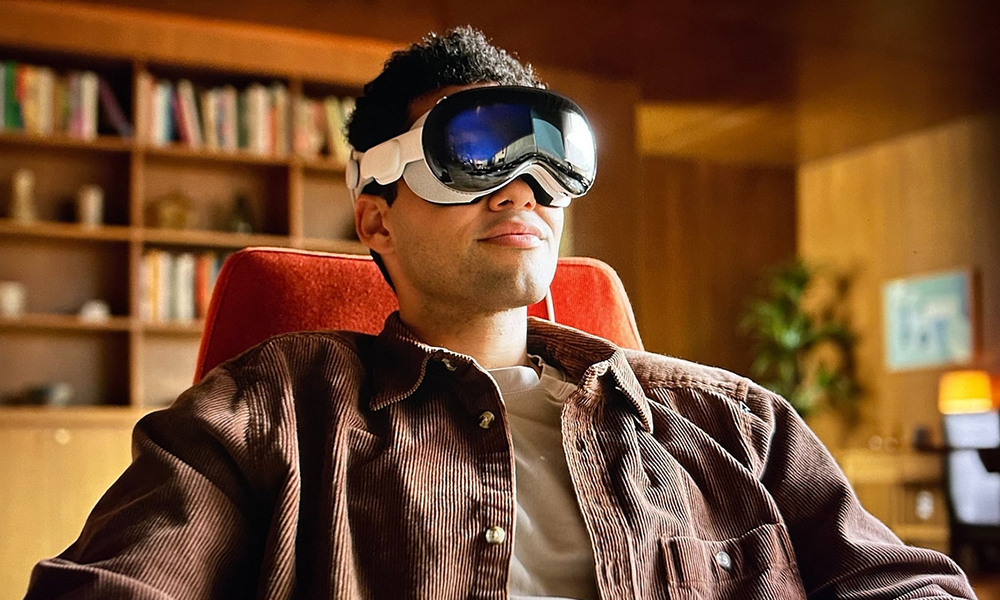
Apple did not lower the price of AR or VR hardware; it raised the ceiling.
The Vision Pro is expensive and heavy, but its display, passthrough, and interaction model are the most refined on the market. Below we go through first impressions, specs, use cases, market reaction, and the practical read for a company weighing an app on the platform. For where it sits in the wider market, see our VR market statistics and trends.
First impressions
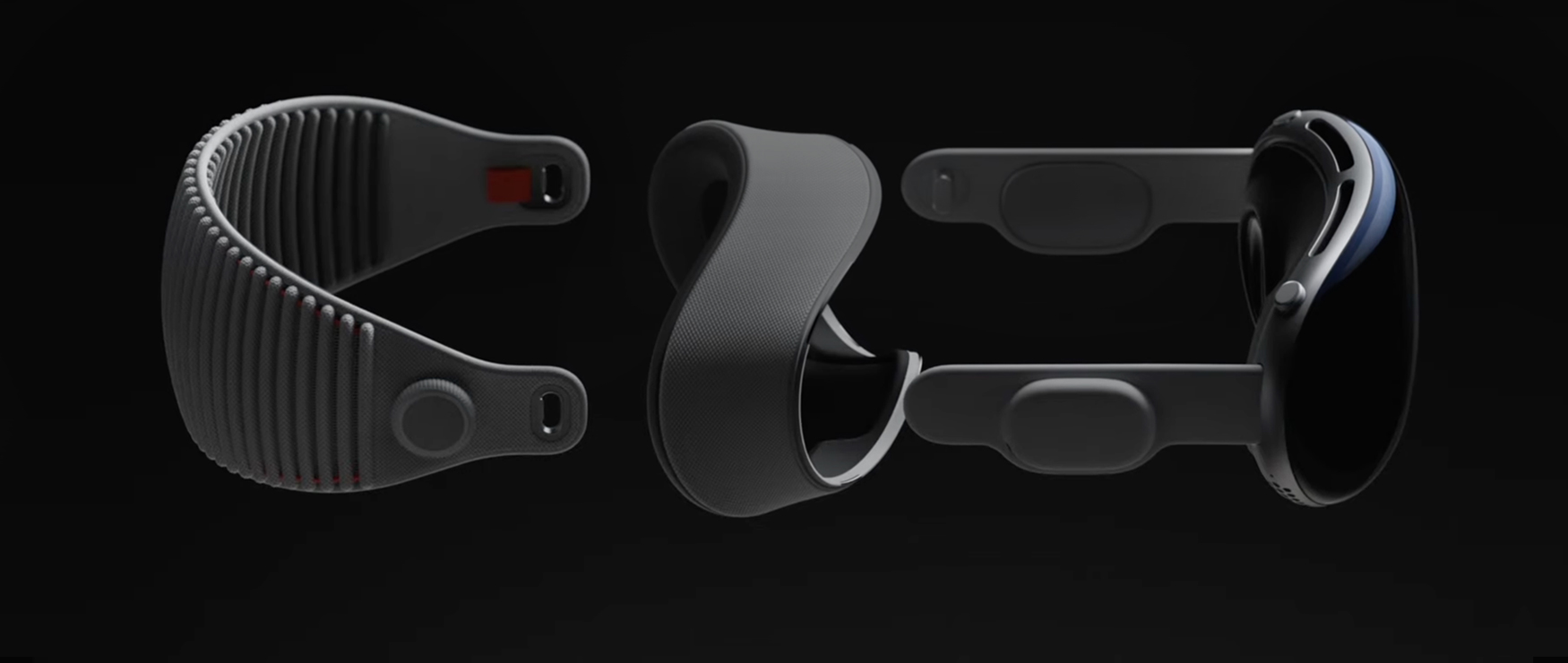
Out of the box, the Vision Pro looks and feels like a premium Apple product: an aluminum-and-glass front, a Solo Knit Band, and a setup process that is quick and guided. The design draws attention, and the first thing testers notice is the display clarity.
It is the closest a consumer headset has come to making digital content feel present in the room.
Where it excels
Two things stand out immediately: the field of view and the fit within Apple’s ecosystem.
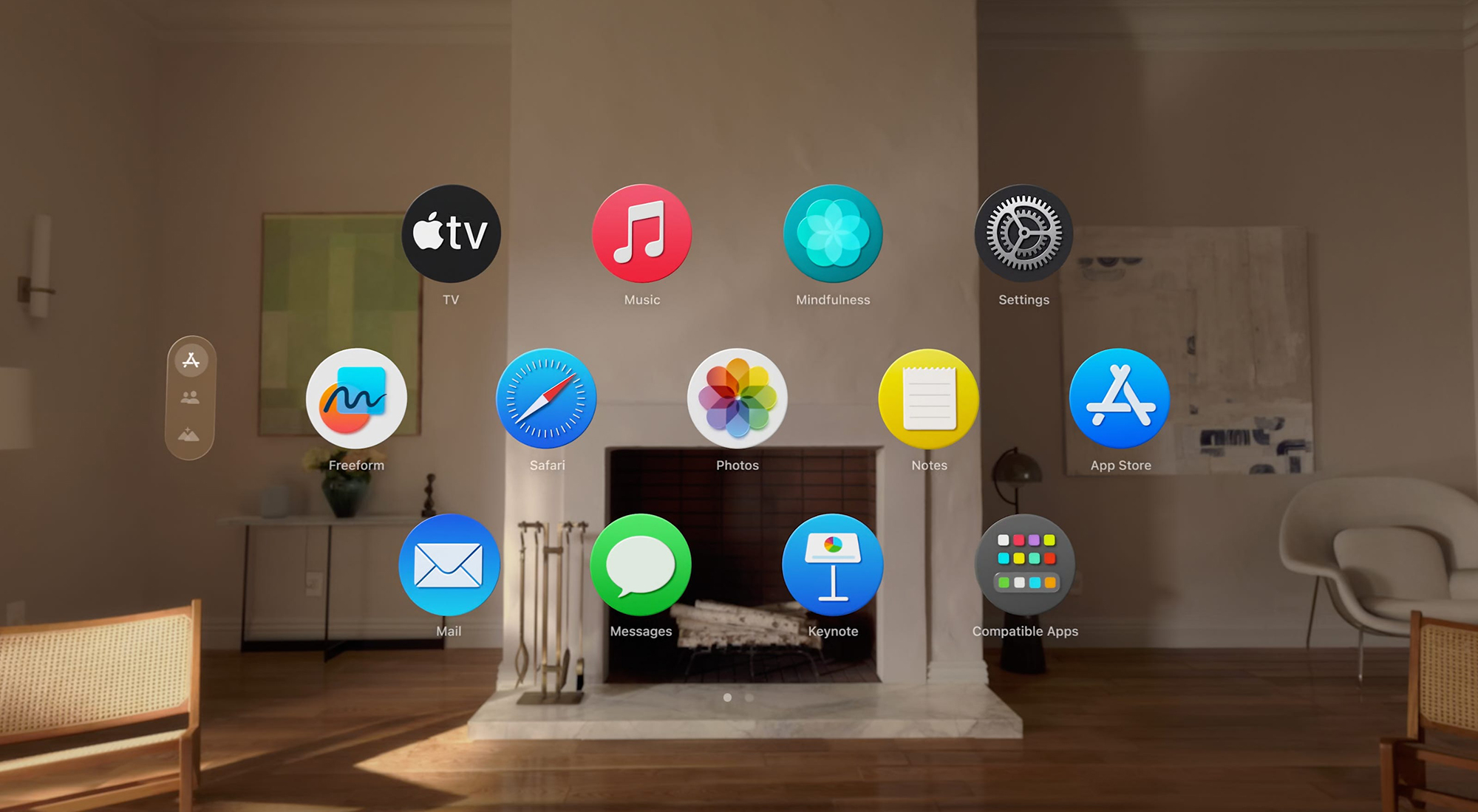
The headset syncs with iPhone, Mac, and Apple services, and it doubles as a virtual 4K Mac display, which is one of its most practical everyday uses. The result is a device that reads less like a games peripheral and more like a wearable computer, which is also the case for immersive uses such as immersive training.
The trade-offs
The same ambition creates real limits.
At $3,499, the Vision Pro is a premium device out of reach for most buyers, which keeps it a niche product rather than a mainstream one. Its weight is noticeable over long sessions, and heavy reliance on the newest hardware widens the gap between early adopters and everyone else. There is also an open question about immersive tech and social interaction, since a headset this capable can substitute for real-world presence. These are the honest costs behind the headset’s strengths.
Capabilities and quirks
Design and comfort
The Vision Pro balances a metal-and-glass build against the weight it adds.
Apple engineered the balance and weight distribution to reduce pressure on the head and neck, and the Solo Knit Band spreads the load, though longer sessions still make the weight felt. Adjustable straps and cushioning fit a range of head sizes, and breathable materials cut the overheating common to headsets. It is comfortable for its class, not weightless.
Immersive experience
The immersion rests on four things working together, the same building blocks behind virtual reality training design and development:
- Visual fidelity. The micro-OLED displays render video and detail sharply enough that scenes feel close to real, which is the headset’s defining strength.
- Spatial audio. Sound is placed in 3D around the user and tuned to head and ear geometry, so audio matches what is on screen.
- Intuitive interaction. Eye tracking and hand gestures replace controllers; you look at a target and pinch to select, with voice as an alternative.
- Environmental awareness. Passthrough shows the real room in real time, so the headset blends virtual content with physical surroundings instead of sealing the user off.
Battery life and portability
Battery is the clearest practical limit.
Tests measured about 2 hours 26 minutes of general use and up to 3 hours 9 minutes of 3D video playback, slightly above Apple’s stated figures. The battery is external and tethered, which aids weight distribution and lets you swap it, but a full recharge takes about 90 minutes, so back-to-back sessions need planning. Apple also manages power dynamically, which can mean longer app launches or dimming when the battery runs low, part of its wider device power strategy.
The price question
The Vision Pro starts at $3,499 for the 256GB model and rises to $3,899 for 1TB, per launch pricing.
That places it firmly as a premium device. It doubles as a 4K Mac display and a self-contained M2 computer, which adds real value, but the price still limits it to a niche of professionals and enthusiasts rather than a mass audience. The core tension of the product is here: the technology is ahead of the market’s willingness to pay for it.
How the Vision Pro came to be
The Vision Pro is the product of nearly a decade of acquisitions and hires.
Apple’s AR push began in May 2015 with the acquisition of German AR company Metaio, and Mike Rockwell, hired from Dolby, formed the Technology Development Group that built the headset. The team shipped an internal AR demo in 2016 and added AR/VR expert Jeff Norris, formerly of NASA, in 2017.
The road was not smooth: chief design officer Jony Ive left in 2019 and successor Evans Hankey in 2023, while the team built visionOS specifically for the device.
Apple’s November 2017 acquisition of Canadian MR company Vrvana for $30 million added the color-passthrough technology central to the Vision Pro. Tim Cook previewed the device in 2022, Apple announced it at WWDC 2023 at $3,499, and it launched in the U.S. in early 2024.
Expectations vs reality
| Expectation | Reality |
| Visual quality | Anticipated to be excellent, and the high-resolution micro-OLED display exceeds it, with crisp images and readable text. |
| User comfort | Expected comfortable extended wear; the ergonomic, adjustable design mostly delivers, though some users find the weight noticeable. |
| Interactivity | Eye tracking and gesture control were expected to feel smooth, and they are precise and intuitive, setting the device apart from rivals. |
| Passthrough | Expected to improve comfort with a real-world view; the real-time 4K passthrough surpasses expectations for prolonged sessions. |
| Price | Expected to be premium; at $3,499 it aligns with the features but limits access to a broad audience. |
Apple Vision Pro specs
The specs explain both the price and the experience. The headline numbers:
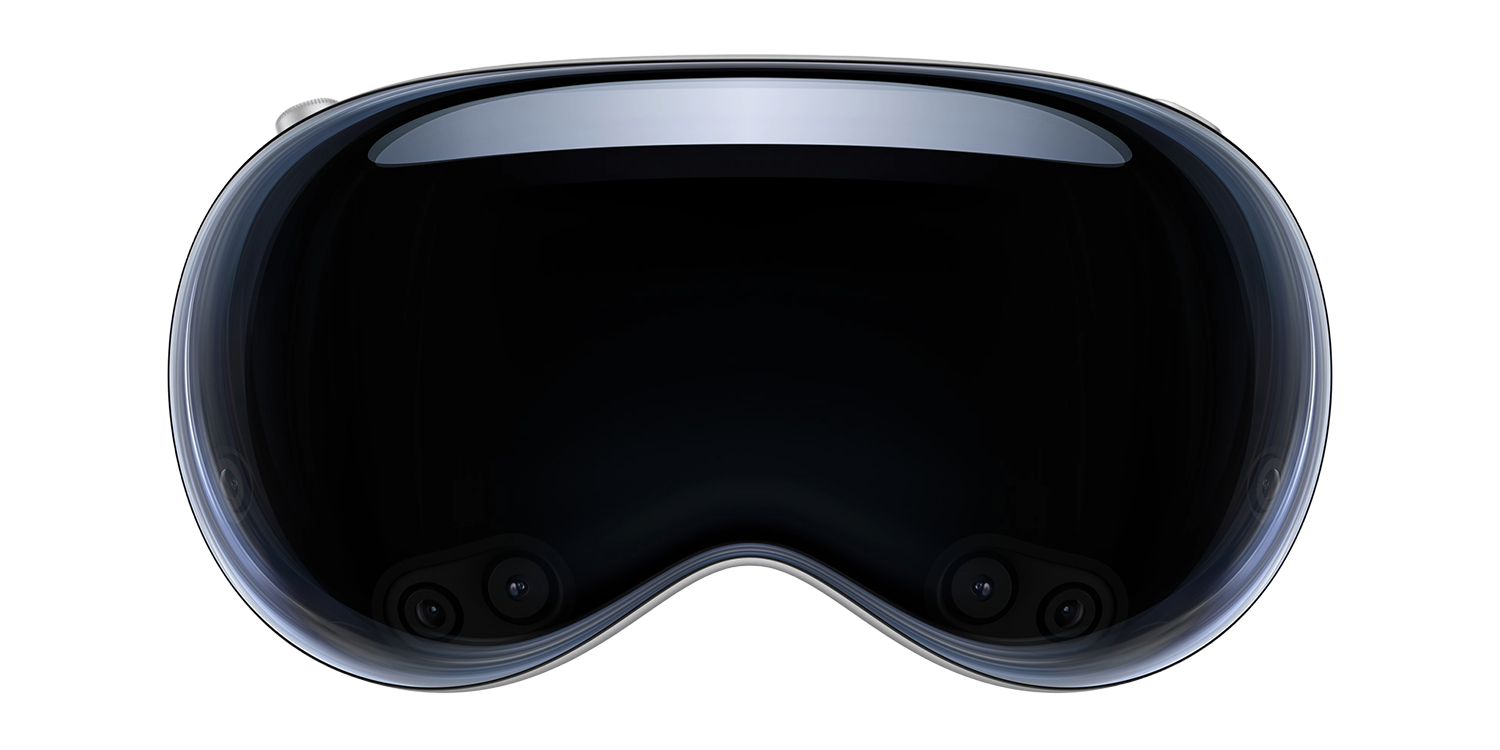
- Display. A micro-OLED panel per eye at roughly 3,380 pixels per inch, a near-4K-per-eye experience with deep blacks and high contrast.
- Refresh rate. Adaptive between 90Hz and 100Hz depending on content, keeping fast motion smooth.
- Chip. An M2 processor plus a dedicated R1 chip for sensor data, so the Vision Pro runs as a standalone computer, not a phone accessory.
- Optics. Magnetic optical inserts handle vision correction without manual adjustment, per early hands-on reports.
- Passthrough. Real-time 4K view of the surroundings, including people nearby, which reduces the isolation of long headset use.
- Interaction. Precise eye tracking and hand gestures as the primary input, with spatial audio tuned to the individual, compared by reviewers to headsets like the PSVR 2.
The display and interaction are genuinely ahead of the field; the weight and price are the cost of getting there. For a business, the spec that matters most is the M2 and visionOS combination, which makes the device a real development target rather than a media viewer.
Use cases
The Vision Pro’s professional value is stronger than its consumer case. It works as a self-contained M2 computer, plays streaming games, and serves as a virtual 4K Mac display, which is genuinely useful in tight workspaces or while traveling.
Professional and educational uses
Across business and education, the clearest applications are:
- Immersive learning. Virtual field trips and simulation training give hands-on practice with complex subjects without leaving the room.
- Remote collaboration. Teams interact with 3D models and data in a shared virtual space, adding a dimension to remote work.
- Medical training. Students rehearse surgical procedures and anatomy in a risk-free environment.
- Architecture and design. Designers walk through creations at true scale to judge spatial relationships before building.
- Cultural education. Museums build virtual tours so users explore historical sites and artifacts interactively.
- Language immersion. Learners practice in simulated real-life situations for faster acquisition.
Business perspective
For architects and designers, the Vision Pro renders projects at true scale for accurate client presentations.
Real estate professionals give complete virtual property tours without a site visit. In education, students explore complex subjects through 3D models. And remote teams meet inside a shared space with 3D data instead of a flat video call. The common thread is that the headset’s fidelity makes interactive, spatial presentation practical where a screen falls short.
Market reaction
Reaction split between genuine enthusiasm and pointed skepticism.
Early adopters and influencers praised the device, with Casey Neistat calling it the single best piece of tech he had used in a video that drew millions of views. Critics raised safety concerns about wearing it while commuting, questioned the price as a barrier to adoption, and flagged privacy given the sensor array. Both reactions are fair: the technology impresses, and the practicality is unproven.
Analysts were measured. Wedbush’s Daniel Ives projected Apple would sell 600,000 units in 2024, while BofA’s Wamsi Mohan estimated 400,000 in 2024 rising toward 1 million in 2025, and expected a more affordable version in 2026. UBS praised the spatial audio and 3D video but expected limited demand at the price.
The consensus: a strong first step, not a mass-market product yet.
What it means for wearable tech
The Vision Pro sets a reference point the rest of the field will chase.
Its display quality, passthrough, and eye-and-hand interaction raise the bar for what a headset should do, and the next generation of devices, from Apple and competitors, will be measured against it. Its influence shows up in a few directions likely to define the category:
- Tighter ecosystem integration. Effortless data sharing and hand-off between a headset and other devices, so users move between them without friction.
- Better biometric sensing. More accurate vital-sign and health tracking built into wearable headsets.
- Immersive haptics. Touch feedback that deepens the sense of interacting with virtual objects.
- AI-driven personalization. On-device intelligence that adapts content to how a person actually uses the headset.
The real obstacles
The barriers are as clear as the promise.
Price limits reach, technical complexity raises the learning curve, and the sensor array makes privacy and data security a genuine concern to address before mass adoption. Compatibility across a fast-moving market is hard, competition is intensifying, and health-and-safety regulation adds another layer. The opportunity is real, but it depends on Apple proving the value clearly enough that buyers accept the cost and the learning curve.
Build immersive apps with Program-Ace
The Vision Pro opens a new development target, and the businesses that move early on visionOS will define what the platform is used for. Program-Ace has built mixed reality solutions since 1992, across 900+ projects, and develops immersive AR and VR applications for enterprise use.
Whether you want a training simulation, a spatial product presentation, or a collaboration tool for the Vision Pro and other headsets, we can scope and build it. To discuss an immersive project, contact us.