Digital twins that predict and decide
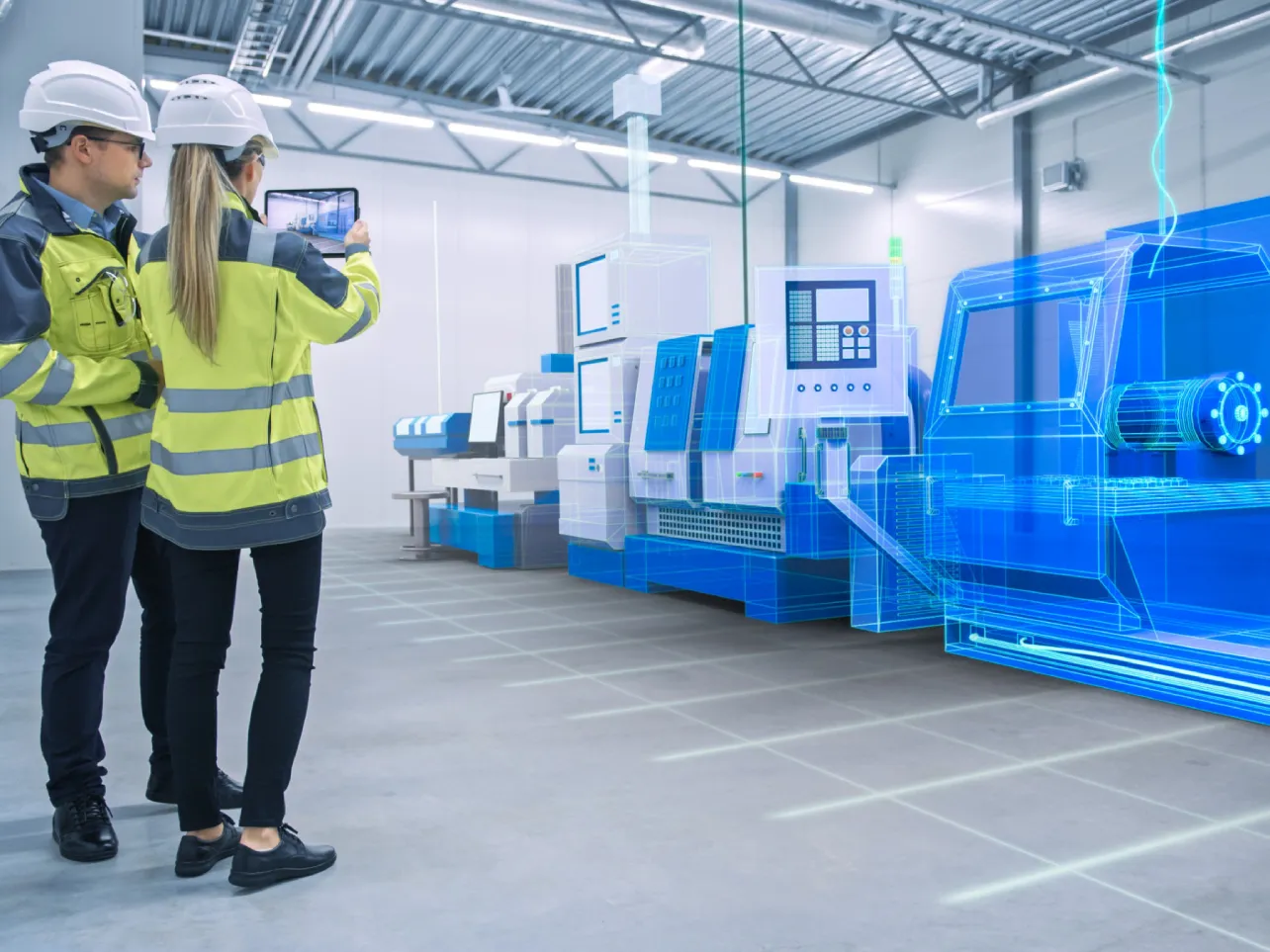
Custom software that mirrors a physical product, plant, or system as a live, data-connected model, so engineers can monitor, simulate, and predict without touching the real asset.
- 30+ years on the market
- Unity and Unreal experts
- 4.8 on Clutch (46 reviews)
- NDA, secure SDLC








What is digital twin development?
Digital twin development is custom software that mirrors a physical product, plant, or system as a live, data-connected model. It lets engineers run a change as a what-if and predict failures before they reach the real asset, turning operational data into decisions you can defend.
Program-Ace builds live, predictive asset models on our 3D visualization and AI practice.
What Program-Ace delivers
- Live, data-connected modelsA 3D model tied to real sensor and operational data.
- Simulation and predictionRun what-ifs and forecast failures before they happen.
- Scales past the pilotArchitecture built to grow from one asset to a fleet.
- System and data integrationWired to SCADA, IoT, ERP, and your data sources.
- XR-accessible twinsView and interact with the twin in VR, AR, or the browser.
Digital twin challenges we solve
Twins stall on fragmented data or never leave the pilot. We connect the data and architect for scale from the start.
Unclear strategy and scope
Fragmented sensor and operational data
Hard to scale beyond a pilot
Security and compliance risk
Integration with existing systems
Model drift over time
What we build with digital twins
From a single product twin to a full plant twin, connected to live data and built to scale beyond the first asset.
Product digital twins
Live replicas of devices and machines for design validation, performance monitoring, and feature testing before a release ships.
Process digital twins
Virtual models of a production or operational process, so you can tune throughput and quality before a change hits the line.
System and infrastructure twins
Replicas of power grids, transport networks, and connected buildings, modeled end to end for performance and resilience.
Plant and facility twins
Full replicas of factories, mines, and energy sites for layout optimization and operational decisions.
Predictive maintenance twins
Real-time and historical data combined to forecast failures, schedule the right intervention, and extend asset life.
XR-accessible twins
The same twin reachable from the web or a VR headset, so an operator and an executive look at one source of truth.
Digital twins reachable from the browser to the headset
Access the same live twin from a web dashboard, a desktop, or a VR and AR headset, wherever the decision is made.
Web dashboard
Desktop and cloud
VR and AR
Digital twin solutions we build
Productized training solutions we deliver most often, each built to your procedures and standards.
Predictive maintenance
Plant twins
3D visualization
AI-powered twins
XR twins
Process twins
How we build your digital twin
A structured, outcome-driven path from training goals to measurable results, refined over 900+ projects.
Strategy and scope
Data connection
3D and model build
Simulation and analytics
Integration
XR access
Deployment and scale
Monitoring and tuning
Industries we serve with digital twins
Twins pay off wherever a physical asset is costly to inspect, risky to test, or expensive when it fails.
Enterprise-grade engineering, security-first delivery
We build on the same real-time engines that power AAA games and industrial digital twins, backed by mature enterprise delivery, NDA-protected processes, and secure handling of your operational data.

"The teams that see the biggest gains treat simulation as a measurement tool, not just a training one. When you can score real competency, you can prove readiness, and that changes the safety conversation entirely."
Talk to a digital twin expert
Tell us the asset or system you need to monitor and predict. We will map a twin that connects your data and scales, with no obligation.
Book a discovery callProgram-Ace by the numbers
Related digital twin case studies
What our clients say

The client is delighted with the results of Program-Ace's work and their problem-solving speed and skill. The team is highly collaborative and integrates well with the client's internal team. They use Jira for sprint planning and communicate effectively through Slack. Their expertise stands out.

Program-Ace's capabilities across a broad range of development and design tools and cost-effective solutions for complex issues are impressive. The team took the time to understand our goals in a space that was unknown to them previously.

Program-Ace has provided the client with a level of flexibility to handle more and more projects. That the team aligns well with the client's vision and specialization ensures that they deliver according to the client and their customer's requirements every time.

The company has been happy with Program-Ace's work. End customers are pleased with the realism of the AR/VR environments that the team has created. They can also jump into a project with flexibility while coming up with alternative ideas for the business. Overall, the engagement has been a success.

The work has continued to meet expectations and passes testing standards. They're a fast, skilled team that comprehends the project's goals and adapts to meet them. Their ability to excel in a scrum environment and deliver quality work makes them a valuable asset.

Program-Ace delivered high-quality work that met expectations. They were communicative and flexible throughout, and their team's skills and professionalism stood out. A reliable partner for complex real-time 3D work.
The client is delighted with the results of Program-Ace's work and their problem-solving speed and skill. The team is highly collaborative and integrates well with the client's internal team. They use Jira for sprint planning and communicate effectively through Slack. Their expertise stands out.
Program-Ace's capabilities across a broad range of development and design tools and cost-effective solutions for complex issues are impressive. The team took the time to understand our goals in a space that was unknown to them previously.
Program-Ace has provided the client with a level of flexibility to handle more and more projects. That the team aligns well with the client's vision and specialization ensures that they deliver according to the client and their customer's requirements every time.
The company has been happy with Program-Ace's work. End customers are pleased with the realism of the AR/VR environments that the team has created. They can also jump into a project with flexibility while coming up with alternative ideas for the business. Overall, the engagement has been a success.
The work has continued to meet expectations and passes testing standards. They're a fast, skilled team that comprehends the project's goals and adapts to meet them. Their ability to excel in a scrum environment and deliver quality work makes them a valuable asset.
Program-Ace delivered high-quality work that met expectations. They were communicative and flexible throughout, and their team's skills and professionalism stood out. A reliable partner for complex real-time 3D work.
The client is delighted with the results of Program-Ace's work and their problem-solving speed and skill. The team is highly collaborative and integrates well with the client's internal team. They use Jira for sprint planning and communicate effectively through Slack. Their expertise stands out.
Program-Ace's capabilities across a broad range of development and design tools and cost-effective solutions for complex issues are impressive. The team took the time to understand our goals in a space that was unknown to them previously.
Program-Ace has provided the client with a level of flexibility to handle more and more projects. That the team aligns well with the client's vision and specialization ensures that they deliver according to the client and their customer's requirements every time.
The company has been happy with Program-Ace's work. End customers are pleased with the realism of the AR/VR environments that the team has created. They can also jump into a project with flexibility while coming up with alternative ideas for the business. Overall, the engagement has been a success.
The work has continued to meet expectations and passes testing standards. They're a fast, skilled team that comprehends the project's goals and adapts to meet them. Their ability to excel in a scrum environment and deliver quality work makes them a valuable asset.
Program-Ace delivered high-quality work that met expectations. They were communicative and flexible throughout, and their team's skills and professionalism stood out. A reliable partner for complex real-time 3D work.
Outcomes you can measure
Every simulation is instrumented, so training stops being a cost center and starts producing data your leadership can act on.
Less downtime
Better decisions
Safer testing
Faster response
Static models and dashboards vs a digital twin
A digital twin is the right fit when you need a live, predictive view of an asset, not a static drawing or a dashboard of numbers.
What works best for your project?
Full-cycle development
We run your project from planning through development and deployment with a dedicated team. Best when you need a complete solution, predictable communication, and clear ownership of the result.
Team augmentation
Our specialists join your team to add training and simulation engineering capacity. Best when you need specific expertise or extra hands without disrupting your current workflows.
Recognized by leading industry authorities
Independent ratings and award bodies rank Program-Ace among the top VR/AR, AI, and custom software development companies worldwide.





More on digital twin development

Digital twin development: FAQ
Start a project with us
Tell us about the procedures you need to train and the outcomes you want to measure. We will route your inquiry to the right expert and map a custom approach.