
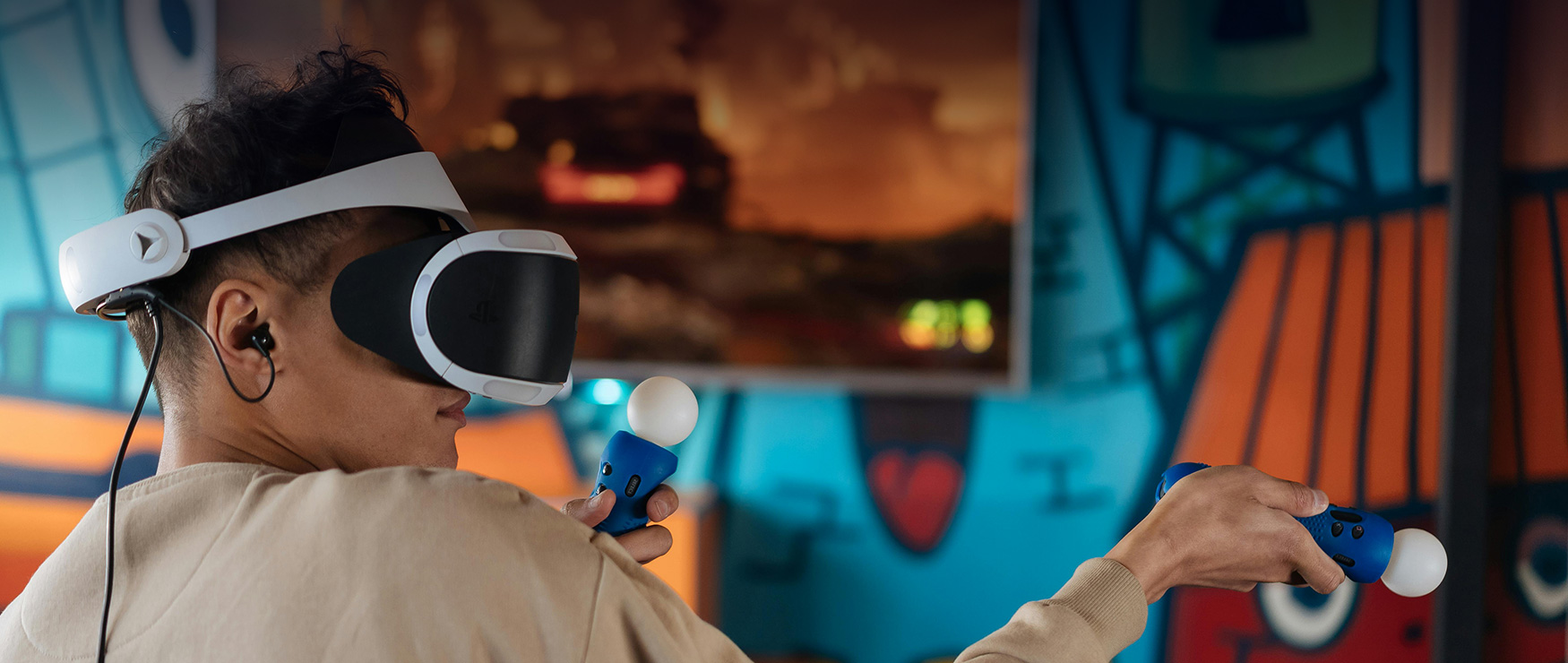
VR entertainment uses virtual reality headsets to put people inside immersive games, experiences, and events, from arcade-style VR arenas to at-home gaming and virtual concerts.
It turns passive viewers into active participants who move through and shape the experience. This guide covers what VR entertainment is, how it evolved, its advantages, real examples, and how VR development teams build it. The market is large: VR and AR entertainment is a multi-billion-dollar sector, with AR gaming alone passing $17 billion in 2025 and growing over 25% a year.
The technology’s rapid advancement demands a blend of creativity, technical expertise, and a deep understanding of user experience to produce content that resonates on a personal level.
The introduction of VR has more than expanded the boundaries of what’s possible in entertainment; it has redefined them, inviting audiences to not only observe but participate in the stories and worlds being created. As this technology matures, its application broadens, promising a future where the lines between the virtual and the real blur even further.
The same development logic is part of the broader future of VR, where entertainment, training, collaboration, and simulation increasingly share similar immersive interfaces.
What is virtual reality entertainment?, hidden truths
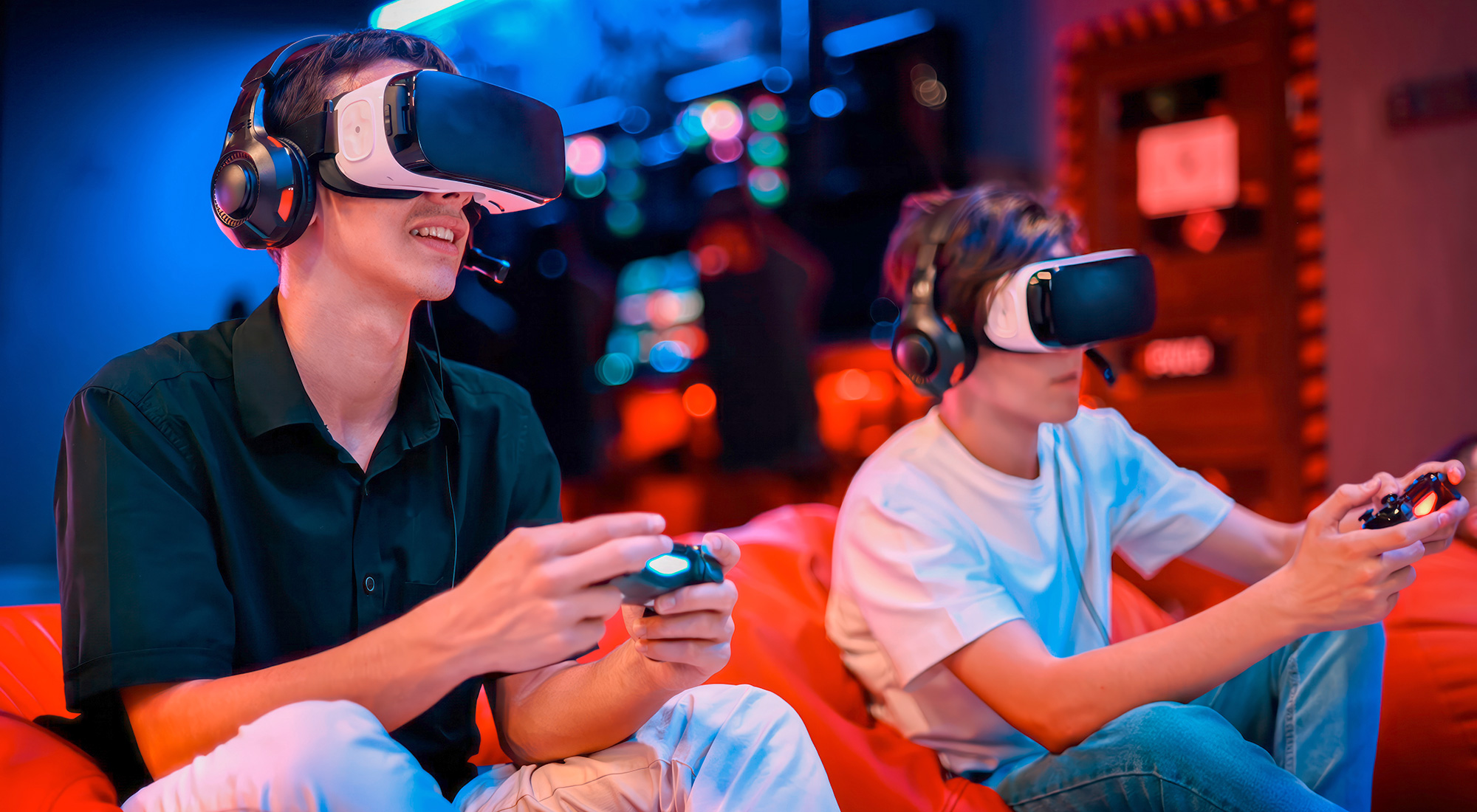
Virtual reality entertainment is a confluence of technology, creativity, and immersive storytelling, pushing the boundaries of how audiences engage with content.
By utilizing head-mounted displays, motion tracking devices, and advanced graphical rendering, virtual reality app development companies create environments that simulate physical presence in imagined spaces. Users find themselves not only observing but actively participating in a narrative, whether it involves exploring distant planets, solving complex puzzles, or interacting with characters in a story.
Advancements in audio design further augment this immersion, with spatial audio cues offering a sense of directionality and presence within the virtual space.
A key distinction of virtual reality entertainment lies in its ability to offer a first-person perspective, making the experience profoundly personal and engaging. Interaction models have evolved, allowing for natural gestures and movements to translate into actions within the virtual environment, thus bridging the gap between the digital and the physical.
A nuanced aspect of virtual reality entertainment is its potential for emotional impact.
Through the direct involvement of the user within the virtual world, experiences can evoke a broader range of emotions, from exhilaration to empathy, in a manner that traditional media struggles to match. The technology not only entertains but educates, offering simulations for training purposes in fields as diverse as medicine, aviation, and the military.
The hidden truth behind virtual reality entertainment lies in its relentless pursuit of authenticity.
Developers spend countless hours refining simulations to mimic reality closely or to create coherent, engaging worlds that obey their internal logic. With every year, the technology improves, bringing higher resolutions, more accurate tracking, and increasingly sophisticated interaction mechanisms.
Critically, the success of a virtual reality experience hinges on its ability to maintain presence, the illusion of being “there”, which is disrupted by technical limitations or design flaws. As such, developers face the constant challenge of balancing ambition with the current state of technology, aiming to offer experiences that are as smooth as they are captivating.
Evolution of VR in the entertainment industry
The trajectory of virtual reality within the entertainment industry charts a course from nascent experimentation to mainstream acceptance, fundamentally altering how content is created and consumed.
Initially, VR found its footing in gaming, where developers use the technology to produce immersive experiences that traditional consoles could not offer. As VR headsets became more accessible and affordable, the technology’s application expanded beyond gaming into movies, live events, and theme park attractions, offering users the thrill of new perspectives and unparalleled immersion.
A significant milestone in VR’s evolution was the introduction of virtual training programs, which underscored the technology’s versatility beyond entertainment.
Industries ranging from healthcare to aerospace began implementing VR to simulate complex procedures, allowing professionals to hone their skills in risk-free, realistic settings. This cross-pollination between sectors fueled advancements in VR technology, benefitting the entertainment industry with improved graphical fidelity, user interface design, and motion tracking accuracy.
Film festivals and art installations began incorporating VR, pushing narrative boundaries and experimenting with storytelling techniques unique to the medium. These forays demonstrated VR’s potential to not only entertain but also evoke deep emotional responses and foster empathy by placing viewers directly into the shoes of others.
As broadband speeds increased and streaming services became ubiquitous, VR content became more accessible, enabling users to download or stream immersive experiences from the comfort of their homes.
Social VR platforms emerged, allowing users to interact with others in virtual spaces, attend concerts, or explore virtual worlds together, thus adding a communal dimension to the VR experience.
Throughout its evolution, the challenge of mitigating motion sickness and improving user comfort has remained paramount, with successive generations of hardware offering solutions through better ergonomics, higher refresh rates, and more accurate tracking. As virtual reality continues to evolve, the boundary between the digital and physical further blurs, heralding a future where VR entertainment is not only a novelty but an integral part of the cultural lexicon, with virtual training standing as a proof of its broad applicability and impact.
Advantages of VR in entertainment explained
With many benefits that traditional media cannot match, virtual reality is a shining example of advancement in the entertainment sector. From reshape viewer engagement to redefining narrative experiences, VR’s impact is profound and multifaceted.

Immersion enhances the depth of engagement. Virtual reality in entertainment engulfs users in experiences, making them feel as though they are part of the narrative or environment. This immersion deepens emotional connections to the content, creating memorable experiences.
Interactivity boosts user agency. Unlike passive forms of entertainment, VR allows users to interact with their surroundings, offering choices that can alter outcomes or paths through the content. This level of interactivity increases engagement and investment in the experience.
Innovation in storytelling emerges. VR introduces novel ways to tell stories, with nonlinear narratives and interactive elements that traditional media cannot replicate. Creators can experiment with spatial audio, 360-degree visuals, and user-driven decisions to craft compelling narratives.
Accessibility to remote locations becomes possible. Through a virtual tour, audiences can explore places they might never visit in person, from ancient ruins to distant galaxies. VR democratizes access to these experiences, broadening educational and cultural horizons.
Social connection is reimagined. VR entertainment can transcend physical boundaries, allowing people to share experiences with others around the globe. Virtual concerts, events, and multiplayer games foster a sense of community and shared excitement.
Training effectiveness sees significant improvement. In contexts where VR is used for educational purposes or skill development, the technology’s immersive and interactive qualities enhance learning outcomes. Users can practice in lifelike scenarios without real-world risks, leading to better retention and understanding.
Summing up, VR redefines the contours of entertainment, promising not only more engaging and immersive experiences but also more meaningful and shared moments.
The journey of VR in entertainment is only beginning, with each advantage paving the way for a future where the virtual and real converge in harmony.
Exploring the challenges of employing VR in entertainment
Implementing VR in entertainment encounters specific hurdles, reflecting the complexities of integrating advanced technology with user expectations and existing infrastructure. The challenges are varied, ranging from hardware limitations to content creation:

Cost remains a significant barrier. High-quality VR experiences require sophisticated equipment, from headsets to tracking systems, making the technology prohibitively expensive for widespread consumer adoption. The investment extends beyond the audience, as creators often face high production costs.
Motion sickness affects a subset of users. The disconnect between visual stimuli and physical motion can induce discomfort or nausea in some individuals, detracting from the immersive experience VR seeks to offer.
Technical complexity intimidates users and creators alike. Producing VR content demands a skill set that combines traditional storytelling with technical proficiency in software and hardware, creating a steep learning curve.
Hardware compatibility poses logistical challenges. With multiple VR platforms on the market, ensuring content works smoothly across different devices requires additional resources and development time.
Addressing these challenges is key for VR to fulfill its potential within the entertainment sector, requiring a concerted effort from developers, content creators, and hardware manufacturers.
How is VR used in entertainment? (and how you can use it too)
Virtual reality in entertainment transcends traditional boundaries, offering experiences that range from immersive storytelling to interactive games. The utilization of VR across various entertainment industry segments highlights its versatility and potential to create unique, engaging content.
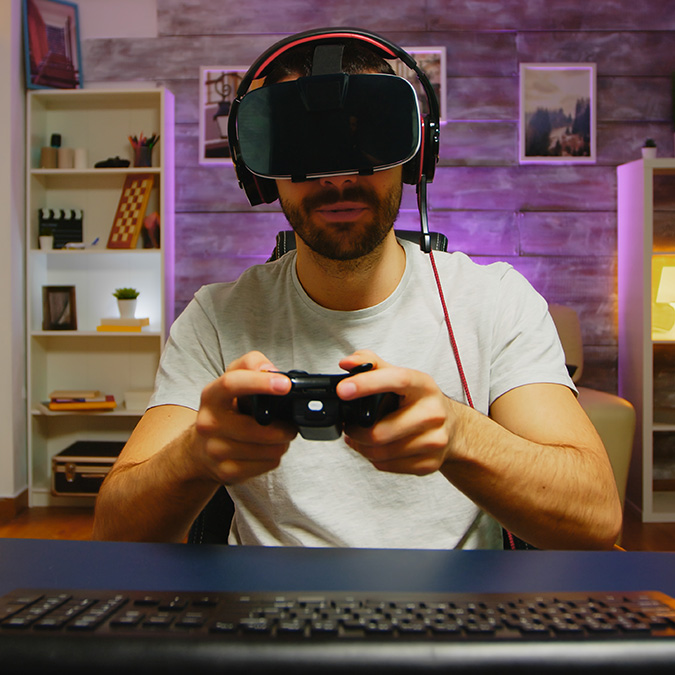
Gaming has seen the most significant adoption of VR, where players step into meticulously crafted virtual environments, tackling challenges, and exploring worlds in ways previously unimaginable.
Through VR, gamers gain the ability to manipulate objects, navigate spaces, and interact with characters on a level that mimics physical reality, all from their living room.
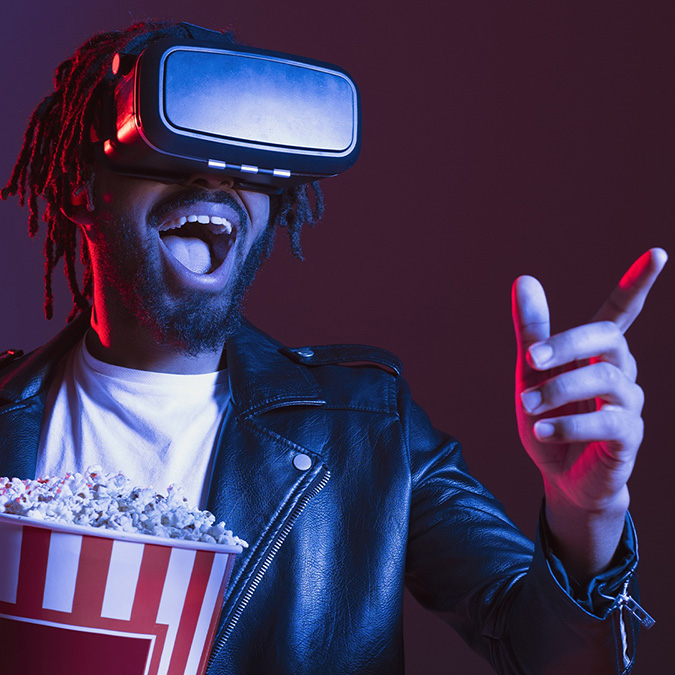
Cinematic experiences have evolved with virtual reality, enabling viewers to experience films and documentaries from within the scene.
As a result, directors and filmmakers employ virtual reality simulations in order to place all the viewers at the very heart of the narrative, thereby reshape passive observation into fully immersive interaction.
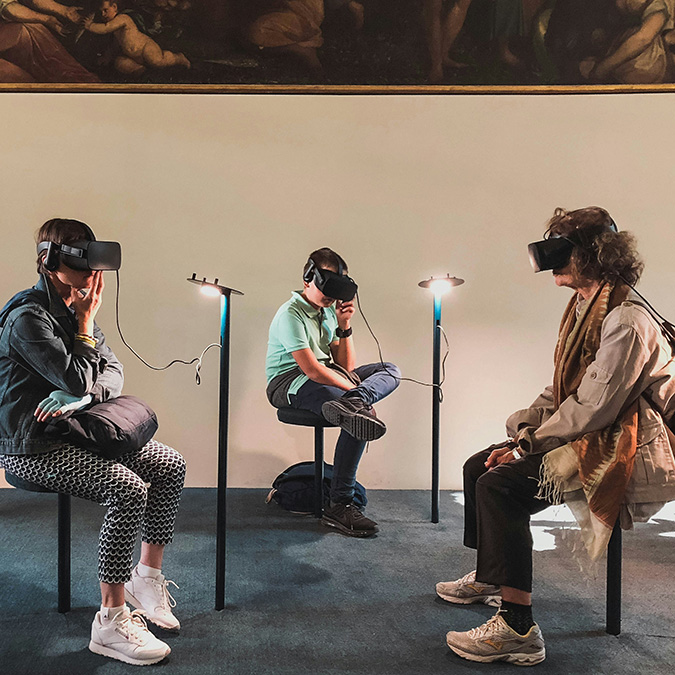
Live events, such as concerts and sports, use VR to offer virtual attendance options.
Fans can enjoy front-row experiences from their homes, complete with the ability to look around the venue as if they were there, enhancing accessibility and participation. Virtual reality thus bridges geographical gaps, fostering global unity among fans.
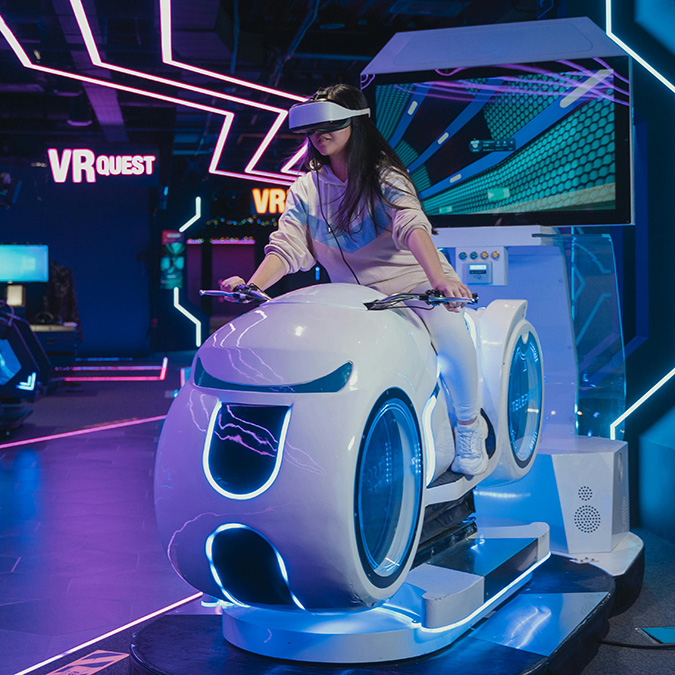
Theme parks and attractions introduce VR headsets on roller coasters and in haunted houses, cleverly blending physical sensations with immersive virtual scenarios, thereby significantly elevating the thrill of the ride with impossible, fantastical scenarios. This innovative integration creates unparalleled experiences that redefine the boundaries of entertainment.
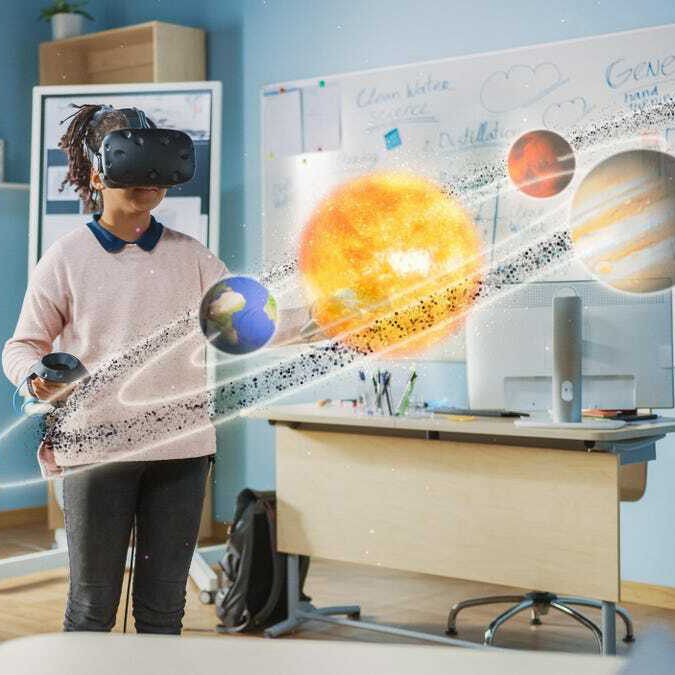
Educational content and museums have started to utilize VR technology for virtual tours and simulations that offer a deep dive into historical events, scientific phenomena, and art exhibitions. In particular, these applications make learning interactive and engaging, thus enhancing comprehension and retention in students and visitors.
For individuals looking to use VR in their entertainment projects, starting with virtual reality simulations offers a gateway. These simulations can be as simple as 360-degree videos for storytelling or as complex as interactive environments for games and educational purposes.
By focusing on creating compelling content that uses VR’s strengths, immersion, interactivity, and innovation, creators can deliver experiences that resonate deeply with their audience.
Embracing VR requires a blend of creativity, technical skill, and a willingness to experiment, but the potential rewards in terms of audience engagement and content innovation are immense.

Successful VR entertainment examples
Virtual reality has etched a path of memorable experiences across various entertainment domains, offering users unparalleled immersion and interactivity. Each success story below highlights VR’s distinct applications and potential in reshaping entertainment.
Virtual Reality Training achieves new heights with programs designed for astronauts.
NASA’s use of VR for spacewalk simulations allows astronauts to practice repairs on the International Space Station, blending high stakes with zero risks. This application underscores VR’s capacity for preparing individuals for scenarios where real-life practice is impossible or impractical.
VR Location-Based Entertainment finds a stronghold in theme parks, where attractions like “The Void” merge physical sets with VR, allowing guests to walk through and interact with expansive virtual worlds. These experiences offer a tactile dimension to VR by overlaying virtual elements onto physical environments, making the virtual indistinguishable from reality.
VR 360 Entertainment has reshaped the concert scene, with platforms like MelodyVR offering front-row seats to live performances from the world’s most prominent artists. Fans experience the thrill of a live show, complete with the ability to choose different vantage points from the comfort of their homes.
VR in Art Exhibitions reshape viewers’ engagement with artwork, offering immersive interpretations of classic and modern pieces.
An example is the Dalí Museum’s virtual reality experience, which transports visitors inside Salvador Dalí’s paintings. This application of VR allows art enthusiasts to step into surreal field, experiencing the artist’s visions from a first-person perspective.
Each example illustrates VR’s versatility in crafting experiences that are not only entertaining but also deeply engaging, educational, or socially connective. As virtual reality continues to evolve, its application in entertainment broadens, promising even more innovative and immersive experiences in the future.
Future trends and innovations in VR entertainment
Virtual reality trends are shaping the future of entertainment, with technological advancements and creative explorations pushing the boundaries of what’s possible.
One significant trend is the integration of haptic feedback systems, which simulate touch and physical sensations. Such technology promises to deepen immersion, allowing users to feel the texture of virtual objects and the impact of virtual environments on the senses.
Another emerging trend is the development of more sophisticated motion capture techniques.
With unprecedented accuracy, these systems translate users’ movements into the virtual space, enabling more natural interactions with virtual environments and characters. The result is a smooth blend of user actions and virtual responses, enhancing the realism of virtual experiences.
Social VR platforms are gaining momentum, reshape virtual spaces into venues for concerts, meetings, and social gatherings. These platforms facilitate shared experiences among users from different geographical locations, creating a sense of community and connection that transcends physical barriers.
The rise of cloud-based VR services is set to democratize access to high-quality VR experiences. By offloading processing tasks to powerful remote servers, users can enjoy complex, graphically intensive VR applications on less capable devices, broadening the audience base for VR content.
Content creators are exploring episodic VR content, akin to television series, offering narratives that unfold over multiple chapters. This format uses VR’s immersive potential to engage viewers in long-term storytelling arcs, encouraging sustained engagement with VR platforms.
Advances in AI are enabling more dynamic and responsive virtual environments.
AI-driven characters and ecosystems react in real time to user actions, creating personalized and unpredictable VR experiences. This adaptability makes virtual worlds feel alive and teeming with possibilities, inviting users to return and discover something new with each visit.
Finally, cross-reality (XR) experiences, which blend virtual, augmented, and mixed realities, are blurring the lines between different forms of digital immersion. By integrating elements from each technology, XR experiences offer a hybrid form of entertainment that could redefine the scope and scale of virtual engagement.
Program-Ace’s innovative VR entertainment solutions
Program-Ace excels as a software development service provider specializing in creating advanced VR entertainment solutions.
With a reliable portfolio demonstrating our capacity to deliver captivating virtual reality experiences, we cater to a diverse clientele seeking to raise their digital offerings. Our team combines technical expertise with creative insight, ensuring each project surpasses expectations in functionality and user engagement. Recognizing the rapid pace at which VR technology evolves, we continuously update our skills and tools to stay at the cutting edge.
Clients choose Program-Ace for our reliability, our commitment to excellence, and our proven track record in reshape concepts into reality. For those looking to pioneer in VR entertainment, we invite you to contact us. Together, we can explore the boundless possibilities that virtual reality holds.