
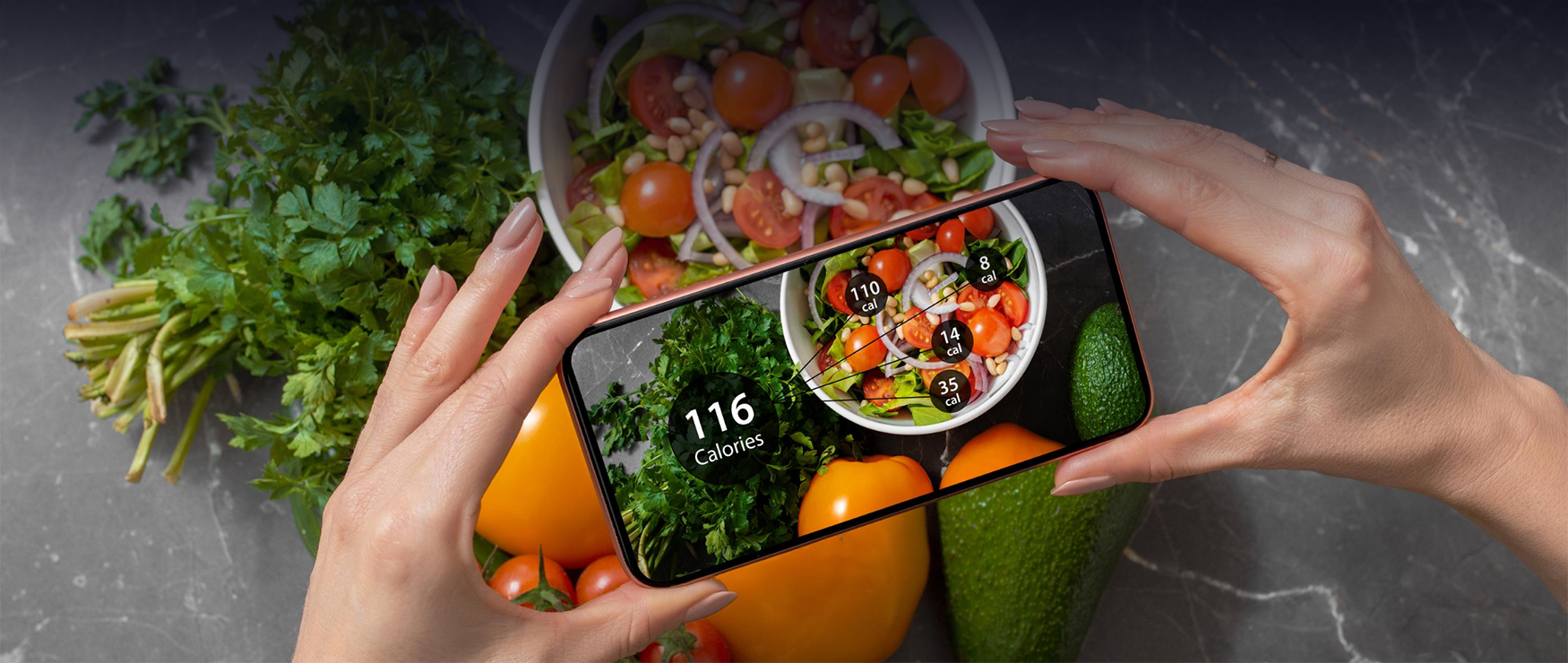
Augmented reality in the food industry lets customers point a phone at a menu or package and see a dish in 3D, with its ingredients, origin, and nutrition laid over the real world. Restaurants use it to cut order returns, brands use it to make packaging interactive, and food-safety teams use it to guide staff. Building it well is the job of an augmented reality app development company. This article covers where AR fits in food, its pros and challenges, real brand examples, and how to start.
The impact of augmented reality in transforming the food sector
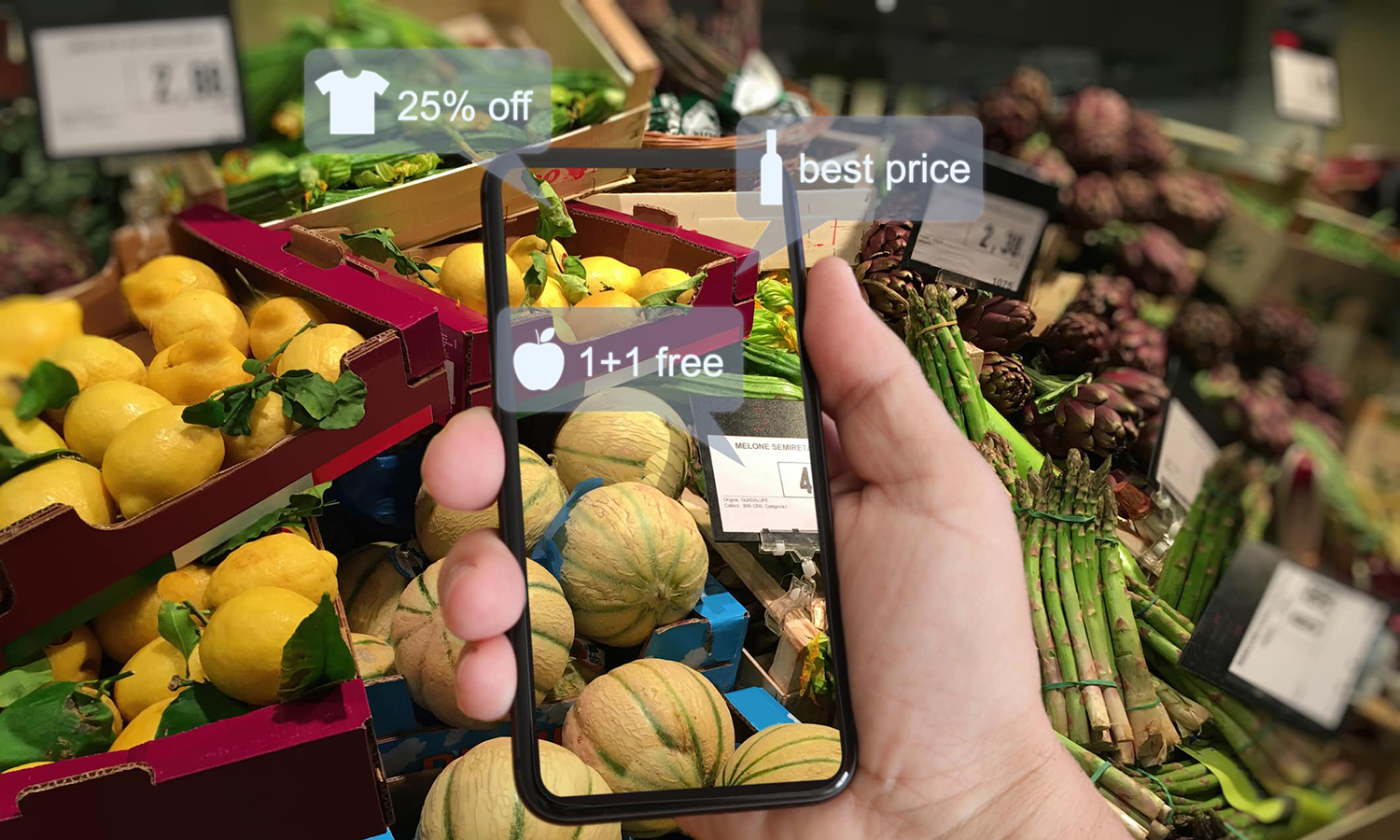
AR gives food businesses and their customers new ways to interact before a single dish is served. Restaurants, cafes, and brands build interactive menus that let patrons see a dish in 3D before ordering, which raises satisfaction and helps people make informed dietary choices.
AR in food reaches past the dining room. In the wider context of augmented reality in business, food companies use it to train staff through simulated kitchen procedures, shortening the learning curve and improving throughput.
Packaging is a second front. Scanning a product can surface sourcing details, nutrition, recipes, or prep videos, and that transparency builds trust in the brand. On marketing, AR turns product exploration into an interactive moment people share on social media, extending a campaign’s reach without extra ad spend.
Food-safety compliance benefits too: AR can display procedures and guidelines to workers in real time, so standards are met consistently rather than from memory.
Across all four uses, menus, packaging, marketing, and safety, AR changes how a food business operates and how openly it can talk to its customers about what they eat.
The rise and development of food AR
AR started in gaming and entertainment, but food companies soon saw its use for dining and shopping. As demand grew, attention turned to how to build an AR app made for food businesses specifically.
Building a food AR app takes programming, interface design, and an understanding of what diners actually want. Developers and designers work together so the app projects a dish onto the user’s real surroundings and behaves interactively, which means the team needs to know both the AR technology and the dining context.
Early restaurant adopters let diners scan a QR code and see a 3D model of a meal before ordering, which raised satisfaction and cut order returns. Retailers followed with apps that animated product stories and nutrition when a shopper scanned an item.
AR food apps also opened access to cuisines and chef-led techniques through virtual classes, part of the wider move to digital tools in food that answer a demand for convenience and information.
The pattern is consistent: where AR is applied to food, it deepens the connection between people and what they eat.

Program-Ace’s delicious world of OishiiAirEating AR app
Pros of integrating AR into food experiences
Integrating AR into food experiences brings numerous benefits:
- It allows customers to see 3D models of dishes before ordering, enhancing decision-making and reducing dissatisfaction.
- Interactive menus through AR provide detailed insights into ingredients and nutritional information, catering to health-conscious diners.
- AR makes food education entertaining, with apps teaching cooking techniques or the history behind dishes.
- AR in food marketing creates engaging, shareable content, increasing brand visibility.
- For businesses, AR applications streamline operations, from training staff with virtual simulations to ensuring food safety standards through augmented prompts, improving overall efficiency and compliance.
For business owners
-
Enhanced customer engagement. By incorporating AR into your food business, you create an interactive and immersive dining experience that captures patrons’ attention and encourages them to explore your menu in depth.
-
Informed decision-making. AR menus allow customers to visualize their orders before placing them, leading to higher satisfaction rates and fewer returned dishes.
-
Educational opportunities. Use AR to educate customers about the origins of dishes, ingredients, and nutritional information, promoting a more informed and health-conscious clientele.
-
Operational efficiency. AR technology can streamline training processes for new staff with virtual simulations, reducing the time and cost associated with traditional training methods.
-
Marketing innovation. Implementing AR in promotional strategies can differentiate your brand, offering unique experiences that customers are eager to share on social media and increasing your visibility.
-
Increased sales. Interactive AR experiences can boost customer engagement and encourage trying new dishes, leading to higher average order values.
-
Customer loyalty. Unique AR experiences foster a memorable connection between your brand and customers, encouraging repeat business and long-term loyalty.
For customers
-
Visual clarity. Food augmented reality offers a 3D preview of dishes, helping you visualize what you are about to order, reducing uncertainty, and enhancing your dining experience.
-
Nutritional insight. With AR, you gain immediate access to detailed information about the nutritional content of your meal, making it easier to stick to dietary preferences or restrictions.
-
Engaging experiences. AR transforms the process of ordering food into an interactive adventure, making dining out or food shopping more enjoyable and memorable.
-
Learning journey. Discover the stories behind your favorite dishes, from their origins to the chefs who prepare them, all through the lens of AR, adding depth to every bite.
-
Efficient service. Restaurants utilizing AR can offer quicker and more accurate order processing, leading to a smoother and more satisfying dining experience.
-
Social sharing. AR experiences are more than fun; they are shareable. Snap and share your augmented food adventures on social media, turning meals into moments that captivate friends and followers.
-
Personalized choices. Food augmented reality can tailor recommendations based on your past preferences, allergies, or dietary needs, ensuring every meal perfectly suits your taste.
Challenges of implementing AR in the food industry
AR in food faces real hurdles. Initial setup and ongoing development cost enough to deter smaller businesses. Adoption is another: both customers and staff have to be willing to use AR, which is a barrier for anyone unfamiliar with it. And an app has to work across many devices and operating systems, which takes continuous testing to avoid compatibility gaps.
A usable experience needs UX design skill that most food businesses do not keep in-house. Producing quality AR content, such as 3D meal models, needs artists and budget. Privacy is a further concern, since AR apps collect user data and must comply with data-protection law.
Ongoing maintenance adds to operating cost. A business also has to judge whether its market is ready, since a novel feature can see low uptake if customers are not there yet. Finally, fitting AR into existing restaurant management systems and workflows takes planning and technical skill many food businesses do not have on staff.
Tips for consumer engagement through food AR
Adding AR to a food business improves the experience and opens new ways to engage customers. These ten practical tips help make each AR interaction land.
1. Start simple. Launch with intuitive designs that guide users, so their first contact with food AR is easy.

2. Educate customers. Use AR to show ingredient sourcing, preparation, and the cultural background of a dish, so dining also informs.
3. Build interactive menus. Let patrons explore items in 3D before ordering, a visual preview that improves their choice.
4. Encourage sharing. Design AR that is worth posting, so users spread it across their social platforms.
5. Offer rewards. Tie AR to loyalty: scanning an AR code for a discount or free item rewards engagement.
6. Gather feedback. Collect input inside the AR app itself, so you learn what to refine while the customer is engaged.
7. Update regularly. Add new features or seasonal items so customers return to see what changed.
8. Personalize. Adapt the AR to individual preferences or dietary needs, so each interaction fits the person.
9. Invest in quality. Keep visuals and interactions polished, since quality is what holds interest over time.
10. Promote it. Use every channel, from in-store signage to online marketing, so customers know the AR feature exists.
Food AR pays off when a business stays responsive to feedback and keeps quality high. Done that way, it surprises customers and builds a loyal community around the brand.
AR technology trends in the food industry
AR in food is moving fast, and a few trends stand out. The clearest is turning static menus into interactive displays, so customers see a realistic 3D model of a dish before ordering, which improves their decision and previews the meal.
A second trend is nutrition on demand. As health-conscious eating grows, customers want more detail, and AR delivers it by overlaying calories, ingredients, and allergens onto a product with a single scan.
AR also reaches food education, bringing cooking tutorials and culinary stories into the kitchen as hands-on learning. And it shows up in marketing, where brands run AR campaigns that invite people to explore a product interactively, lifting engagement and loyalty.
Finally, AR improves food-safety training and compliance: interactive guides give staff procedures in real time so hygiene and preparation standards are met consistently. Together these trends show how much ground AR now covers in food.
How AR is used successfully in food brands
Here are two real campaigns that show AR working for food brands.
Dutch Lady’s interactive AR
Dutch Lady aimed at families and children with an AR experience unlocked by pointing a device at the packaging, turning mealtime into interactive content.
Jump into africa
Kinder, with FPP and Aircards, ran “Jump Into Africa” in Tesco stores. The WebAR portal drops users into an African savanna to explore animated 3D safari animals and infographics, all in the browser with no app to install, reached through in-store signage and flyers. It is a strong example of WebAR in a retail setting.
Both cases show the same thing: AR helps a food brand stand out in a crowded market and build a closer connection with its customers.
Partner with Program-Ace to bring value to your customers
Program-Ace has built augmented reality since 1992, across 900+ projects, including AR food apps like OishiiAirEating. We develop the 3D content, the app, and the integration your food business needs to put AR in front of customers. To scope an AR project for your menu, packaging, or marketing, contact us.