
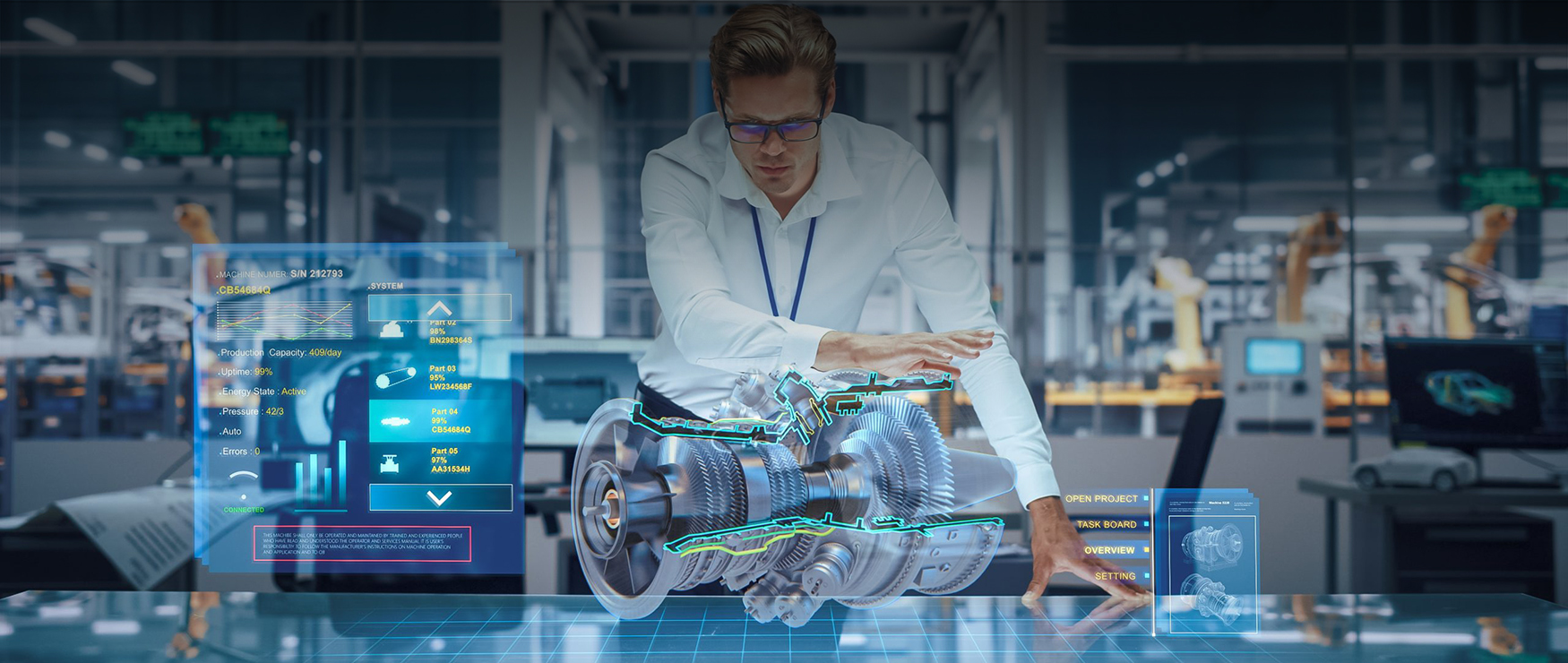
A digital twin and a simulation both model reality, but they differ in one key way: a simulation is a static, offline model you run to test a scenario, while a digital twin is a live virtual replica connected to a real asset through sensors, updating continuously in real time. In short, a simulation studies what could happen; a digital twin mirrors what is happening now. This guide explains each in depth, the key differences, and how to choose. The momentum is real: digital twin adoption is growing fast across industry, with the market on track for double-digit annual growth through the decade.
The terms “digital twin” and “simulation” have been tossed around quite a bit lately, each presenting a fascinating new frontier for businesses to explore. But which approach serves your needs best? As we navigate the exciting fields of these technologies, this article is designed to assist you in making an informed decision that ensures your business not only survives but thrives in this rapidly advancing digital era. Welcome to a world where real and virtual blur the lines, welcome to the future of business.
Digital twins definition
Have you ever pondered over the notion of creating a virtual replica of your business processes or products? Well, this is precisely where digital twin modeling and simulation come into play. A digital twin, in essence, is an exact virtual replica of a physical object or system. Its development often requires the expertise of a digital twin consulting firm, given the precision and technical knowledge required.
From product design to operational processes, the types of digital twins span a vast range. They breathe life into data, rendering intangible insights tangible, and provide a powerful means to anticipate challenges and streamline efficiency.
Understanding digital twins: An overview
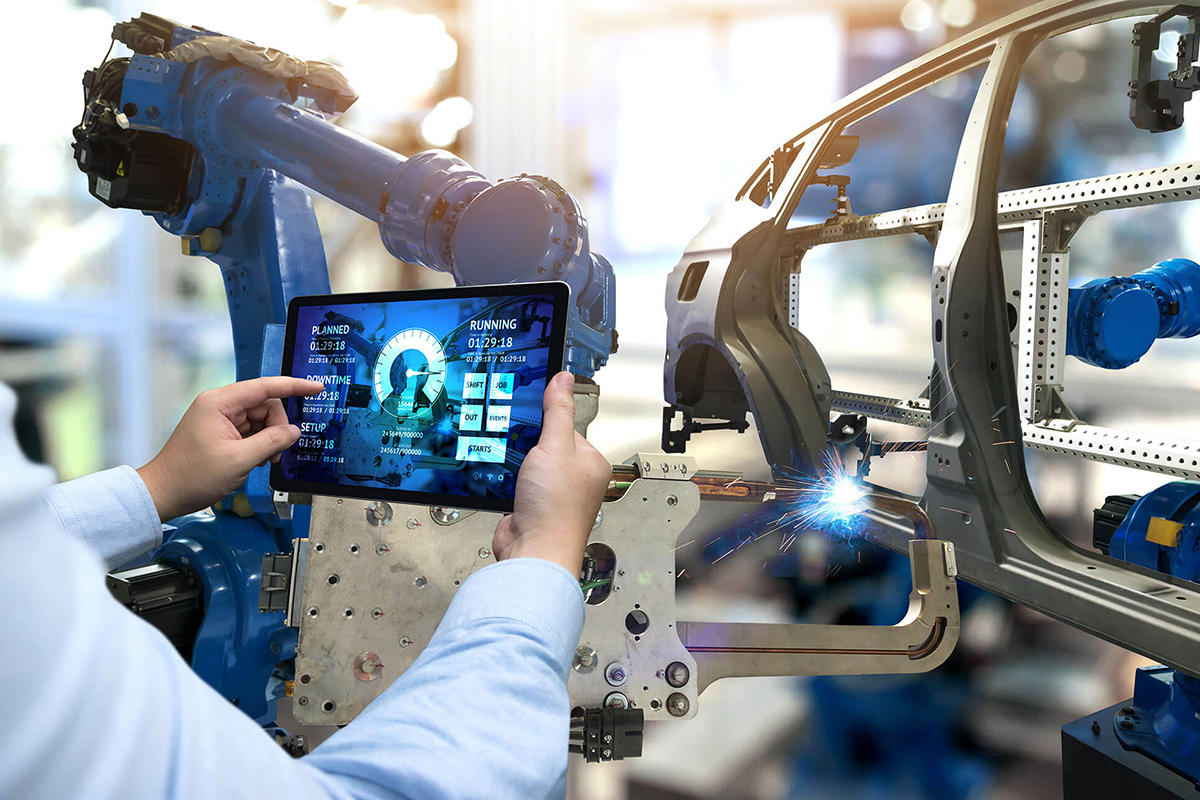
Indeed, the world of digital twin technology is vast, and its applications are limitless. A striking example of its implementation is in the manufacturing sector, where digital twins have reshaped traditional practices. In this context, the digital twin in manufacturing is a precise virtual representation of the production process, bringing real-time tracking and advanced predictive analysis to the factory floor.
But it doesn’t stop at physical realities. The concept of the digital twin metaverse introduces us to a new dimension of digital interaction. In this metaverse, digital twins mirror our physical environments, creating endless possibilities for immersive experiences and complex simulations.
Meanwhile, digital twin process simulation holds the power to change the way businesses operate. This process creates dynamic models that mimic the performance of individual components or entire systems, providing key insights that can lead to streamlined operations, enhanced productivity, and substantial cost savings.
Real-world applications of digital twins
As businesses plunge deeper into the digital era, how do they employ digital twin technology to navigate the rising tide of digital change? The applications are as varied as they are far-reaching, reaching far beyond the conceptual stage and into the heart of diverse industries.
Aerospace industry

Consider the aerospace industry, for instance. Airbus employs digital twins for its entire fleet of aircraft. They utilize this technology to monitor real-time flight data, maintaining optimal conditions and anticipating issues before they occur. By creating a virtual replica of their aircraft, Airbus can simulate scenarios, evaluate aircraft performance, and make informed decisions.
Automotive manufacturing
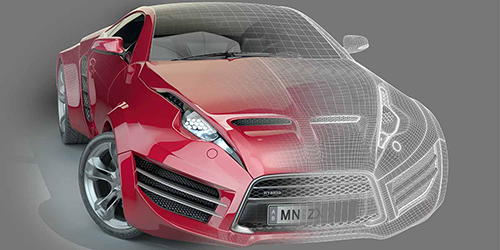
In automotive manufacturing, Tesla sets the pace with digital twins. The company has implemented this technology to design, test, and optimize their electric vehicles before they even hit the production line. Digital twin simulations have helped Tesla improve product quality, reduce development time, and streamline production processes.
Energy sector
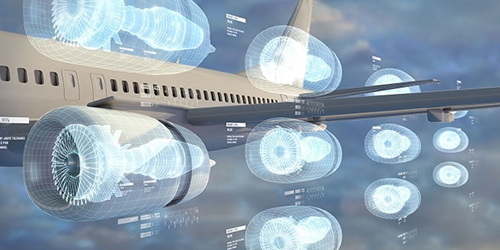
The energy sector, too, is not left behind. General Electric (GE) takes advantage of digital twin technology in order to predict failures and reduce downtime in wind turbines. By constantly analyzing data from various turbine components, GE is able to optimize its operations, increase power output, as well as extend the life of its equipment without compromising anything.
Thus, digital twins hold a major potential, enabling businesses to optimize, innovate, and excel in an increasingly digital world.
Real-time urban insight powered by Program-Ace
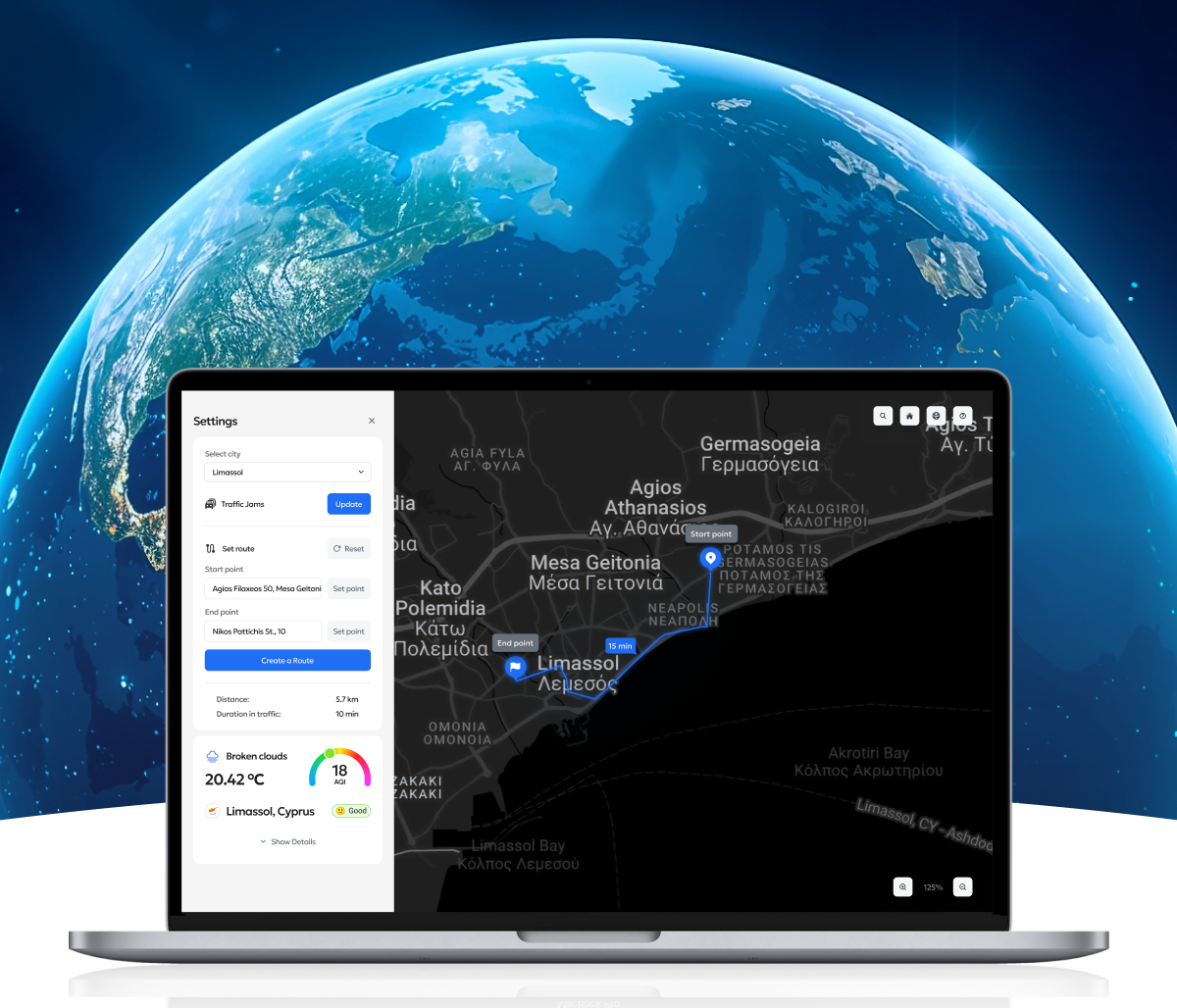
Program-Ace integrated environmental, traffic, and infrastructure data into a single Cesium-powered digital twin. Leipzig and Limassol now have access to reliable urban intelligence in their browsers.
Simulation explained
What if we had the power to predict outcomes, to see the result of our decisions before taking a step? Simulation technology makes this possible. At its core, simulation is modeling a simple system or situation, then studying it to gain insights. It’s like having a crystal ball, only one grounded in data and powered by technology.
Consider training simulation as an example. Here, we use virtual models to create a risk-free, controlled environment that mirrors the real world. From training pilots with flight simulators to preparing soldiers for combat scenarios, training simulations provide a space to learn, make mistakes, and hone skills without real-world repercussions. The benefits? Improved efficiency, reduced risk, and invaluable experiential learning.


Delving into simulation: An introduction
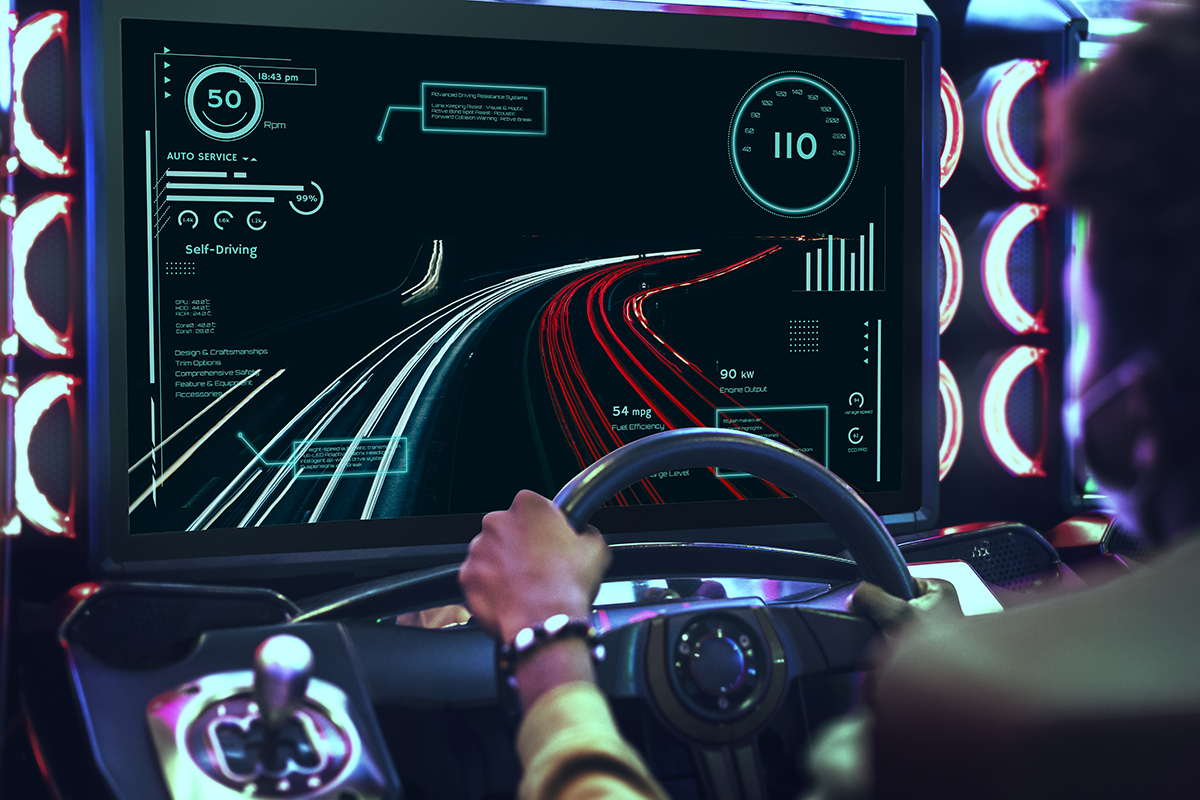
In the business world, simulations have profound applications. Our findings show that businesses use them for strategic planning, market research, and even predicting customer behavior. Ever wondered how a new product might fare in the market or how a slight change in the production line could affect the overall efficiency? Simulation holds the answers.
Using simulation, businesses can anticipate potential challenges, devise effective strategies, and make data-driven decisions. It’s a tool that helps us understand our present better and shapes our future in the most efficient way possible.
Let’s explore deeper. Imagine launching a new product. Instead of relying on guesswork or past experiences, businesses can use simulations to predict consumer response, determine optimal pricing, and identify potential roadblocks in the supply chain. Thus, risks associated with new product launches can be mitigated.
Simulations are also instrumental in the logistics and supply chain domain. They can assist in modeling complex transportation routes, determining warehouse capacities, and optimizing resource allocation. It’s a cost-effective way to spot bottlenecks and make proactive changes.
For the financial sector, simulations offer an avenue to test different investment strategies, assess risk tolerance, and forecast market trends, all while minimizing potential losses. It’s a way of “seeing the future”, and it’s all driven by past and present data.
In the arena of human resources, simulations are employed for personnel training, development, and even in selection processes. They allow employees to refine their skills in a safe environment and help in selecting the best candidate for a job based on their performance in a simulated scenario.
In essence, simulations enable businesses to look into the future, armed with data and insights, and make the journey ahead less about guesswork and more about informed decision-making. Simulations, thus, turn uncertainties into opportunities.
Practical uses of simulations in business
How can simulations turn abstract theories into tangible business gains? Let’s look at some real-world examples.
Retail sector
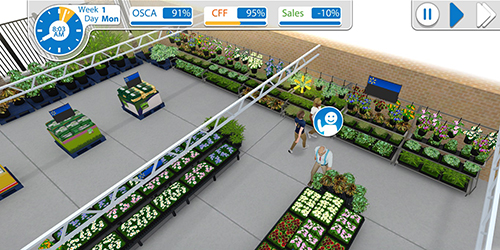
In the retail sector, Walmart uses predictive simulation to manage its inventory, ensuring optimal stock levels and avoiding wastage. With predictive simulation, they can anticipate customer demand and adjust their inventory accordingly, which is going to have a huge positive effect on what customers get.
Healthcare sector

Another powerful application lies within the healthcare sector. Companies like Simul8 Healthcare utilize simulation technology to improve hospital operations. By modeling patient flows, they are able to identify bottlenecks as well as make data-driven decisions in order to enhance patient care and improve efficiency.
Game industry
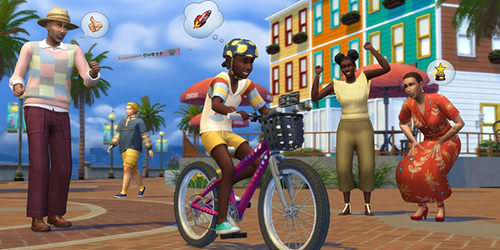
Perhaps the most immersive example of simulation is found in the world of gaming. Companies like Electronic Arts and Ubisoft use simulation to test the mechanics of their games, optimize user experience, and predict player behavior. Simulations allow game developers to reduce the number of production issues.
From retail to healthcare and gaming, the versatility of simulation technology is evident. It is an instrument of precision, a bridge to the future, enabling businesses to visualize, experiment, and optimize before taking real-world action.
Digital twin vs simulation: Key differences
In the complex labyrinth of business technology, digital twin and simulation often stand as two prominent signposts. Each path offers businesses unique vistas and value, but which aligns with your objectives? Understanding these technologies is vital, but discerning the distinction between them is equally important.
It’s like knowing the difference between a detailed city map and a dynamic GPS system: both can guide you, but they do so in fundamentally different ways. In the upcoming section, we’ll highlight these fundamental differences, helping you steer this complex terrain and make informed decisions that drive your business forward.
Comparing the technical aspects
As we venture into the space of digital change, the choice between employing digital twins or simulations can be central. To guide you through this decision, we’ve devised a comparison table, contrasting these technologies based on their technical aspects, features, and use cases.
| Features/ Use Cases | Digital Twin | Simulation |
| Real-Time Data Integration | Digital twins utilize real-time data to continually update the virtual model. | Simulations use predefined data sets and may not incorporate real-time updates. |
| Interactivity | Allows interaction with the model to test different scenarios dynamically. | Interaction occurs before the simulation, setting variables to observe outcomes. |
| Predictive Analysis | Predictive capabilities with real-time data for decision-making. | Often used for predictive analysis but may lack real-time data integration. |
| Model Creation | Digital twins require, multi-layered models that can mimic real-world counterparts. | Simulation models can vary in complexity, from simple statistical models to complex, detailed representations. |
| Lifecycle | Digital twins maintain a continuous relationship with their physical counterparts throughout the lifecycle. | Unlike the digital twin technology, simulations are often used for specific scenarios and may not persist through the entire lifecycle. |
| Use Cases | Asset management, predictive maintenance, and process optimization. | Simulations allow for training and education, risk management, strategic planning. |
As a result of our tests, we determined that the choice of simulation vs digital twin is not about picking the superior technology, but rather selecting the right tool that fits your business’s unique needs and goals. Both offer valuable pathways towards improved efficiency, predictive analysis, and data-driven decision making. Understanding the nuanced differences between these technologies can empower you to make the optimal choice, effectively steering your journey in the digital field.
Oil platform simulator, how was it made?

Discover how Program-Ace crafted a realistic offshore oil platform simulation for a renowned oil and gas company, enhancing safety skills and facilitating emergency evacuation training for a large workforce amidst rapid technological changes and high-risk conditions.
Choosing the right option for your business: Digital twin versus simulation
So, you are at a crossroads: should you take the path of digital twin technology or veer toward simulation? This decision is critical, as it could shape the trajectory of your business in this digital age. In this section, we shall embark on a comprehensive exploration of these technologies, considering their merits, their distinct utilities, and how they align with various business objectives.
Ultimately, our goal is to equip you with the insights needed to make an informed choice. Ready to uncover the most suitable solution for your business – digital twin or simulation? Let’s dive in.
Evaluating your business needs: When to choose digital twin
Your business environment and goals can significantly influence whether digital twin solutions are the right choice. Here are some considerations to bear in mind:
-
Real-time data requirement. If your operations rely heavily on real-time data and its instant analysis, digital twin technology can be a game-changer. It provides live feedback, enabling swift and informed decision-making.
-
Lifecycle management. Digital twins excel in scenarios where the entire lifecycle of a product or system needs tracking and optimization. This is particularly beneficial for industries like manufacturing and aviation.
-
Predictive maintenance. Digital twins can offer predictive insights to foresee issues and optimize performance in sectors where equipment maintenance is key and downtimes are costly.
-
Complex system analysis. If your business involves intricate systems like a power grid or a supply chain, digital twins can simulate and analyze these complexities in ways traditional methods can’t.
-
Integration with IoT. For businesses planning to use Internet of Things (IoT) technology, digital twins serve as the perfect companion, offering a complete view of IoT ecosystems.
Making a choice isn’t simply about the technology, but more importantly, it’s about how well it aligns with your business goals and demands.

Assessing suitability: When simulation is a better choice
When considering the suitability of simulation as a solution, several key factors must be evaluated to make an informed decision for your business.
-
Training and skill development. Simulations are an excellent tool if your focus lies in employee training, especially in risk-laden environments. They provide safe, repeatable scenarios for learning and skill refinement.
-
Scenario testing. Simulations excel at modeling ‘what if’ scenarios. They’re ideal for strategic planning, policy testing, and exploring multiple possibilities before making decisions.
-
Resource allocation. If your business involves complex logistics, simulations can model resource distribution effectively and help identify optimization strategies.
-
Market predictions. Businesses seeking to forecast market trends, analyze customer behavior, or test new product reception might find simulations particularly useful.
-
Cost considerations. Simulations can be less costly to implement than digital twins, making them a viable choice for businesses with budget constraints.
Remember, the right technology depends on your business’s unique field and the challenges you wish to overcome.
Gap Inc. Immersive active shooter training
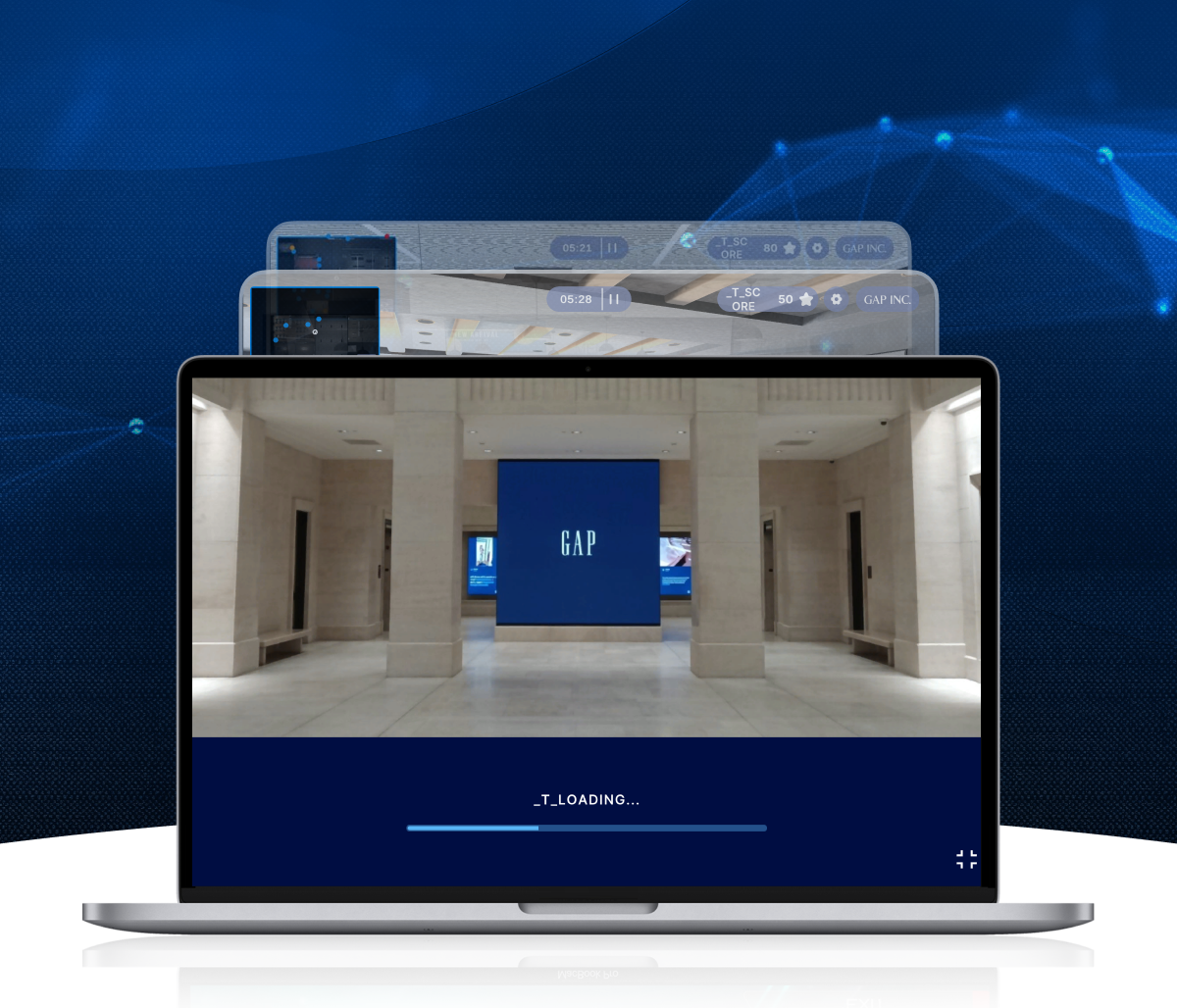
See how Program-Ace helped Gap Inc. simulate real-time retail emergencies across stores, offices, and distribution centers. The active-shooter simulator combines role-play, branching logic, and embedded analytics.
Let Program-Ace assist you in your business journey
Program-Ace, a custom software development company, is here to propel your business toward success with advanced solutions tailored to your unique needs. With our extensive expertise in digital twin technology, simulation, and immersive experiences, we are your ideal partner on this major journey.
Our team of seasoned professionals is dedicated to understanding your business goals, challenges, and aspirations. From conceptualization to execution, we collaborate closely with you to deliver innovative, high-quality solutions that drive tangible results.
Whether you require a state-of-the-art digital twin application, a realistic simulation platform, or immersive training experiences, Program-Ace has the expertise and passion for making it happen.
When you choose Program-Ace, you benefit from:
-
Trailblazing achievements. With a rich history of pioneering innovation, Program-Ace has continuously shattered industry norms, reshaping digital experiences for a wide array of clients hailing from various sectors.
-
Advanced technology. We stay at the forefront of industry trends, using the latest tools and technologies to deliver exceptional solutions.
-
Unparalleled expertise. Our team comprises seasoned professionals with deep domain knowledge, ensuring our solutions align perfectly with your business needs.
Take the next step towards reshaping your business today. Contact us to embark on this exciting journey together.