

Simulation training is a method of learning by doing in a realistic, risk-free replica of a real task or environment. Instead of listening to a lecture or watching a video, trainees practice the actual skill, handling equipment, responding to an emergency, performing a procedure, in a simulated setting that reacts to their actions. It is used most where real-world practice is dangerous, expensive, or hard to repeat: aviation, healthcare, manufacturing, and defense. The payoff is measurable: in a large PwC study, VR learners completed training up to 4 times faster than in the classroom and were far more confident applying what they learned.
For businesses, simulation training raises retention and confidence while cutting the cost and risk of on-the-job mistakes. This guide explains what simulation training is, the main types and methods, its benefits, and real examples of how companies use it.
Understanding simulation training
What is simulation training? This concept, also known as simulation-based training, is a dynamic learning technique that replicates real-world scenarios to enhance employee skills and knowledge. It goes beyond traditional classroom instruction by creating immersive environments where individuals can practice and develop their skills and abilities.
Simulation training allows learners to gain practical experience, make informed decisions, and refine their performance within controlled settings. By simulating specific situations relevant to their industry or profession, employees can apply theoretical knowledge, refine critical thinking skills, and develop confidence. Whether through virtual or physical models, simulation training offers a safe and risk-free environment for employees to practice and learn.
Glock 19 Virtual Trainer
Simulation training can encompass various forms, such as virtual simulations and physical simulations. Virtual simulations utilize computer-based technologies to create interactive scenarios and lifelike environments, enabling employees to engage and respond as they would in real life. Physical simulations, on the other hand, involve the use of physical models or replicas to simulate real-world situations. This can range from simulated medical procedures using mannequins to flight simulators that mimic the cockpit experience for pilots.
Need to go beyond simulation? Consider digital twins, a profound virtual replica of any entity within your enterprise.
Simulation training is beneficial for businesses across diverse industries. It allows employees to acquire hands-on experience, develop critical skills, and improve decision-making abilities. By bridging the gap between theory and practice, simulation training enhances employee performance, reduces errors, and boosts confidence. This transformative learning approach also enables businesses to standardize training processes, ensure consistent outcomes, and adapt to evolving industry needs. From healthcare to manufacturing, customer service to oil & gas, simulation training offers a powerful solution to unlock the full potential of employees and drive organizational success.
The core idea is transfer of learning: skills practiced in a realistic simulation carry over to the real task. A good simulation gets three things right, fidelity (how closely it mirrors reality), interactivity (the trainee acts and the system responds), and feedback (the learner sees the consequences of each decision). The closer these come to the real environment, the better the skills transfer.
Simulation training is delivered through several methods, and most programs combine them. Web-based and software simulations scale cheaply to many learners. Game-based simulations use points, levels, and challenges to drive engagement. Physical simulators, from a flight deck to a mannequin patient, recreate the feel of real equipment. And immersive VR, AR, and mixed-reality simulations put the trainee inside the scenario with full spatial presence. The right method depends on the skill: procedural knowledge suits software, hands-on skills need physical or immersive practice.
Types of simulation training
Simulated training encompasses various types that cater to different learning needs and objectives. Let’s explore four key types of simulation training and their unique specifics and benefits.
Interactive web-based simulations
Interactive web-based simulations are accessible through online platforms and offer a flexible and convenient learning experience. Learners can engage with realistic scenarios, make decisions, and see the immediate consequences of their actions. These simulations often include interactive elements like quizzes, branching scenarios, and multimedia content, enhancing learner engagement and knowledge retention. The benefits of a web-based eLearning simulation include cost-effectiveness, scalability, and the ability to reach a wide audience regardless of geographical constraints.
Game-based simulations
Game-based simulations use the engaging nature of gaming to facilitate learning. These simulations incorporate elements like challenges, rewards, and progression, creating an immersive and enjoyable learning experience. This approach is akin to roblox simulation games, which use gameplay mechanics to teach systems thinking. Learners can apply their skills in a gamified environment that mirrors real-world scenarios. Game-based simulations foster critical thinking, problem-solving, and teamwork skills. They also provide instant feedback and promote a sense of competition, motivating learners to improve their performance.
In-person simulations at special facilities
In-person simulations take place in dedicated facilities designed to replicate real-world environments. These facilities include mock hospital wards, emergency response centers, and manufacturing plants. Participants engage in hands-on activities, practice specific tasks, and experience the dynamics of their workplace. In-person simulations offer a high level of realism and enable trainees to develop technical skills, improve teamwork, and enhance their ability to handle complex situations. These simulations foster experiential learning and provide an immersive training experience.
Augmented, virtual, and mixed-reality simulations
Augmented, virtual, and mixed-reality simulations use advanced technologies to create highly immersive training experiences. Augmented reality overlays digital information onto the real world, virtual reality creates entirely virtual environments, and mixed reality combines virtual elements with the real world. These simulations enable trainees to interact with 3D objects, navigate realistic scenarios, and engage in hands-on tasks. The benefits of this 3D simulation training include enhanced engagement, realistic training environments, and the ability to simulate dangerous or rare situations safely.



Top reasons to use simulation training in your business
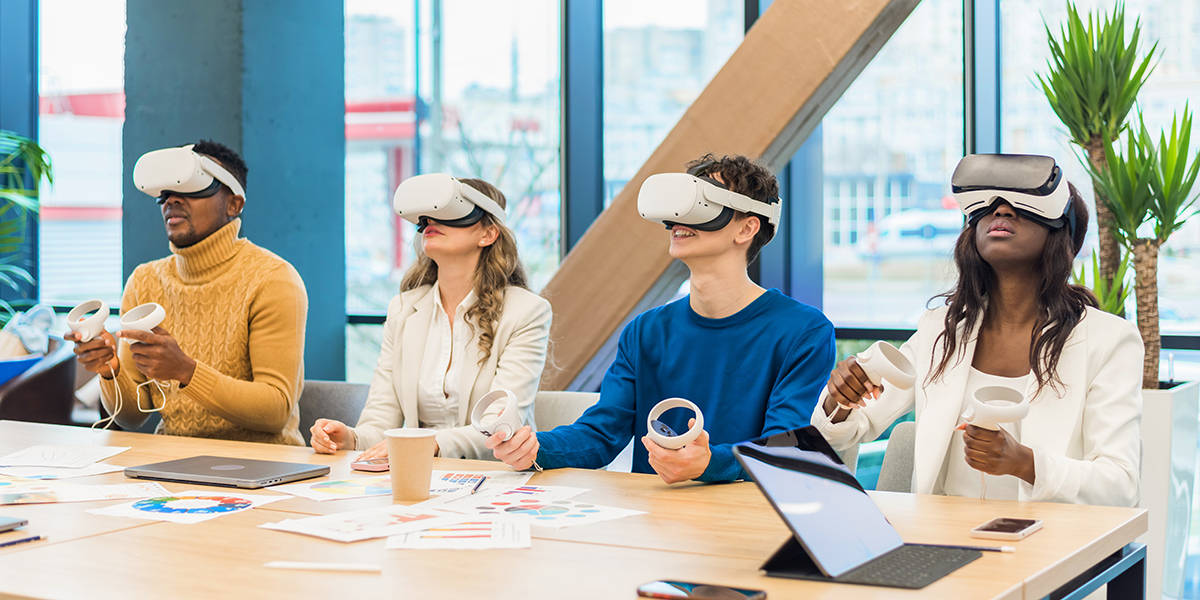
Simulation training offers a multitude of benefits for businesses across industries, making it a valuable investment. Let’s explore some of the top reasons why businesses should embrace simulation training:
-
Realistic and practical learning. Simulation training provides a realistic and practical learning experience that bridges the gap between theory and practice. It allows employees to apply their knowledge, practice skills, and make decisions in a simulated environment that closely mirrors real-world situations. This practical approach enhances learning retention and prepares employees for real-life challenges.
-
Risk-free environment. Training simulation offers a safe and controlled environment for employees to learn and make mistakes without real-life consequences. It enables them to experiment, explore different strategies, and learn from failures without being exposed to real hazards.
-
Skill development and competency enhancement. Simulation training focuses on developing specific skills and competencies required for job roles. Whether it’s decision-making, problem-solving, communication, or technical skills, simulation training provides targeted practice and feedback to help employees hone their abilities and improve performance.
-
Teamwork and collaboration. Many simulation training programs involve team-based scenarios, promoting collaboration, communication, and teamwork. Employees learn how to work effectively as a team, coordinate efforts, and solve problems together. This collaborative experience strengthens team dynamics and fosters a sense of camaraderie among employees.
-
Cost and resource efficiency. The implementation of simulation training eliminates the need for expensive physical resources, equipment, or real-world scenarios, resulting in cost savings for businesses. It also reduces the time and resources required for training, as employees can access simulations at their convenience, minimizing the impact on daily operations.
-
Standardization and consistency. This practice allows businesses to standardize training procedures and ensure consistent learning outcomes. Every employee goes through the same simulated experiences, providing a standardized baseline for skills and knowledge. This consistency helps maintain quality standards across the organization.
-
Adaptability and scalability. At their core, training simulators are adaptable to changing business needs, industry regulations, and technological advancements. They enable businesses to quickly update training modules, incorporate new procedures, or address emerging challenges. Simulation training is also scalable, accommodating the training needs of a growing workforce without significant additional costs.
-
Employee engagement and motivation. In a world where we get used to the constant flow of interactive content and easily get distracted, simulation training captures employees’ attention and engages them through immersive experiences. The gamified elements, instant feedback, and measurable progress keep employees motivated, leading to higher engagement levels and better learning outcomes.
The integration of gaming into business training is gaining momentum for its interactive and engaging nature. This next piece offers insights into how serious games can be a transformative tool for your business. Go check it out!
The measurable benefits cluster around four areas. Retention: people remember far more from doing than from watching, so skills stick. Safety: mistakes happen in the simulation, not on a live site, a live patient, or a real aircraft. Cost: once built, a simulation runs many times without the expense of real equipment, facilities, or downtime. And consistency: every trainee gets the same scenario and the same objective assessment, which is hard to guarantee with live instructors. Together these make simulation training especially strong for onboarding at scale and for high-risk roles.
Overcoming challenges and limitations
Despite the vast list of advantages, simulation training presents various challenges and limitations that businesses need to address to ensure its successful implementation. Therefore, when executives understand these obstacles and are able to find effective solutions, businesses can overcome the challenges and maximize the value of simulation training.
-
Cost and Accessibility
One of the challenges of simulation training is the cost involved in developing and implementing simulations, as well as ensuring accessibility for all employees. To overcome this challenge, businesses can use technology advancements and partner with simulation training companies like Program-Ace. Based on our observations, when utilizing custom simulation software solutions, businesses can tailor the training to their specific needs, reducing development costs. Additionally, implementing user-friendly interfaces and platforms that are easily accessible remotely ensures that employees can engage with the simulations conveniently, overcoming accessibility limitations.
-
Fidelity and Realism
Maintaining high levels of fidelity and realism in simulation training is crucial for its effectiveness. Achieving an immersive and realistic experience that closely mirrors real-world scenarios demands a high level of preparation, planning, and execution. Hence, businesses should be ready to invest in advanced technologies such as augmented reality (AR) and virtual reality (VR). By using these technologies, simulations can incorporate realistic graphics, interactive elements, and sensory feedback, enhancing the overall fidelity and realism of the training experience.
-
Integration with Traditional Training Methods
Integrating simulation training with traditional training methods can be challenging due to differences in formats and approaches. However, businesses can adopt a blended learning approach that combines simulation training with traditional classroom instruction or e-learning modules. This approach ensures a comprehensive and well-rounded training experience that combines theoretical knowledge with practical application. By incorporating simulations as a supplement to traditional training methods, businesses can enhance employee learning outcomes and bridge the gap between theory and practice.
Gap Inc. Simulation training for active threat incidents
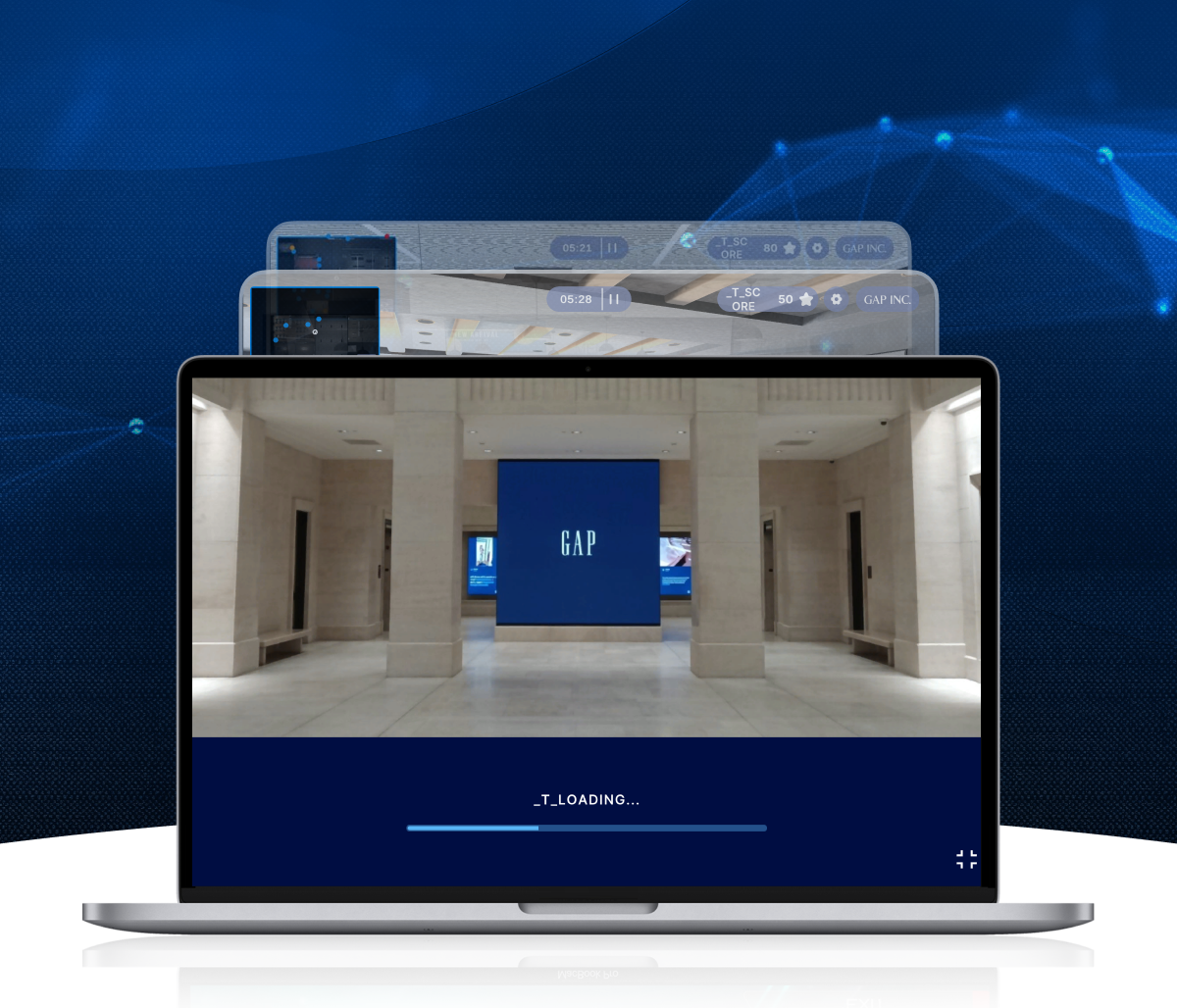
Program-Ace delivered a retail-specific simulation training for Gap Inc., focused on active-shooter scenarios. The project combines realism, branching outcomes, and measurable staff performance.
Simulation training examples
Several companies across industries have successfully implemented simulation training to enhance employee skills and improve performance.
Healthcare industry
For example, in the healthcare industry, hospitals like Mayo Clinic have integrated patient simulation scenarios to train medical professionals in handling complex medical emergencies and providing care to the patients. This has resulted in improved response times, enhanced critical thinking skills, and better patient outcomes.
Manufacturing industry
In the manufacturing industry, companies like Toyota have implemented virtual simulations to train employees in production processes. These simulations enable employees to practice their skills, identify areas for improvement, and optimize production workflows, resulting in increased productivity and reduced waste.
Aviation sector
In the aviation sector, airlines like Delta Air Lines utilize flight simulators to train pilots in various scenarios, including emergencies and adverse weather conditions. This training has proven effective in enhancing pilot decision-making skills, and crisis management abilities, leading to increased safety and operational efficiency.
Oil and Gas sector
In the oil and gas sector, companies like one of Program-Ace clients, use simulations to train their rapidly expanding workforce and ensure safety compliance. Program-Ace has delivered Oil Platform Simulator that offers an interactive, full-featured 3D solution that provided realistic and accurate training in this high-risk industry.

Tap into simulation training with the help of Program-Ace
The combination of training & simulation opens a huge set of opportunities for enterprises, giving them tools to upgrade employee training significantly. At the same time, our practical experience shows the virtual training environment should be precisely tailored to the needs and specifics of the business; otherwise, it would be an entertainment piece rather than an actual educational tool. Therefore, companies that decide to use this approach need to find a reliable simulation training company proficient in VR and AR technologies.
Program-Ace, a leading custom software development company, knows how to use the true value of simulation training. Our expertise in creating immersive and realistic simulations, coupled with our deep understanding of various industries, allows us to develop tailored solutions that meet specific business needs. Feel free to contact us to discuss the details and enter the new approach of employee education.