Author

Founder & CEO at Program-Ace
Why Staff Augmentation Matters in 2026
In the high-stakes environment of modern software and game development, the difference between a market-defining release and a forgotten prototype often comes down to a single variable: the people behind the code.
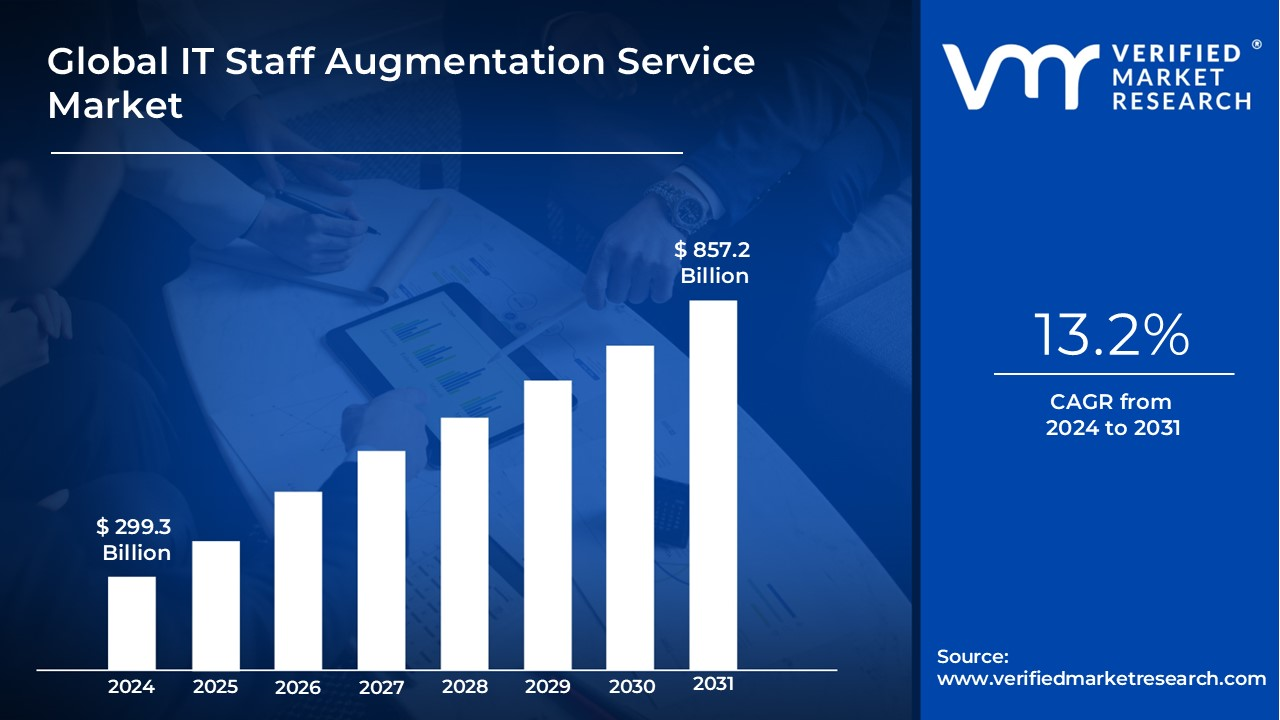
As we navigate the complexities of 2026, the demand for digital agility has rendered the old "hire slow, fire fast" playbook obsolete. Decision-makers must now look outside their organizations when:
- The Velocity Gap: The sheer speed of innovation across the tech landscape now consistently outpaces the cycle of internal upskilling and traditional recruitment.
- Time-Sensitive Rescues: A CTO needs to salvage a slipping timeline or close a critical skill gap.
- Risk Mitigation: A Product Lead aims to de-risk a new feature launch without permanent overhead.
- Market Precision: The project requires niche expertise that traditional hiring cannot provide in time.
Choosing a partner for staff augmentation services is not merely a procurement task; it is a strategic maneuver. It is about finding a studio or agency that operates less like a vendor and more like an extension of your own intellectual capability.
As an innovative solutions integrator and custom software development company, Program-Ace ensures a perfect fit. Our Staff Augmentation model uses the TalentAce methodology to seamlessly integrate vetted developers into your projects. A bad hire in a permanent role is a headache; a bad choice in a strategic partnership can be a systemic failure.
This guide is an exhaustive exploration of that selection process. Drawing from the realities of the 2026 market, we will walk through the granular steps required to identify, vet, and integrate a staff augmentation partner that aligns with both your tech stack and your project's core mission.
Defining Strategic Needs Before Hiring a Staff Augmentation Company

Before you ever open a browser to search for a partner, the first and most critical step happens internally. It is a moment of introspection. Most failures in staff augmentation don’t stem from the vendor's incompetence; they stem from the client not truly understanding what they need.
The Granularity of "Need"
It is not enough to say, "We need more developers." That is a recipe for ambiguity, and ambiguity is expensive. You must dissect your requirement with surgical precision. Are you looking to fill a temporary skill gap because your lead AI engineer is on leave? Are you trying to accelerate a project that is three months behind schedule? Or are you looking to scale a team for a specific "crunch" period, perhaps during a pre-launch phase or a holiday season rush?
The scope of your project dictates the profile of the staff augmentation company you need. If you are building a Retrieval-Augmented Generation (RAG) system for a new AI chatbot, you don’t just need a "developer." You need a senior engineer with specific experience in Large Language Models (LLMs) and vector databases. If you are optimizing a CI/CD pipeline to cut deployment times, you need MLOps specialists who breathe Jenkins and Kubernetes.
The Internal Audit Checklist
Before engaging with the market, conduct a rigorous internal audit:
Skill Gap Analysis: Look at your current team. Where is the friction? Is it a lack of raw manpower, or is it a specific technical deficit? For instance, your backend team might be strong, but they lack the specific know-how to integrate blockchain elements for a decentralized payment app. Identifying this specific void is step one. Fewer than 50% of organizations have a clear understanding of their current skill sets, making this assessment vital.
Duration and Scalability: Define the temporal boundaries. Is this a six-week sprint to build a prototype, or a twelve-month engagement to maintain a live service game? Contract terms and pricing models differ significantly between these engagement types. Staff augmentation services are particularly effective for businesses that need to scale teams up or down quickly in response to project demands, such as during a product launch.
Budgetary Reality: Be honest about the finances. While staff augmentation can save 30-50% compared to the overhead of in-house hiring (cutting out recruitment costs, benefits, and long-term liabilities), it still requires a budget that respects the value of senior talent. The goal is not to find the cheapest option; it is to find the highest value per dollar invested.
Management Capacity: Who will manage these new hands? One of the defining features of staff augmentation, as opposed to outsourcing, is that you retain control. But control requires bandwidth. If your internal project managers are already drowning, adding five external developers will not speed things up—it will capsize the boat. You must ensure you have the internal structure to absorb and direct this new energy.
The Landscape Scan: How to Find a Staff Augmentation Company
Once you know what you need, you enter the research phase. The market in 2026 is flooded with providers, from massive body shops to boutique studios. Navigating this noise requires a filter set to "high sensitivity."
Prioritizing Expertise in a Partner
The golden rule of 2026 is specialization. The era of the "we do everything" shop is fading. You want a staff augmentation partner who doesn't just "have developers," but who has your developers. If you operate in the gaming or simulation space, you need a partner well-versed in real-time rendering, physics engines, and player latency, rather than just someone who can write clean code.
Look for firms that demonstrate expertise in your specific domain. If you are building a fintech product, you need a partner familiar with the regulatory minefields of GDPR or HIPAA. If you are in e-commerce, you need someone who understands the crushing load of Black Friday traffic and can optimize for conversion spikes. Industry-specific knowledge reduces onboarding time and ensures a smoother integration, as augmented staff already understands your market’s unique challenges.
Leveraging the Global Talent Pool
Geography is no longer a barrier, but it is a variable. The normalization of remote work has unlocked talent pools in Eastern Europe, India, and Latin America.
- Eastern Europe has built a reputation for rigorous engineering and software development standards, making it a hotspot for complex R&D and game tech.
- India remains a powerhouse in data analytics and large-scale operations, often offering a competitive cost advantage and a vast pool of English-speaking professionals. The country's cloud consulting staff grew by 35% in 2023, reflecting its capability in niche skill sets.
- Latin America offers the unique advantage of time zone alignment for US-based companies, facilitating real-time collaboration without the lag of asynchronous communication.
- The Philippines is also a strong contender, boasting a highly skilled workforce with strong English proficiency and cultural compatibility with Western businesses.
Your choice of region should be dictated by your operational needs. If your team relies on intense, real-time collaboration (such as pair programming), a nearshore staff augmentation firm in Latin America might be a better fit. If you need a team that works while you sleep to ensure 24/7 progress, an offshore partner in India or Eastern Europe could be the strategic unlock.
The Reputation Check for Your Staff Augmentation Company
Don't trust the sales pitch; trust the track record. In the digital age, reputation is transparent if you know where to look.
- Case Studies: A reputable firm will have detailed case studies. Look for specific metrics. Did they cut deployment time by 70%? Did they help a startup secure $2 million in seed funding by delivering an MVP in four months? Did they help a retailer handle a 30% increase in traffic? These are the signals of competence.
- Third-Party Verification: Platforms like Clutch, GoodFirms, and Glassdoor offer unfiltered views into a company’s performance. Look for patterns in the reviews. Do clients consistently mention "communication breakdowns" or "missed deadlines"? Or do they praise the "seamless integration" and "proactive problem solving"?
- Client References: Go a step further. Ask to speak to a current or past client. Ask them the hard questions: "How did they handle it when a developer wasn't performing?" "Did they respect the IP rights?" "Was the billing transparent?"
Are you looking for an experienced staff augmentation company? We are here.
The Vetting Gauntlet: Screening Your Staff Augmentation Partner
You have a shortlist. Now comes the interrogation. The vetting process is where you separate the vendors who want your money from the partners who want your success. This phase must be rigorous, almost aggressive, in its pursuit of clarity.
Evaluating the Hiring Process
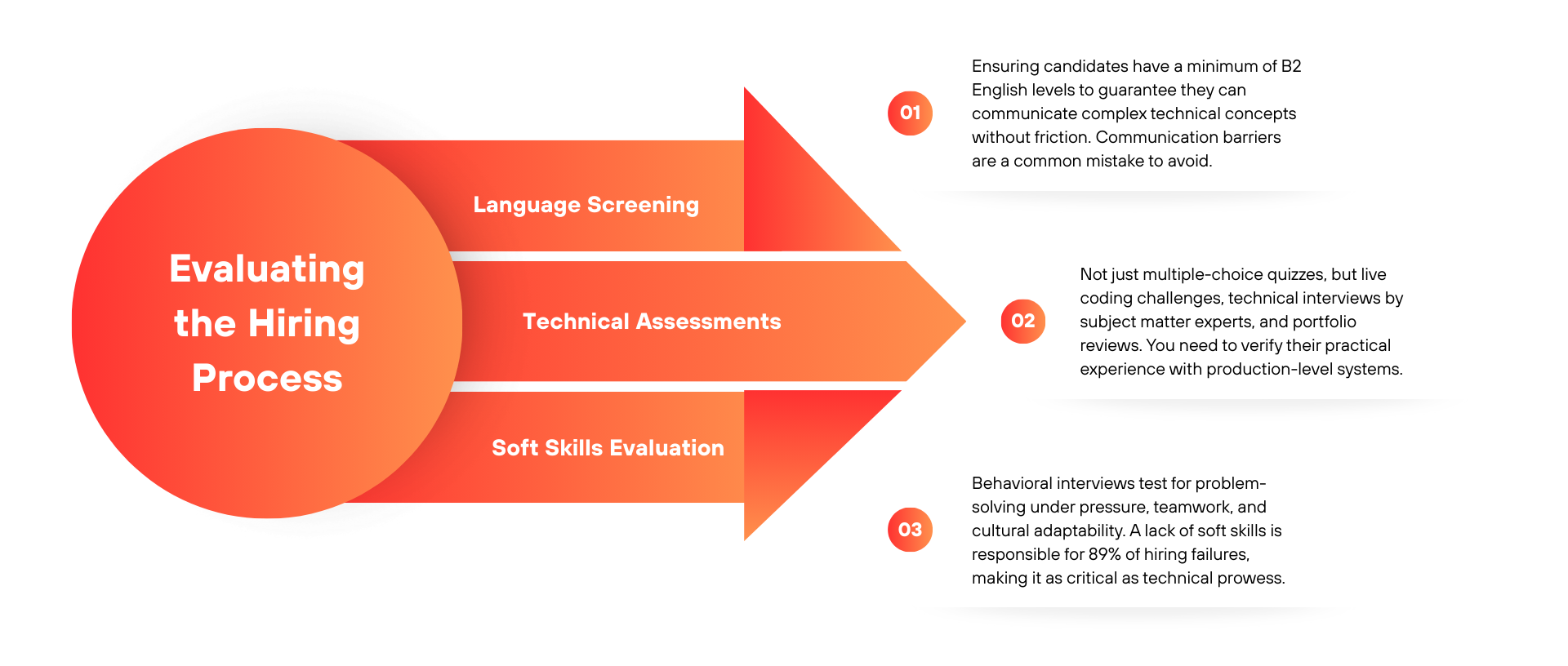
The quality of the staff you get is directly downstream of the partner’s own recruitment process. You are essentially outsourcing your HR function for these roles, so you need to audit their HR process. Ask them: "Walk me through your entire vetting process for a Senior Engineer". If the answer is vague, run. A quality staff augmentation company will have a multi-stage process involving:
The Talent Depth Check
Does the company actually have the talent, or are they going to go find it after you sign the contract? You need to know the depth of their "bench". If you need to scale up by five engineers next week because a publisher accelerated your launch date, can they handle it? Ask about their "Time to Fill". In 2026, a top-tier staff augmentation company should be able to present qualified candidates in days, not months. The standard for in-house hiring is 2-3 months; staff augmentation should deliver within 2-4 weeks at most. Some scalable partners can even source and onboard within 72 hours for urgent needs.
The AI and Future-Readiness Test
We are in 2026. If your potential partner isn't talking about AI, they are already behind. The demand for AI specialists has surged, increasing by 40% since 2023. Whether or not your current project is "AI-driven," you want a staff augmentation partner who is fluent in modern efficiencies. Are they using AI tools to speed up their own coding? Do they have access to MLOps engineers? Do they understand the "Hybrid Model" where human creativity is augmented by automated processes? A partner who leverages these tools will deliver higher value and faster results.
Operational Compatibility with Your Staff Augmentation Firm
You’ve found a partner with good developers. Now, the question is: can you actually work with them? The friction in staff augmentation rarely comes from code syntax; it comes from human dynamics, communication gaps, and cultural misalignment.
Communication Protocols of a Staff Augmentation Partner
Silence is the killer of remote projects. You need a partner who has a codified communication strategy.
- Tools: Do they use the tools you use? Slack, Jira, Trello, Microsoft Teams? They should slot into your existing infrastructure, not force you to adopt theirs.
- Rhythm: Establish the project's heartbeat. Daily stand-ups, weekly sprint reviews, bi-weekly retrospectives.
- Transparency: You should never have to ask, "What is the team working on?" Reporting should be proactive. You want a partner who provides regular updates on progress, challenges, and "blockers" before they become disasters. A transparent communication philosophy fosters an uninterrupted workflow.
Cultural and Time Zone Alignment
"Culture" in this context isn't about ping-pong tables; it's about work ethic and communication style.
- The "Yes" Man Problem: In some cultures, it is considered rude to say "no" or "I don't understand." This can be fatal in software development. You need a partner who trains their staff to be assertive, to ask for clarification, and to push back if a deadline is unrealistic.
- Time Zone Strategy: Use time zones to your advantage. If there is a 12-hour difference, can you set up a "follow the sun" model where your team hands off work at 5 PM, and the augmented team picks it up immediately? Or do you need 4 hours of overlap for collaborative meetings? Define this overlap requirement in the contract.
- The "Buddy System": To mitigate the "us vs. them" mentality, look for partners who encourage or facilitate a buddy system in which an internal employee pairs with an augmented staff member for the first 30 days. This simple human connection can accelerate integration and trust.
Security and Compliance: The Non-Negotiables
You are granting an external partner access to your most critical assets, including your codebase, user data, and intellectual property. Security cannot be an afterthought.
- IP Rights: The contract must explicitly state that you own 100% of the code, designs, and inventions created by the augmented staff. There should be no ambiguity.
- NDAs: Robust Non-Disclosure Agreements must be signed not only by the vendor but also by the individual engineers.
- Data Security: How is data handled? Is it encrypted in transit and at rest? Do they use secure cloud storage? If you are in healthcare or finance, are you HIPAA- or GDPR-compliant? A reputable staff augmentation firm will have documented disaster recovery plans and multi-factor authentication protocols.
- Physical Security: If they are working from an office, what are the physical access controls? If they are remote, do they use secure, company-issued hardware?
Structuring the Agreement with a Staff Augmentation Partner

You have the right partner. Now you need the right deal. The contract structure will determine the relationship's flexibility and financial viability.
Pricing Models of a Staff Augmentation Company
Staff augmentation typically functions on a "Time and Material" basis, meaning you are billed solely for the hours worked. However, you should look for transparency. Are there hidden fees? What is the overtime policy? Be wary of the "lowest bidder". If a vendor offers a rate that seems too good to be true, it is. You will pay for it later in refactored code and missed deadlines. The goal is cost efficiency, not just low cost. Instead of focusing on the cheapest option, analyze the total value proposition; a slightly higher rate for a highly skilled professional who can deliver quality work efficiently will almost always provide a better return on investment.
Contract Flexibility and KPIs
- The market is volatile. You need a contract that breathes.
- Scalability Clauses: Can you add three developers next month? Can you downsize the team if the project concludes early? Look for contracts that allow for scaling without punitive fees.
- Notice Periods: What is the notice period for termination? A standard is often 14-30 days. Avoid being locked into year-long commitments for what should be a flexible resource.
- Replacement Guarantee: What happens if an engineer isn't working out? A strong staff augmentation partner will offer a "trial period" (e.g., 2 weeks) to help you assess the fit. If it doesn't work, they should replace the resource immediately at no extra cost.
Moving Beyond "Hours Worked"
Traditional staff augmentation bills for time, but modern partnerships measure outcomes. Incorporate KPIs (Key Performance Indicators) into your management.
- Sprint Goal Alignment: Did the augmented staff complete >90% of their assigned story points?
- Code Quality: Monitor bug rates and code review turnaround times.
- Integration: Use peer feedback scores. Is the augmented engineer contributing to architectural discussions? By shifting the focus to these metrics, you align the vendor’s incentives with your business goals. You stop asking "Did they work 40 hours?" and start asking "Did they help us ship the feature?"
Execution: Managing the Relationship with Your Staff Augmentation Company
The contract is signed. The team is assembled. Now the real work begins. The success of the engagement is now largely in your hands as the manager.
The Onboarding Sprint
Treat augmented staff exactly like full-time employees during onboarding.
- Access: Give them their email, Jira access, and repo permissions before Day 1.
- Documentation: Provide clear architectural diagrams, coding standards, and project roadmaps.
- Introduction: Introduce the team to them during a video call. Put a face to the name. Make them feel part of the mission.
- The "First Win": Assign a small, well-defined task for their first week. This allows them to commit code, learn the release process, and build confidence quickly.
Managing the Hybrid Team
Your role is to act as the conductor of this hybrid orchestra.
One Team, One Dream:
Don't segregate the "contractors" from the "employees". Invite them to the all-hands meetings. Celebrate their wins. Include them in the team chats. Disengagement leads to churn, and churn is expensive.
Clear Hierarchy:
Define roles using a framework like RACI (Responsible, Accountable, Consulted, Informed). Who owns the code quality? (Ideally, your internal Tech Lead). Who is responsible for writing it? (The augmented engineer).
Knowledge Transfer:
Don't let knowledge walk out the door. Make documentation a required part of the workflow. If an augmented engineer builds a complex module, they must document it. In the final weeks of an engagement, shift their focus almost entirely to handover sessions and wiki updates.
Future Trends for the Modern Staff Augmentation Partner
As we look toward the latter half of the decade, the model of staff augmentation is evolving. We are witnessing a shift toward "Staff Augmentation 2.0," a model that is more strategic, integrated, and technologically advanced.
We are seeing the rise of AI-Augmented Staffing, where human developers come paired with AI toolsets that multiply their productivity. We are seeing a focus on Sustainability and Diversity, where global sourcing allows companies to support eco-conscious operational models and tap into underrepresented talent pools.
We are also seeing the blurring of lines between "in-house" and "augmented." As remote work becomes the default for tech, the distinction between a developer in your city and a developer in a partner’s hub in Eastern Europe becomes purely administrative. The tangible results, specifically the code, creativity, and the product itself, are the only metrics that truly matter.
Conclusion: Choosing the Best Staff Augmentation Company

Choosing the right staff augmentation company is not about buying a commodity; it is about choosing a partner for the trenches. It is about finding a team that will stay late to fix a critical bug before launch, a team that will suggest a better architectural approach because they care about the product’s longevity, and a team that scales with your ambition.
Whether you are a startup founder prototyping an MVP on a shoestring or an enterprise CTO orchestrating a massive digital transformation, the principles remain the same: Know your needs. Vet with rigor. Integrate with empathy. Manage with clarity.
In the end, software is built by people. The right staff augmentation partner gives you access to the best people in the world, exactly when you need them. For a studio like Program-Ace, which lives and breathes the complexities of full-cycle development, this isn't just a business strategy; it's the only way to build the future. The tools are in your hands—choose wisely.
A Final Checklist for the Decision Maker
To summarize this journey, use this final scorecard before signing any agreement. If you cannot check these boxes, pause and reassess.
- Clarity: Have I defined the exact skill set, duration, and budget for this role?
- Expertise: Does the vendor have proven case studies in my specific industry (e.g., game dev, fintech, AI)?
- Vetting: Have I personally interviewed the candidates or verified the vendor’s rigorous screening process (technical & soft skills)?
- Communication: Is there a clear protocol for daily/weekly updates and a plan for time zone overlap?
- Security: Is there a signed NDA, and does the vendor comply with my data security requirements (GDPR, IP ownership)?
- Flexibility: Does the contract allow me to scale up/down or replace a candidate with reasonable notice?
- Cultural Fit: Do the candidates have the language proficiency and work ethic to integrate seamlessly with my internal team?
By adhering to this disciplined approach, you transform staff augmentation from a tactical fix into a strategic superpower. The talent is out there. Go get it.
Deep Dive: The Economics of Staff Augmentation
To fully appreciate the strategic value of this model, one must understand the financial mechanics that drive it. In 2026, the cost of "bad hiring" has never been higher. The traditional recruitment process for a specialized software engineer typically takes 2-3 months. During this time, your project is stalled, your "time-to-market" clock is ticking, and your competitors are moving forward.
Once you find a candidate, the costs compound. You are not just paying a salary; you are paying for recruitment fees, onboarding, health benefits, insurance, hardware, office space, and ongoing training.
Staff augmentation inverts this risk profile.
- Zero Recruitment Cost: The vendor absorbs the cost of finding, vetting, and hiring the talent. You pay only for the time they work on your project.
- Operational Savings: Industry estimates suggest businesses can save 30-50% on operational costs by augmenting staff. You don't pay for their health insurance, their sick days, or their 401(k). You pay a flat rate for output.
- Flexibility as Currency: The ability to "turn off" the cost is perhaps the most valuable asset. If a project is paused or completed, you end the contract. There are no severance packages, no morale-damaging layoffs, and no legal entanglements. You simply scale down.
- The Opportunity Cost of Speed: Consider a fintech startup that needs to launch a DeFi platform. If they hire in-house, they might launch in six months. With staff augmentation, they can onboard a team of blockchain experts in three weeks and launch in four months. That two-month head start can be the difference between capturing the market and being a follower.
The Role of AI in Your Selection Process
A critical, often overlooked aspect of choosing a partner in 2026 is their relationship with Artificial Intelligence. AI is not just a buzzword; it is a force multiplier. When evaluating a staff augmentation partner, probe their AI maturity.
AI-Driven Sourcing
Does the vendor use AI algorithms to match candidates to your requirements? Advanced firms use AI to scan thousands of profiles, matching not just keywords but "skills adjacency" to find the perfect fit faster.
AI in Development
Do their developers use tools like GitHub Copilot or AI-assisted testing frameworks? A developer who effectively uses AI can be significantly more productive. Since you are paying for time, ensuring that every hour delivers maximum impact is essential.
Knowledge Management
Does the vendor use AI to document code or summarize meetings? This ensures that even temporary staff leave a permanent trail of clarity.
A partner like Program-Ace, deeply entrenched in the cutting edge of development, recognizes that the best engineers are those who know how to wield these new tools to deliver better products faster.
Navigating the "Hybrid" Future
The binary choice between "In-House" and "Outsourced" is dead. The future is Hybrid. Successful companies in 2026 are building "core" teams of permanent employees who hold the long-term vision, culture, and architectural knowledge. They then surround this core with a flexible "cloud" of augmented staff who bring specialized skills and execution power.
This model requires a shift in mindset. You are not "outsourcing a project"; you are "augmenting a capability."
- The Core Team focuses on the What and the Why.
- The Augmented Team focuses on the How.
For example, your internal Creative Director defines the vision for a new game level. Your internal Lead Architect defines the data structure. Then, a team of augmented Unity developers and 3D artists executes the vision, building the assets and scripting the interactions. Once the level is built, the augmented team scales down, while the core team moves to the next phase.
This Elastic Workforce model is the secret weapon of the fastest-growing tech companies. It allows for aggressive expansion during boom times and safe contraction during market corrections, all while maintaining the integrity of the product.
Program-Ace Staff Augmentation Services: Trust is the Ultimate KPI
In the end, all the checklists, scorecards, and contracts serve one purpose: to establish trust. Software development is an inherently messy, complex, human endeavor. Requirements change. APIs break. Deadlines shift. When the storm hits, you don't want a staff augmentation partner who points to a clause in the contract; you want a partner who jumps in the trench with you to shovel out the mud.
Finding that partner takes effort. It requires you to be demanding, diligent, and clear. But the reward is a level of agility and capability that can transform your business. You stop being limited by the people you can hire in your zip code and start being empowered by the best talent on the planet.
The world is your talent pool. Choose the right guide, and dive in. Contact us today to discover how our experts can elevate your next project.