
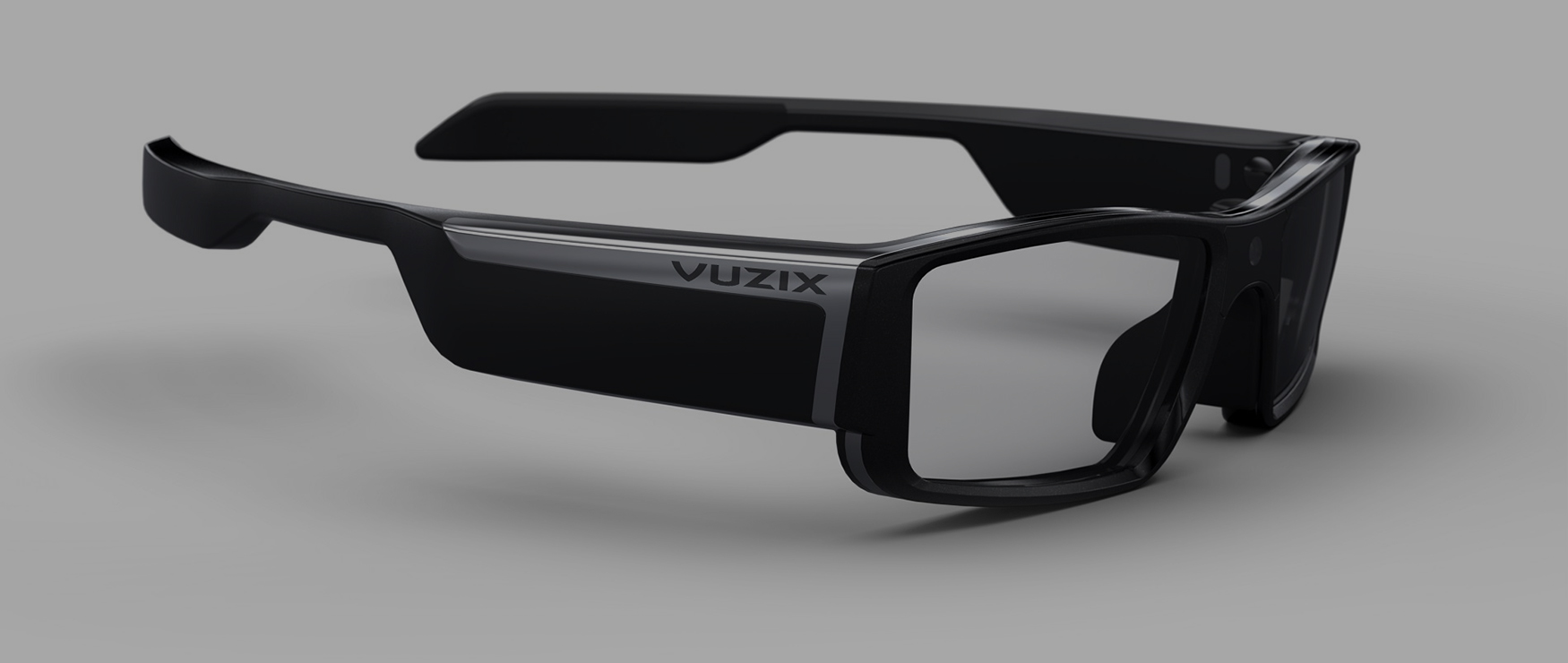
Vuzix is one of the established names in enterprise AR smart glasses, and the Vuzix Blade helped put it there.
The original Blade has since been succeeded by the Blade 2, alongside a wider enterprise lineup, the M400, the warehouse-focused LX1, and the waveguide-based Shield, and Vuzix now also supplies waveguide optics to other device makers. This guide covers what the Vuzix Blade is, its specs, how development works, and how to build an app for it.
Looking for Vuzix Blade developers for your AR project?
What is the Vuzix blade?
Vuzix Blade is a set of eyeglasses with a built-in display and augmented reality features, among others.
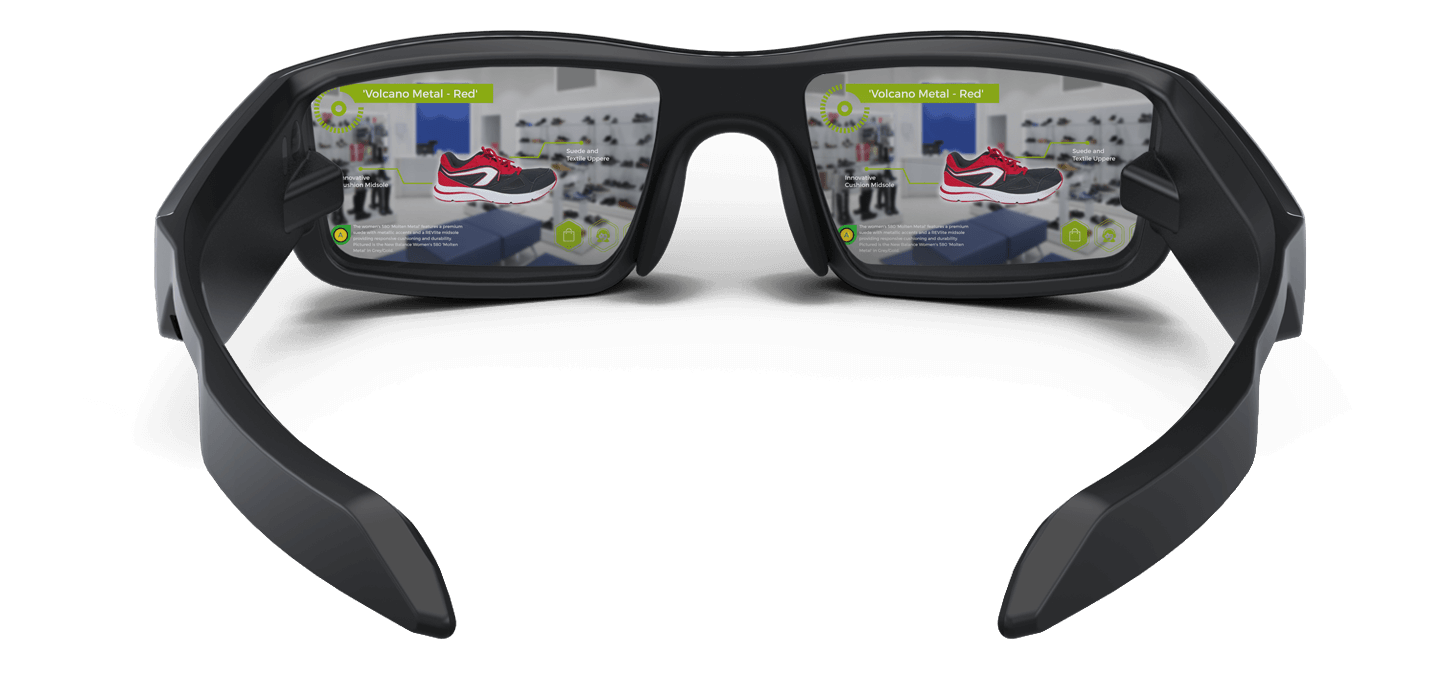
Augmented Reality (AR) works by overlaying digital elements and objects over real objects and settings in a visual interface. Thus, the glasses (labeled Smart Glasses by the creators) allow anyone wearing them to see the world around them through the glasses, but the display integrates digital elements into the field of view, which may be logically linked to objects in the field of view.
The original Blade was released by the American company Vuzix in January 2019, in an everyday model and an impact-resistant “Safety” model for industry.
Vuzix has since expanded well beyond it: the Blade 2 succeeds the original, while the M-Series (now the M400) and the rugged, freezer-rated LX1 target field service, manufacturing, and warehousing. The specs below describe the original Blade; current models improve on them.
Vuzix blade review
“The Vuzix Blade sunglasses are excruciatingly close to achieving what Google set out to master years ago… truly augmented reality that not only keeps you connected but tells you more about the world around you.”
Vuzix blade specs
At first glance, Blade looks like a pair of ordinary (if somewhat bulky) black sunglasses.
Still, appearances can be deceiving, and there is a lot more to this product than meets the eye. Hardware-wise, it is quite impressive how much tech Vuzix has managed to pack into a pair of glasses. The ends of the glasses’ temples house their batteries and haptic feedback device, while the side shields house a touchpad and the display engine. Accordingly, the lenses feature a transparent display and a camera. Finally, the frame around the lenses contains a MicroSD slot, noise-canceling microphones, and the operating system hardware. All in all, the Vuzix Blade Weight adds up to 90 grams (3.17 ounces).
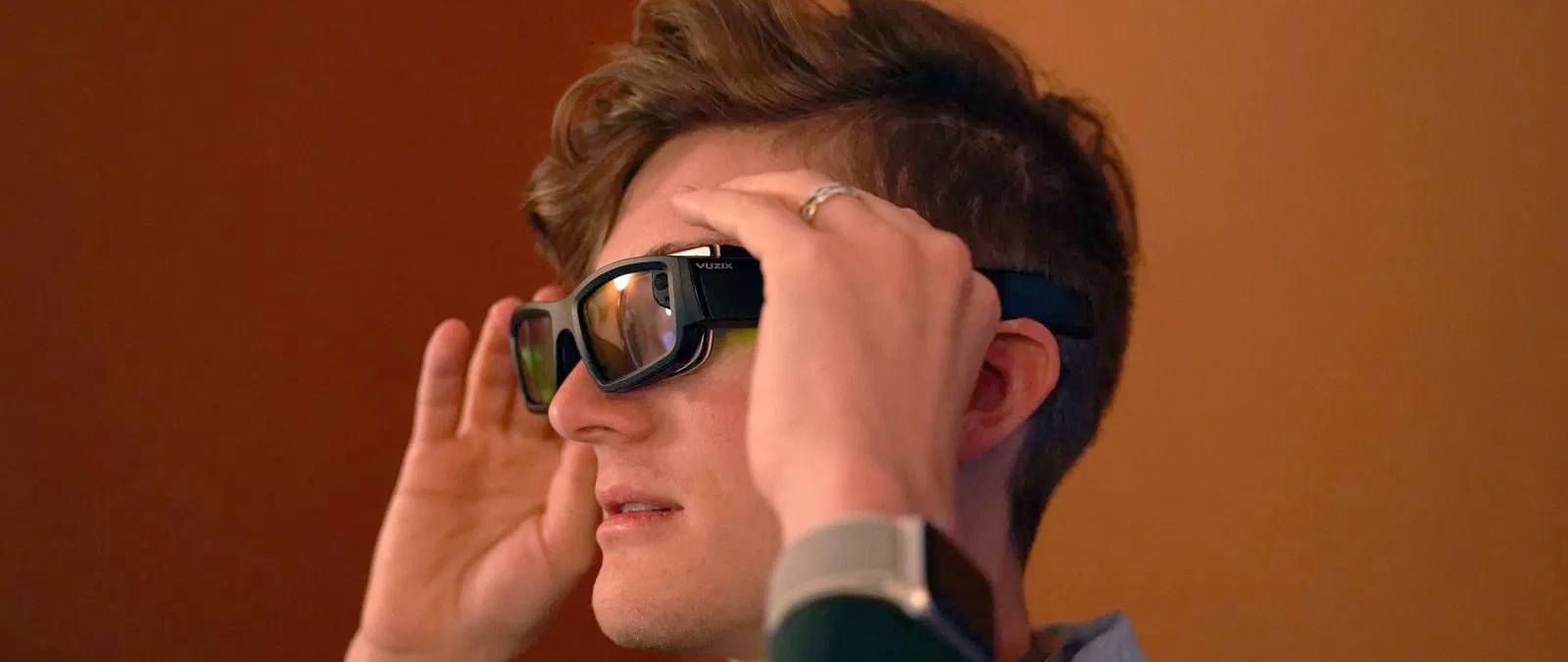
At the time of writing, the base-model Vuzix Blade Smart Glasses price is €912 (approximately 1013 U.S.
If a user has any sort of vision condition or problem, they can also buy customized prescription lens for an additional €190, which will suit them most comfortably and efficiently. The price points can be quite hefty for someone just jumping into the world of augmented reality, so finding a used Vuzix Blade for sale can be a viable alternative.
Looking past the hardware and price, we get to the real selling point of the glasses – their features.
Vuzix blade features:
The Vuzix Blade display resolution is easily one of its best features, as you can open a variety of top-notch apps and media files and view them in great detail. This is further aided by the impressive Vuzix Blade FOV, as the display can be moved around to different points on the lens, expanding the typical 19-degree FOV to a whole 28 degrees. Furthermore, apart from the standard functionality made possible by the hardware, the Android system and Alexa assistant software allow users to do so much more with the application.
| Screen resolution | 480 x 853 |
| Display | transparent |
| Camera | Fixed-focus |
| Field of view (FOV) | 19*-degree |
| Voice assistant | Alexa |
| Ecosystem support | Android |
| Control | By smartphone |
| Other features | Head detection |
Vuzix blade AR smart glasses development
The operating system running on the glasses is Android 5.1.1, so developing software for it is possible with 4 programming languages compatible with Android development – Java, Kotlin, C, and C++. The company recommends developing software with the general Android Studio program, but has plenty of its own tools for developers, including a Speech SDK, a connectivity SDK, and HUD API.
Potential developers can find all of the relevant documentation on the company’s Developer Center pages.
It is also important to mention that several other service providers have developed their own development kits for building applications for Vuzix Blade AR glasses that are compatible with their platforms. For example, Unity and Wikitude freely offer SDK downloads. Vuzix has also built proprietary applications (Commercial Edge Suite, the Companion App) to make it easier for users to manage the glasses and use them properly with their smartphones.
All other applications currently approved for use with the glasses can be found on the company’s App Store.
Finding a Vuzix blade developer
Across more than 30 years in wearable optics, Vuzix has kept releasing new AR products and now designs waveguide displays used by other device makers too. The Blade line and its successors show the company’s steady push in enterprise AR, from field service to warehousing.
The company App Store already features hundreds of applications compatible with the glasses, but it is never too late to create more.
If you are interested in developing a Blade project but lack the expertise to do it yourself, you shouldn’t hesitate to hire a developer for the task. Program-Ace is a top augmented reality app development company with a long history of software development. Our experienced developers have built applications for many platforms and devices, including those rooted in AR/MR/VR. Thus, you can count on us to develop your Blade application with the highest level of proficiency and dedication.