
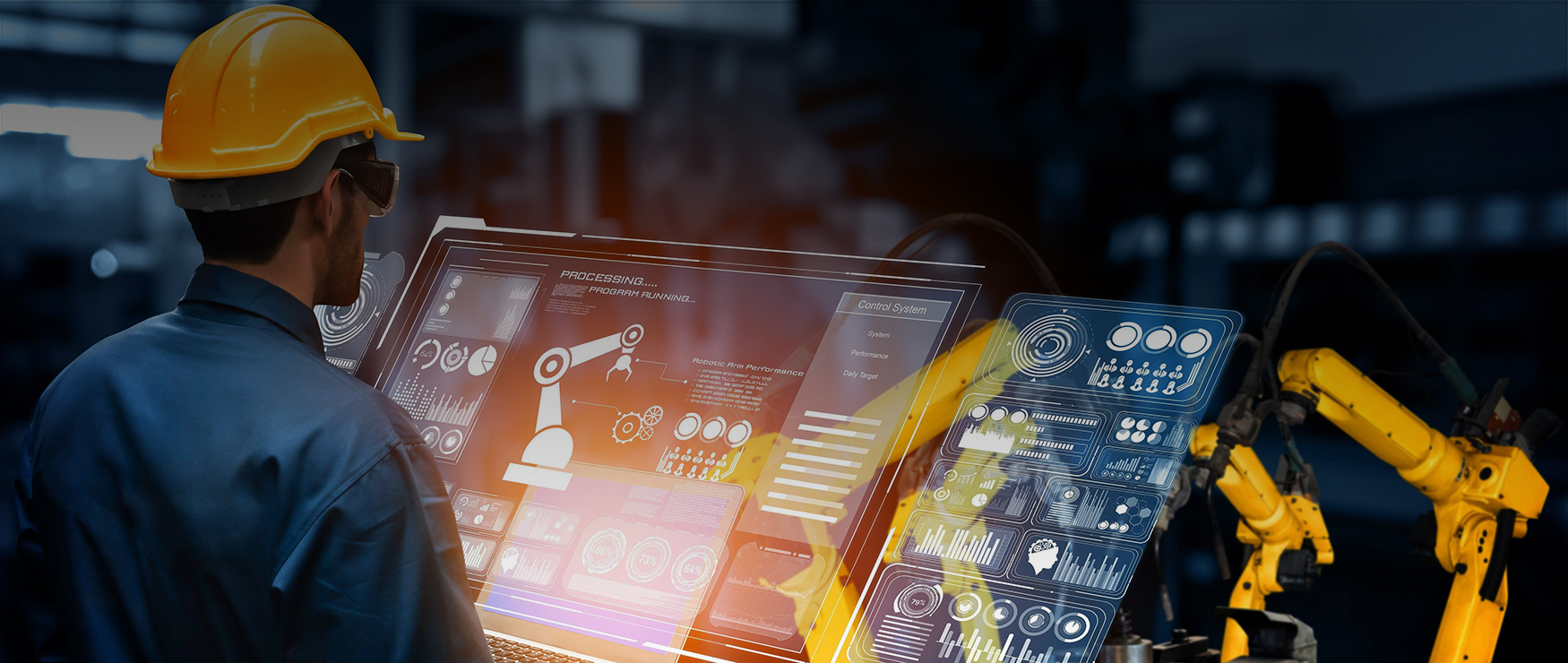
There are four main types of digital twins, classified by scale: component twins (a single part), asset or product twins (a full product or machine), system twins (several assets working together), and process twins (an entire operation or workflow). Each represents a physical thing at a different level of complexity, from one sensor-equipped component up to a complete production process, and the right type depends on what you need to model, monitor, or optimize.
The momentum is real: digital twin adoption is growing fast across industry, with the market on track for double-digit annual growth through the decade.
A digital twin is a virtual replica of a physical object or system, kept in sync with real-world data so you can simulate, analyze, and predict its behavior. This guide explains each of the four types, how they differ, and where they are used, with real examples.
What are the types of digital twins?
A digital twin is more than a 3D model.
It is a technology that allows the creation of a virtual copy of any entity. However, a true digital twin is more than a simple replica of a product, an equipment piece, or a workshop. The underlying concept of the technology implies that there is a real-time data exchange between a digital twin and its physical counterpart. This ensures that the data obtained through the implementation of the technology is relevant and corresponds with ever-changing real-life conditions and external influences.
Manufacturers use digital twins differently and apply them to various stages of the production process.
But the main value of these solutions remains the same: in their diverse types, every digital twin pursues the goal of process optimization, which triggers the following changes and upgrades like the adoption of smart automation, predictive analytics, and others.
To explore details, there are several types of digital twins, and the main difference between them is the scale of coverage.
While some solutions may represent the smallest unit of the production line, others might imitate the whole shop floor or even the factory. So, let’s contemplate the four main digital twin types.
Component twin
Start at the smallest scale and work up.
The component twin, also sometimes called parts twin, is the lowest level of digital twin technology.
It corresponds with the smallest elements of the system, a certain part of the equipment or product, e.g., a sensor, a switch, a valve, etc. The virtual representation of such smart parts allows for monitoring of their performance and simulating real-time conditions to test their endurance, stability, and efficiency.
While this type of digital twin mimics the manufacturing layout on a minor level, it enables enhanced surveillance of the equipment parts and their timely maintenance, which, in turn, ensures the stability of the production process and product quality.

Product digital twin, or asset digital twin
A product or asset type of digital twins is the next stage in the hierarchy of this technology.
Usually, they consist of several component twins or use the info generated by part twins to model a complex asset like an engine, a pump, or a building. An asset twin analyzes how efficiently separate parts interact together and perform as a whole solution.
The implementation of asset/product digital twins allows engineers to acquire insights regarding equipment performance and detect potential improvement cases. This consequently powers up productivity enhancement, optimization of such metrics as mean time between failures (MTBF) and mean time to repair (MTTR) and resource consumption reduction.

System twin
System twins duplicate assets on the system level, representing how different assets combine into functional units (therefore, you can also encounter the name “unit twins” applied to these solutions). System twins give a large-scale overview of the factory or plant, making it possible to test different system configurations to achieve optimal effectiveness or reveal new business opportunities for the introduction of additional profit sources.
The coverage of system twin includes a set of assets involved in a certain operation, e.g., energy supply or production of a certain base product within the plant.
The real-time monitoring and simulation on this level go beyond the detection of malfunctions and failures achieved through simpler types of digital twins. It is a path to gaining data valuable for strategic change-making and full process visibility.

Process digital twin
The highest level of digital twins, process twins, connects the system twins into one entity that explores the collaboration and synchronization between different systems.
This solution gives the maximal view of the processes and workflows within the plant or factory, which allows for a much deeper and more versatile analysis of output.
Process twinning helps to tweak inputs like the rate of feeding raw materials, production temperature, etc., and gain data on outputs without disrupting the actual manufacturing process and jeopardizing the production quality. As a result, executives get a chance to conveniently and harmlessly test different business hypotheses, efficiently track essential business metrics and enable data-driven decision-making rather than rely on intuition or speculations.


How different types of digital twins are represented in industries
In recent years, more and more sectors started to grasp the value hidden behind the digital twins.
We can see successful implementation cases in healthcare, logistics, retail, and e-commerce, but still, manufacturing remains one of the leaders in the digital twin adoption and development. Dozens of worldwide manufacturing giants report about impressive results they manage to achieve through digital twin adoptions. Within this list, you can find brand names like Tesla, Ford, Lockheed Martin, General Electrics, and many others.
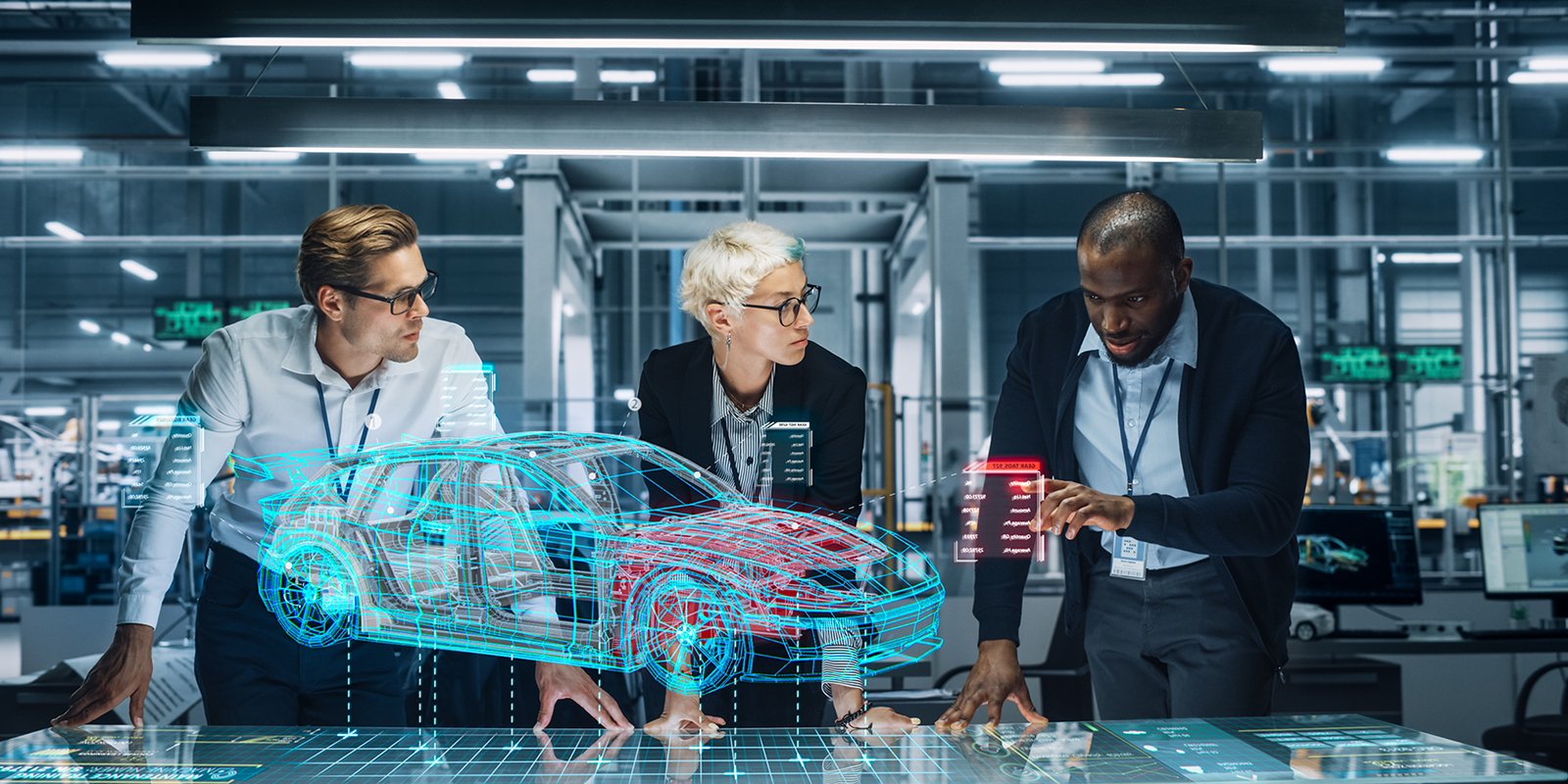
Component twins, as the first and the smallest link in the digital twin ranking, are one of the most common examples of digital twins in manufacturing.
They are the building blocks for the more advanced digital twinning system and enable the practice of real-time monitoring and simulation within the company.
Product and asset twins are also gaining popularity within various factories and plants.
First, they allow simulating equipment pieces, which in turn powers up predictive maintenance, a practice that reduces downtime and saves thousands of dollars for manufacturers.
Second, through product twining, automotive manufacturers are able to create virtual copies of the vehicles they sell, monitor their state, and notify car owners about maintenance needs before the breakage occurs, thereby improving customer satisfaction and reducing warranty expenses.
Third, asset twins can even change the business model of the enterprise, and Kaeser, a manufacturer of compressed air solutions, is a vivid example of this phenomenon.
This company implemented digital twin technology to track the data on the air consumption of their products. Instead of selling their system to the client, they decide to charge customers according to the air consumption rate.
Fourth, product and asset twining also play a crucial role in the creation of the industrial metaverse.
The digital twin technology and the metaverse are directly connected, as the former makes it possible to transfer physical entities into the virtual world precisely. Hence, the companies that work on developing their virtual factories rely on product and asset twins in order to use the full potential of the metaverse.
Program-Ace builds scalable 3D urban digital twins
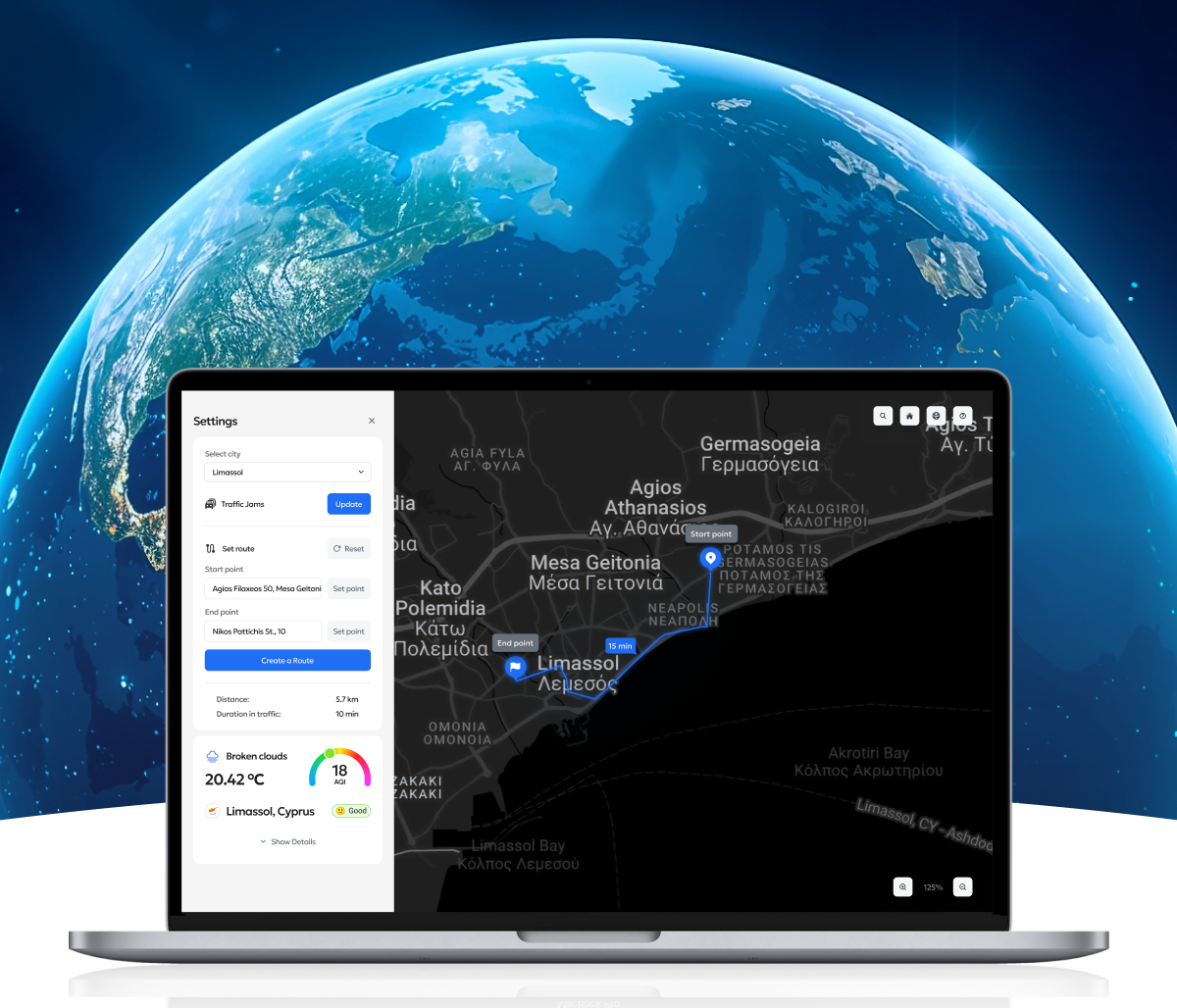
Cities like Limassol and Leipzig gained real-time insight through Program-Ace’s Cesium digital twins, merging terrain, structures, and live signals in a single browser tool. See how fragmented data can be turned into unified intelligence.
System and process digital twins as more complex types of technology are mainly adopted by huge conglomerates that have the opportunity to invest in long-term development projects.
As a result, such enterprises manage to reach enhanced levels of smart automation and relieve employees from excessive workload, reduce the number of defective batches, optimize electricity and water consumption, enhance safety, or gain full control over processes and production quality like Unilever.
As you can see, the more advanced type of the digital twin the company adopts, the more substantial result it achieves.
At the same time, you won’t be able to skip the first levels of digital twins and immediately start to model complicated, intertwined systems because the advanced solutions usually consist of the plainer predecessors.
We are here.
Examples of digital twins by type
Each type of digital twin maps to concrete real-world uses. Seeing them side by side makes the classification easier to apply.
- Component twin, a single sensor-equipped part such as a motor bearing or a turbine blade, monitored for wear and failure prediction.
- Asset or product twin, a complete machine or product, a pump, a vehicle, an aircraft engine, used to test performance and plan maintenance across its lifecycle.
- System twin, several assets working together, a production line or a building’s HVAC, used to optimize how the parts interact.
- Process twin, an entire operation, a factory floor or a supply chain, used to model and improve the whole workflow.
Industries apply them differently. Manufacturing uses component and asset twins for predictive maintenance; smart cities and construction use system and process twins to plan infrastructure; energy and utilities use all four to manage complex, distributed operations.
Which type of digital twin do you need?
Choose by the question you are trying to answer, not by the most advanced option.
If you want to predict when a single part will fail, a component twin is enough.
Need to understand a full machine’s performance over its life? An asset twin fits. If the problem is how several assets interact, you need a system twin, and if you are optimizing an entire operation end to end, a process twin is the right scale.
In practice, digital twins are often built in layers: component twins feed asset twins, which feed system and process twins.
Starting small, with one high-value component or asset, and expanding as the data and value prove out is usually more successful than modeling an entire process from day one.
Cesium expertise for digital twin development
Program-Ace applies deep Cesium development expertise to help enterprises design digital twins that mirror real-world assets and environments with measurable precision.
Our developers work with CesiumJS, 3D Tiles, and Cesium ion to process terrain, photogrammetry, and live sensor data into responsive, browser-based systems capable of representing entire cities or industrial networks. Each solution is structured to ensure high accuracy, performance, and interoperability.
Our Cesium proficiency extends across several technical directions:
- Geospatial Data Processing. Conversion of LIDAR, BIM, CAD, and satellite data into optimized 3D Tiles for smooth visualization at any scale.
- Digital Twin Architecture. Construction of interactive geospatial models that connect with IoT, GIS, and enterprise databases for continuous data synchronization.
- AI and Analytics Integration. Embedding predictive algorithms for monitoring asset health, forecasting risks, and improving operational decision-making.
- Hybrid Visualization. Combining Cesium with Unreal Engine or WebGL frameworks to deliver photorealistic or specialized industry-grade environments.
- Enterprise System Connectivity. Integration with ERP, SCADA, and BI tools to create an end-to-end information flow across departments.
Through this structured approach, Program-Ace transforms Cesium-based platforms into intelligent digital twins that evolve alongside real infrastructure. The outcome is a scalable, real-time environment that supports advanced analytics, collaborative planning, and high-fidelity visualization, empowering organizations to maintain situational awareness and manage assets with complete spatial accuracy.
Build your digital twin with Program-Ace
In a world of growing innovations and intense competition, digital twins have become almost a must-have element for manufacturers that aim for success.
Thanks to their popularity, digital twins are a pretty mature technology that has proved its value and positive impact on factory and plant effectiveness. Therefore, it is high time to consider implementing this technology for your manufacturing business, especially if your competitors have already started the adoption process.
To ensure a positive outcome for this initiative, it is crucial to get support from a reliable development vendor that has experience delivering such types of digital twin solutions. Program-Ace, an innovative solutions integrator with 30 years of track record in the industry, is experienced in building digital twins for businesses operating in the manufacturing industry. We have expertise in simulation development, 3D modeling, AR/VR, integrations, and other areas necessary for a digital twin creation.
Feel free to contact us to learn the details.