

A vehicle configurator lets a buyer build a car online, choosing trim, color, wheels, interior, and packages, and see the result rendered in real time before ordering. It replaces guesswork with an interactive preview that raises purchase confidence, lifts order value through visible upgrades, and cuts the returns and misunderstandings that come from static brochures. This guide covers what vehicle configuration is, its business value, the features that matter, real examples, the challenges, and where the technology is heading.
For automotive businesses, car configurator solutions raise engagement without depending on a physical showroom. Customers compare configurations from home and decide with confidence, while sales teams present accurate visuals that cut misunderstandings and improve conversion.
What was once an optional add-on is now a standard sales tool. A configurator is not only customization; it is a scalable way to run customer-driven sales that meet buyer expectations for convenience and transparency.
Introduction to digital vehicle customization
Automotive customers want clarity when selecting features, and digital tools now provide it. A vehicle configurator allows buyers to explore every option before purchase. To learn how this approach compares with other customization models, see types of product configurators. Instead of relying on brochures or static websites, customers see interactive visuals that reflect their choices in real time.
Businesses benefit as well, since fewer sales depend on physical showrooms and in-person consultations. Dealers can guide clients remotely while providing accurate and consistent information across all channels. Digital customization simplifies complex decision-making, fosters confidence in purchasing, and supports sales strategies focused on long-term retention.
What is vehicle configuration and why it matters
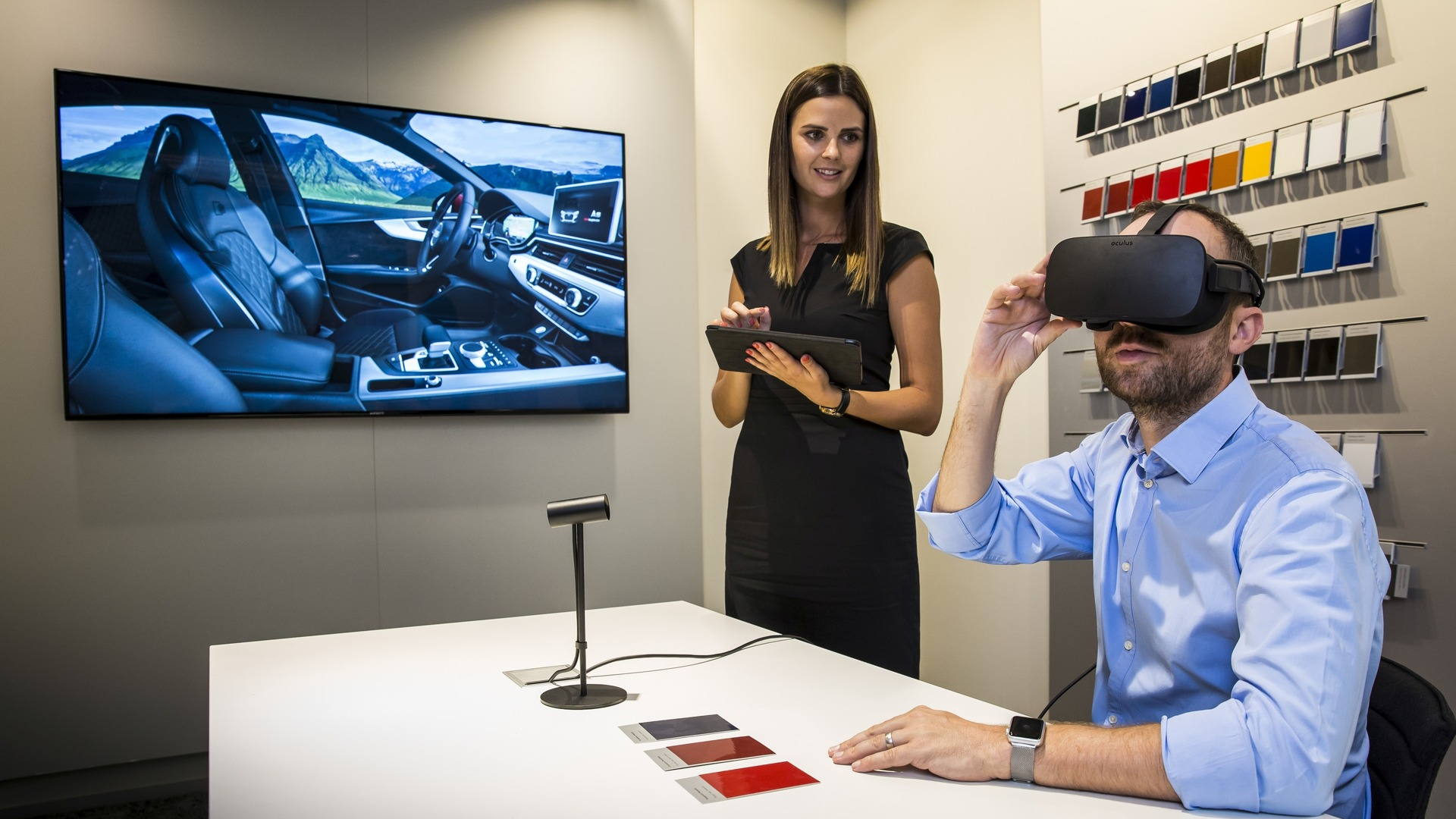
Vehicle configuration refers to the structured process of tailoring a car by selecting elements such as trim level, color, wheel design, and technology packages. It ensures the product matches customer expectations before manufacturing or delivery. For buyers, configuration delivers transparency and control.
For businesses, it reduces errors and increases trust during the sales cycle. When done through a digital tool, the process becomes more efficient and visually engaging. A clear definition of vehicle configuration is essential, as it highlights its role as both a customer service instrument and a profit driver.
Defining what is vehicle configuration in simple terms
Vehicle configuration means choosing specific options to create a car that matches personal preferences. Instead of a one-size-fits-all model, a buyer can pick exact details, including interior finish, safety add-ons, or performance upgrades. In digital form, this process is presented through an interactive interface that updates instantly with every change.
Key aspects include:
- Trim level. Defines the basic set of features offered for a model.
- Exterior styling. Covers paint color, wheel types, and lighting variations.
- Interior options. Allows customers to adjust seating materials, dashboard layouts, and in-car technology.
- Performance features. Lets users select engines, transmission types, or efficiency packages.
By laying out each component clearly, configuration tools help customers avoid confusion. Businesses also reduce the risk of miscommunication, since both parties see the same visualization. Understanding vehicle configuration in simple terms removes barriers between expectation and delivery.
All the benefits of vehicle configuration for buyers and sellers
The importance of configuration grows as both sides seek efficiency and precision. Buyers feel more confident when they can confirm details before finalizing a contract. Sellers, on the other hand, avoid costly rework or dissatisfaction caused by unclear expectations.
The main benefits include:
- Customer empowerment. Clients make informed choices without pressure.
- Reduced sales friction. Clear visualization speeds up decision-making.
- Improved conversion. Personalized options drive stronger purchase intent.
- Lower returns. Accurate pre-purchase previews decrease dissatisfaction.
- Operational efficiency. Sales teams spend less time on manual explanations.
Real-world usage shows measurable effects. For example, automotive brands report higher engagement rates on websites offering configurators compared to those with static product pages. Dealers equipped with digital configuration tools can also respond faster to inquiries. Buyers leave interactions satisfied, and businesses secure higher-value transactions by encouraging upgrades during the process.
Common misconceptions about vehicle configuration
Many businesses hesitate to implement configurators due to misunderstandings about cost, complexity, or practicality. One frequent assumption is that only large automakers can justify such systems. In reality, scalable solutions exist for dealerships and smaller retailers as well.
Other misconceptions include:
- Configurators are expensive. Cloud-based tools and modular designs allow businesses of different sizes to adopt them without prohibitive investment.
- They slow the sales cycle. Interactive visuals actually shorten time-to-decision by clarifying options early.
- Buyers prefer in-person selection. Studies show that digital-first customers value flexibility and transparency more than those who browse showrooms.
- The technology is challenging to maintain. Many providers offer integrated platforms with automated updates and easy data management.
Addressing these myths highlights the practical value of adopting vehicle configuration. Once organizations understand that configurators enhance, rather than complicate, their workflow, adoption becomes far less daunting. In practice, vehicle configuration represents a straightforward way to align customer expectations with operational goals.
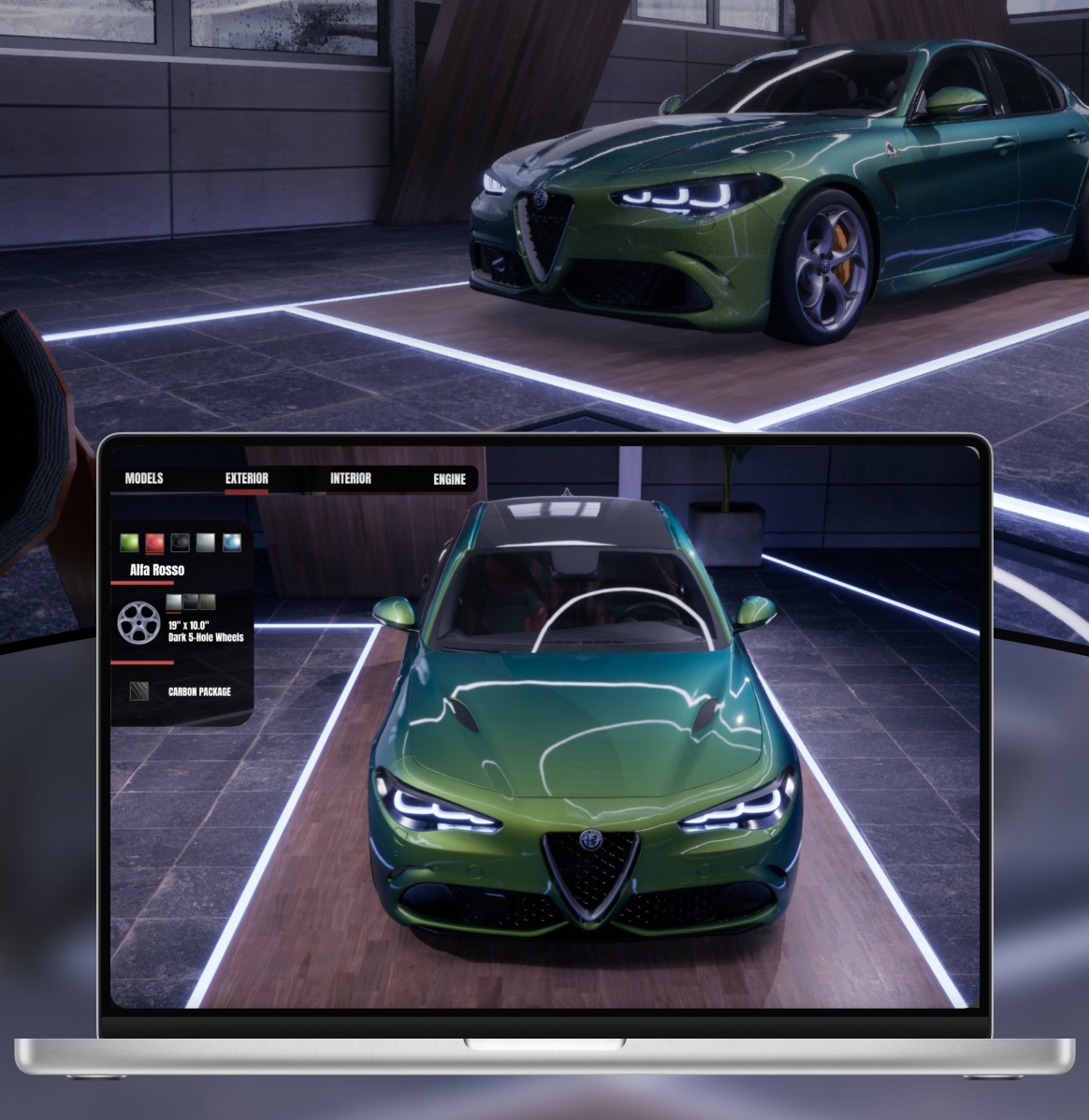
High-performance 3D car configurator by Program-Ace
Evolution of the vehicle configurator in the automotive market
Automotive configurators have progressed from static visuals to highly interactive digital tools. Businesses once relied on printed catalogs with limited impact, while today they use advanced software. For example, an Unreal Engine car configurator demonstrates how real-time rendering and interactivity reshape customization.
From printed catalogs to early digital tools
The first stage of vehicle configuration relied on printed catalogs. Customers browsed through brochures, selecting preferred trims, colors, and accessories without knowing how the full car would look. Sales teams often struggled to convey realistic representations, leading to miscommunication.
With the spread of early digital tools, dealerships started offering 2D interfaces where users clicked through drop-down menus to select options. While helpful, the experience remained limited because visuals were static and disconnected from real-world expectations. Configurations could be described, but customers rarely felt immersed in the process.
Early digital configurators marked an important step, proving that interactive product selection had value. Businesses discovered that digital presentations improved sales efficiency and reduced time spent on manual explanations. Even with their simplicity, these systems created the foundation for modern solutions. As technology advanced, both customers and businesses demanded more realism, speed, and flexibility, leading to the development of advanced platforms capable of real-time updates and lifelike accuracy.
Rise of the 3D vehicle configurator
The introduction of 3D graphics reshaped configuration from static selection into an interactive experience. Customers could finally rotate a model, zoom into details, and evaluate changes instantly. Such progress raised buyer confidence, as the end product became easier to envision.
A major advancement came with the VR product configurator engines, such as Unity and Unreal. Their technologies combine immersive headsets with interactive modeling, allowing users to step into a virtual showroom. Retailers gained a powerful way to differentiate their offerings, while customers enjoyed unparalleled engagement.
Benefits of 3D configurators include:
- Accurate visuals. Customers view details such as lighting effects, reflections, and material finishes.
- Immersive experience. Buyers can interact with vehicles in virtual environments.
- Cross-platform use. Configurators function in showrooms, websites, and mobile apps.
Businesses using 3D tools found measurable increases in sales conversions and customer satisfaction. Instead of abstract descriptions, buyers interacted with precise visualizations that clarified every choice. The success of 3D systems laid the groundwork for today’s integration of high-end engines like Unreal, which combine realism with scalability.
Current trends in custom vehicle configurator development
Modern development focuses on combining realism with accessibility. A current custom vehicle configurator often supports real-time rendering, dynamic lighting, and scalable performance, ensuring users enjoy smooth interaction regardless of device capacity.
Some trends are:
- Web integration. Pixel streaming makes configurators accessible through browsers without requiring powerful hardware.
- Omnichannel strategies. Configurators are now embedded across dealership websites, e-commerce platforms, and showroom displays.
- AI-driven personalization. Algorithms suggest configurations based on previous user behavior.
- Scalability. Platforms are designed to expand with new features such as VR or AR integration.
Businesses seek flexibility, which means tools must adapt to different audiences and sales models. For example, some dealerships integrate financing calculators directly into the configurator. Others offer remote collaboration features so customers and sales representatives can finalize configurations together online.
The demand for realistic visualization and user-friendly design ensures configurators remain central to customer decision-making, while constant improvements in rendering technology push them closer to lifelike accuracy.
Business value of a vehicle configurator
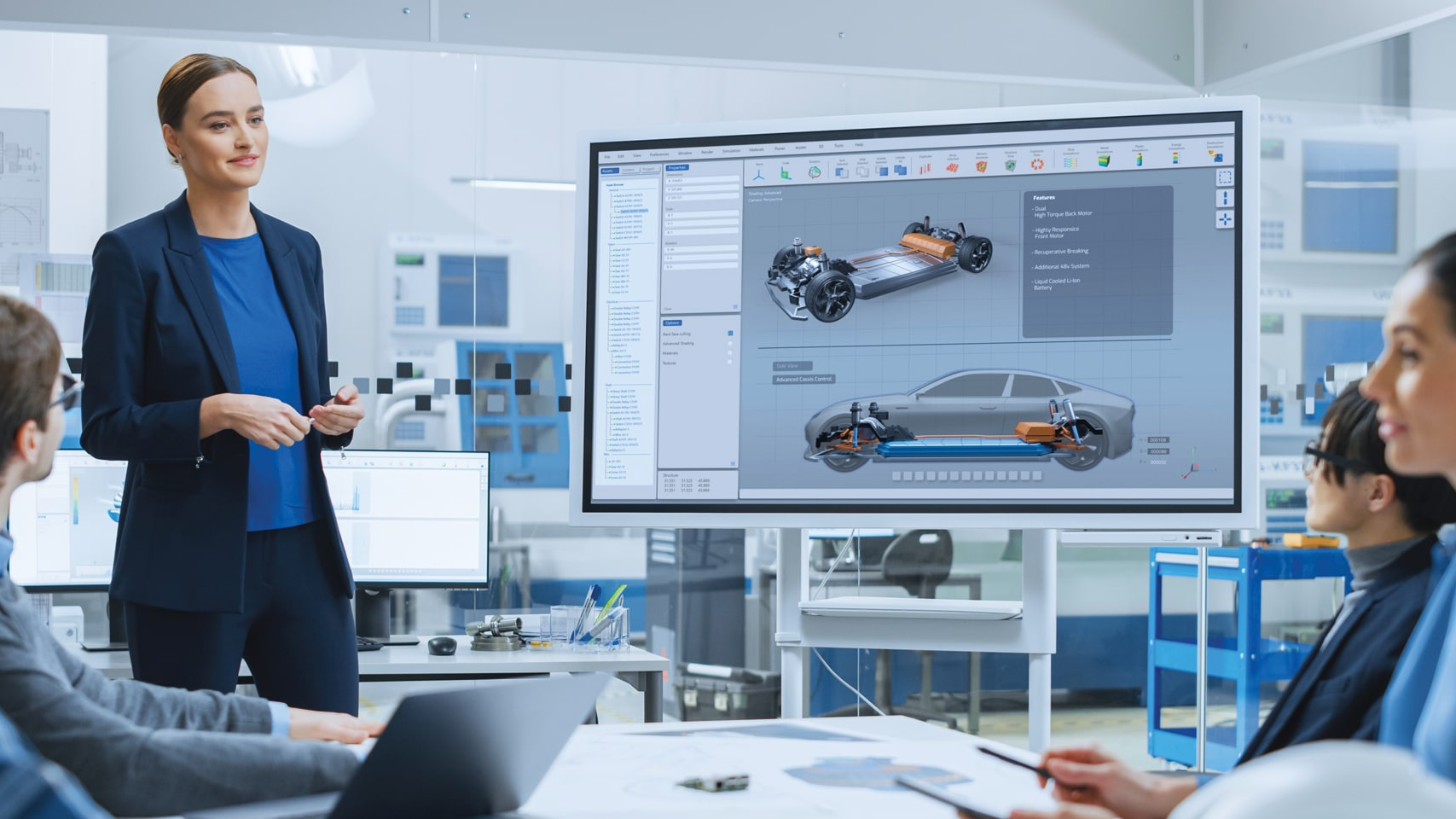
Vehicle configurators have evolved from a feature to a strategic business tool. Companies establish stronger customer connections, enhance conversion rates, and minimize operational inefficiencies. Configurators create measurable value by linking visual accuracy with practical sales processes.
How a vehicle configurator increases customer engagement
Customer engagement often depends on interactivity and clarity. A vehicle configurator delivers both by letting buyers test multiple options before making decisions. Customers gain confidence as they see each modification instantly applied to the model.
A web-based product configurator expands accessibility even further. Instead of visiting a showroom, users interact with vehicles directly on their devices. The ability to compare trims, colors, and accessories in real time keeps audiences interested longer and reduces drop-offs.
Practical engagement benefits include:
- Longer session times. Customers stay on websites longer when interacting with visual tools.
- Higher interaction rates. Features encourage exploration of premium add-ons.
- Fewer abandoned inquiries. Clear visuals reduce hesitation during the buying process.
Businesses using web-based platforms find that engagement correlates directly with better sales outcomes. Customers enjoy autonomy, while dealerships strengthen trust by offering transparent, user-friendly solutions that make every option easy to understand.
Revenue growth through personalized experiences
When buyers feel that an offer reflects their individual needs, they spend more and decide faster. A vehicle configurator makes that personalization concrete by showing exactly how upgrades or premium packages look on the car before purchase. The ability to compare side by side creates confidence and often shifts attention toward higher-value trims or accessories.
Several revenue effects stand out:
- Upselling made natural. Customers often add premium wheels, interior finishes, or technology packages after seeing them visually applied.
- Confidence drives spending. Transparent pricing tied directly to visual options reduces hesitation about higher costs.
- Quicker checkout. Personalized experiences eliminate the back-and-forth typically required in sales conversations.
- Brand value reinforced. Offering precise customization communicates that a business respects individual choice.
Businesses often ask whether the investment is justified, given the cost of the product configurator. Evidence shows that configurators not only pay for themselves but continue to deliver long-term gains. Higher order values, stronger loyalty, and reduced sales friction all combine to create measurable growth. Configurators reshape personalization from a marketing phrase into a direct financial outcome.
Reducing inventory and streamlining sales processes
Automotive businesses traditionally faced high expenses in maintaining large inventories. A configurator changes that model by letting customers preview every variation digitally. Cars no longer need to be kept on-site in every trim or color, reducing storage and display costs.
Insights gathered through configuration data also guide production and purchasing. Popular combinations appear in reports, helping companies align inventory with actual demand. Less popular variations can remain digital-only, avoiding unnecessary investment.
Practical advantages include:
- Inventory efficiency. Digital previews reduce the number of physical models needed on lots.
- Smarter decisions. Analytics reveal which configurations drive most interest and sales.
- Simplified workflows. Sales teams demonstrate options instantly instead of moving between vehicles.
- Lower operational strain. Maintenance and depreciation costs decline when fewer cars are stored long-term.
When comparing product configurator cost against potential savings, the balance favors implementation. Businesses spend less on holding unsold inventory while maintaining the ability to present endless combinations online or in showrooms. Streamlined processes lead to quicker deals, leaner operations, and stronger profitability.
Features that define a successful custom vehicle configurator
A configurator must do more than display options. It should create a smooth connection between visuals, pricing, and usability. Success depends on clear interaction, accurate information, and reliable performance across devices and sales channels.
Real-time 3D visualization for vehicle configuration
Buyers want to see cars as they would appear in real life. Real-time 3D visualization makes that possible by rendering every adjustment instantly. Instead of static photos, customers rotate models, zoom in, and view textures under realistic lighting.
Some capabilities are:
- Instant updates. Color, trim, and accessory choices appear immediately without delays.
- Close detail. Users inspect interiors, stitching, and dashboard layouts at high resolution.
- Environmental context. Cars can be placed in different settings to highlight performance or styling.
Such visual accuracy reduces uncertainty and improves confidence. Automotive retailers report higher satisfaction scores when buyers preview realistic models before committing. For businesses, strong visuals also act as a marketing tool, making websites and showrooms more engaging. Real-time 3D visualization ensures that vehicle configuration is not only functional but persuasive.
Integration with pricing and financing options
A strong configurator connects visual choices with clear financial information. Customers want to know how each decision affects the bottom line, from base model pricing to optional upgrades. Transparent calculations support faster commitments and reduce negotiation time.
Ways integration adds value:
- Dynamic pricing. Costs update automatically as configurations change.
- Financing clarity. Loan or lease terms display alongside the total purchase price.
- Package comparisons. Buyers see how bundled options affect affordability.
- Transparency. Sales teams avoid hidden fees or unexpected changes.
Such integration simplifies the sales process for both sides. Customers feel informed, while sellers minimize back-and-forth explanations. Businesses also gain an advantage by showing financing scenarios early, preventing hesitation later in the process.
Cross-platform accessibility and mobile optimization
Modern buyers expect flexibility in how they interact with businesses. A configurator restricted to one platform risks losing potential customers. Cross-platform access ensures users can configure vehicles from desktops, tablets, or smartphones without sacrificing quality.
Important elements include:
- Responsive design. Layouts adapt to screen sizes and device capabilities.
- Consistent performance. Smooth rendering across platforms maintains credibility.
- Mobile-first features. Touch controls and simplified navigation enhance accessibility on smaller screens.
Accessibility is not limited to individual customers. Dealerships use configurators in showrooms, while e-commerce platforms embed them into websites. Sales representatives can also guide clients remotely by sharing configurations during calls. Mobile optimization, in particular, drives adoption.
Many customers research cars on their phones before visiting dealerships, and a reliable configurator ensures their experience is uninterrupted. Businesses gain reach, customers enjoy flexibility, and the purchasing process becomes smooth across all channels.
Comparing 3D vehicle configurator solutions
Every business must assess the right fit between ready-made configurator tools and custom-built platforms. Options differ in deployment time, flexibility, and long-term value. A clear choice depends on goals, budget, and the level of control needed.
Off-the-shelf platforms vs. Custom vehicle configurator development
| Feature | Off-the-Shelf Platforms | Custom Development |
| Deployment speed | Launch ready tools fast | Requires months to build, test, deploy |
| Upfront cost | Lower initial cost, often subscription-based | Higher initial investment tailored to needs |
| Scalability & flexibility | Limited customization, expansion often constrained | High flexibility and scalable architecture |
| Maintenance & long-term cost | Vendor handles updates, but fees may increase | Business controls updates; no vendor lock-in |
| ROI over time | Faster setup; ROI may plateau | Higher ROI long term; break-even often by year three |
Cost considerations and ROI of 3D vehicle configurator adoption
Balancing cost and return defines success for configurator projects. Subscription-based solutions reduce upfront risk but may limit long-term value. Custom development requires significant initial resources but aligns precisely with evolving business needs, offering better cost efficiency over time. Studies show custom tools delivering strong ROI, cutting overheads significantly.
A strategic assessment of the total cost of ownership over five years reveals that custom investments often pay off by year three. Businesses also avoid subscription fees and vendor constraints, gaining ownership and flexibility. Opting to build in-house means that features can evolve in line with customer expectations and competitive demands. Evaluating long-term ROI requires considering not only financials but also adaptability, system control, and innovation potential.
Case examples of successful vehicle configuration solutions
Program-Ace’s real-time 3D car configurator
Program-Ace designed a solution built on real-time 3D graphics that changed how customers interact with vehicles online and in showrooms. The configurator delivers lifelike rendering, instant feedback, and an interface designed for simplicity. Unlike static catalogs, the tool adapts to different vehicle models, giving businesses flexibility to present new products without rebuilding the entire system. Companies using it reported higher engagement, more frequent exploration of premium packages, and smoother integration into both websites and physical sales environments.
Aston martin immersive platform
Aston Martin introduced a web-based configurator that emphasizes high realism and speed. Built to support demanding customers, it uses advanced rendering technology to deliver photo-accurate views in milliseconds. Customers switch between trims, colors, and finishes smoothly, while the system maintains a luxury-brand standard of design and performance. Dealers benefit from consistent, reliable presentations that match the exclusivity of the vehicles being sold.
Ferrari’s aws-powered configurator
Ferrari deployed a platform that pairs 3D visualization with cloud-based personalization on AWS, using machine learning to suggest options from customer history. The personalization cut configuration time by 20% and improved qualified lead generation, a concrete example of how data-driven configurators lift both sales efficiency and satisfaction.
Challenges in implementing a vehicle configurator
Adopting a configurator brings measurable value, but the path to deployment is not always simple. Technical requirements, data integration, and performance constraints create hurdles. Businesses must anticipate these challenges early to avoid delays and added costs.
Technical barriers in building a 3D vehicle configurator
Developing a 3D configurator requires more than attractive visuals. Rendering engines, physics systems, and cloud delivery must align to create a smooth user experience. Many businesses underestimate the complexity of connecting these elements.
Common barriers include:
- Rendering load. High-quality models demand significant computing power.
- Cross-browser consistency. Ensuring flawless operation on Chrome, Safari, and Edge often requires custom optimization.
- Scalability. Supporting hundreds of simultaneous users can overload servers without careful planning.
- Security. Online configurators may require safeguards to protect proprietary 3D assets.
Overcoming such barriers calls for specialized expertise in engines like Unreal or Unity, along with strong backend infrastructure. Teams that neglect early testing often face costly fixes later. Proper planning, including prototype development and load testing, ensures smoother deployment and a stable user experience at scale.
Data management and compatibility issues
Every configurator relies on detailed product data. Vehicle specifications, pricing, and accessory lists must be accurate and constantly updated. Inconsistent data between the configurator and dealership systems creates confusion for buyers and risks damaging trust.
Compatibility challenges arise when existing enterprise systems, such as CRM or ERP platforms, fail to integrate smoothly with the configurator. Without synchronization, sales teams may see discrepancies between what a customer selected online and what the backend system records.
Businesses often adopt middleware or APIs to bridge this gap. Success depends on strict data governance policies, ensuring that all updates propagate automatically across all platforms. Another vital aspect is compliance with regional requirements, such as displaying tax-inclusive prices in the EU or meeting accessibility standards in North America.
Strong data management practices keep configurators reliable. When customers see up-to-date information and receive consistent communication across channels, confidence grows and operational headaches diminish.
Balancing realism and performance in vehicle configuration
High-quality visuals attract customers, but too much detail can slow performance. Businesses must find the balance between realism and responsiveness. A configurator that lags or fails to load quickly risks driving customers away.
Here are some important considerations:
- Model optimization. Using Nanite or LODs to preserve fidelity without overloading devices.
- Lighting efficiency. Dynamic effects must remain realistic while consuming minimal resources.
- Adaptive streaming. Pixel streaming or cloud rendering adjusts visuals based on user bandwidth.
- Testing across hardware. Ensures accessibility for users with both high-end and average devices.
The goal is to deliver lifelike images without compromising speed. Customers should rotate, zoom, and adjust options fluidly. Businesses that strike this balance benefit twice: they gain the wow factor of realism and the reliability of smooth interaction. Continuous optimization allows configurators to expand over time without sacrificing usability.
Future outlook for vehicle configuration technologies
The next stage of configurator development will not be limited to graphics alone. Businesses that anticipate these developments will stay competitive by offering richer, smarter, and more flexible solutions.
Artificial intelligence in vehicle configurator platforms
Artificial intelligence is beginning to reshape configurators into adaptive systems. Instead of relying solely on manual selection, customers receive tailored recommendations based on their behavior and context. That level of personalization shortens the path to purchase.
AI strengthens configurators in several ways:
- Smart recommendations. Suggest trims or add-ons that match lifestyle patterns.
- Virtual assistants. Offer real-time guidance inside the configurator itself.
- Predictive analytics. Highlight which combinations have the highest conversion likelihood.
- Automated data entry. Keep pricing, models, and options up to date with minimal effort.
For businesses, AI reduces friction in the sales process and increases opportunities for upselling. For customers, it eliminates decision fatigue. The technology ensures that configuration evolves alongside shifting expectations rather than remaining a static selection tool.
Augmented and virtual reality as additions to 3D vehicle configurator
Immersive technology takes visualization one step further. Augmented reality allows users to place a digital car in their driveway, while virtual reality transports them into a fully interactive showroom. Both approaches make the buying process more tangible.
Essential applications show how extended reality delivers practical value:
- AR placement. Customers use a phone or tablet to project vehicles into real environments.
- VR interaction. Headset experiences let users explore interiors and adjust features virtually.
- Dealer presentations. Sales staff guide buyers through VR models during remote consultations.
- Event showcases. Brands replace static displays with headsets to capture attention.
Extended reality enriches the experience without requiring every vehicle to be physically present. As hardware becomes more affordable, AR and VR are expected to shift from special demonstrations into standard components of configurators.
Expanding vehicle configuration beyond the automotive industry
Configuration technology is proving valuable outside automotive. Industries with complex options or high-cost items are applying the same logic to support faster, more confident purchasing decisions.
Examples highlight how other markets are using configurators effectively:
Furniture retail. Shoppers select fabrics, finishes, and layouts before committing to an order.
Aerospace and defense. Engineers configure equipment virtually to validate combinations pre-production.
Consumer electronics. Customers switch specs for laptops or smartphones and see results instantly.
Real estate. Homebuyers personalize interiors and fixtures within virtual mockups.
By extending into these sectors, configurators demonstrate scalability well beyond cars. They serve as digital assistants that improve accuracy, reduce misunderstandings, and help businesses meet customer needs across industries. Automotive may have pioneered the practice, but many other fields now benefit from it.
Why choosing Program-Ace makes your vehicle configuration project easier
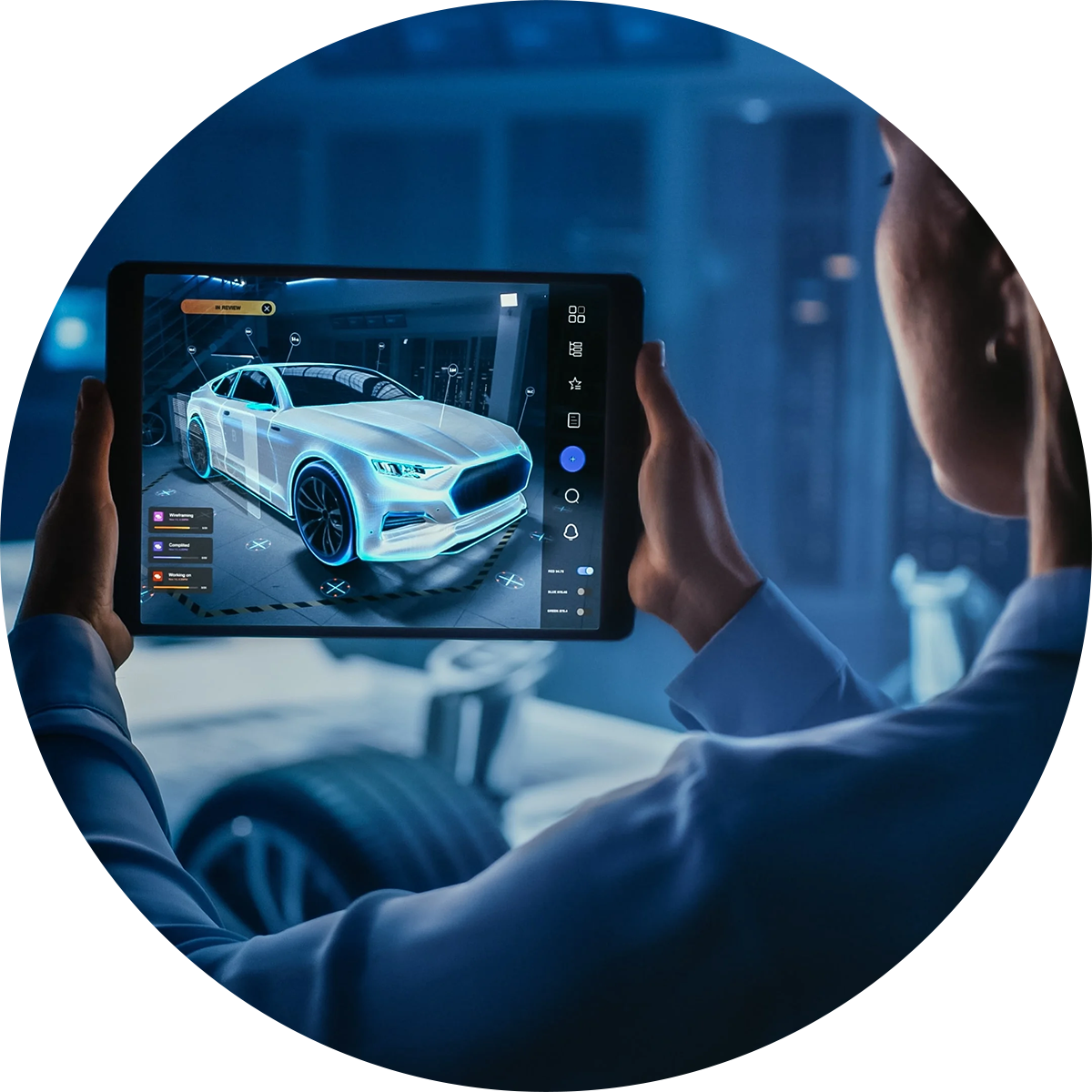
Program-Ace handles the complexity of vehicle configuration end to end, pairing technical depth with a focus on business results. Building software since 1992 across 900+ projects, our team manages every stage, from design and real-time visualization to backend integration and platform scaling, so you get a tool that fits both customer expectations and operational goals.
Our experience covers real-time rendering, cross-platform deployment, and advanced customization features, all tailored to different business models. Companies working with us reduce risks tied to data compatibility, user experience, and performance optimization because we test and refine every detail before release.
Program-Ace has delivered configurators for automotive clients that both impress customers and drive revenue. If you want a partner focused on usability, scalability, and ROI, we are ready. Contact us to explore how a vehicle configurator can lift your sales and customer engagement.